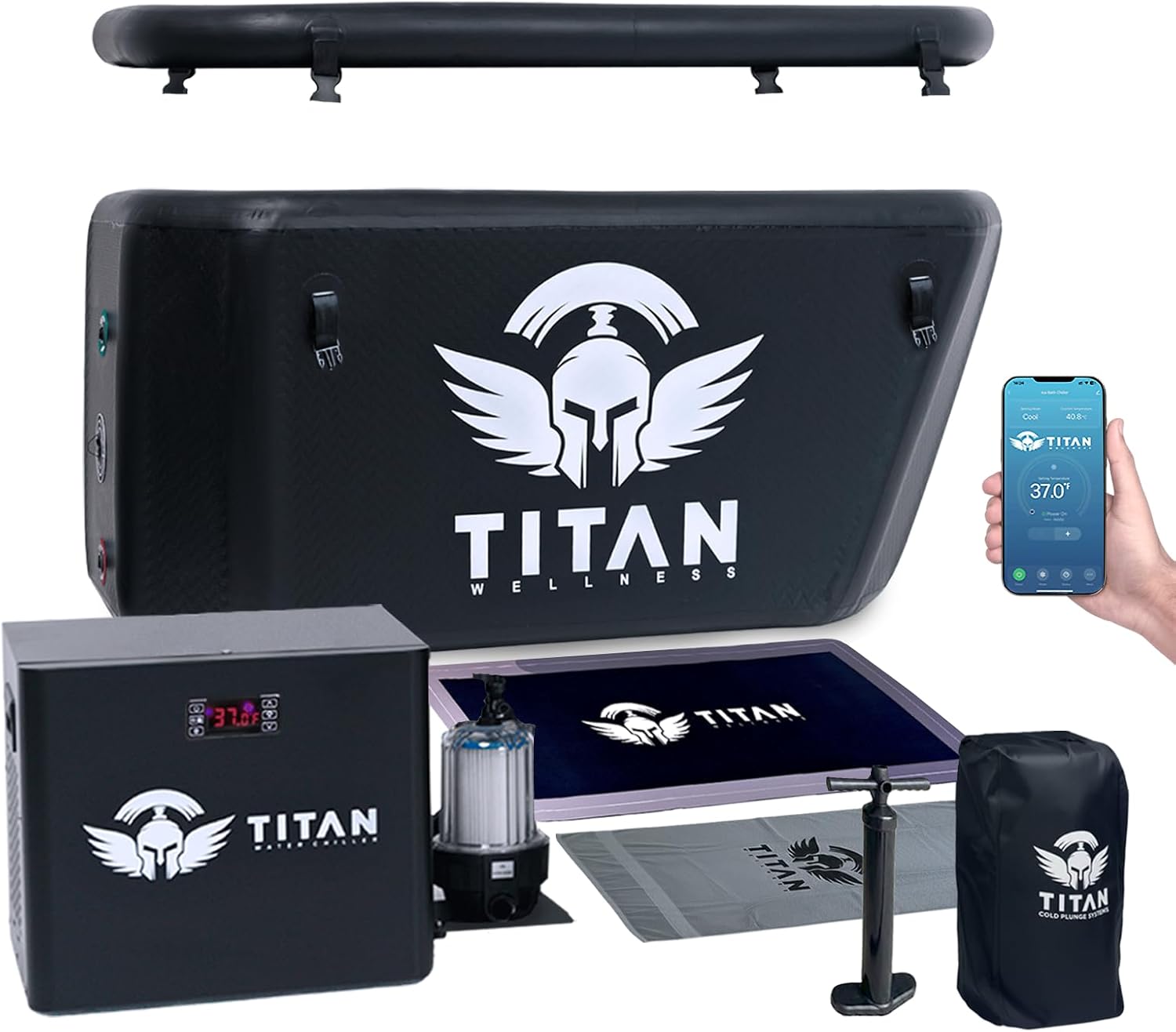
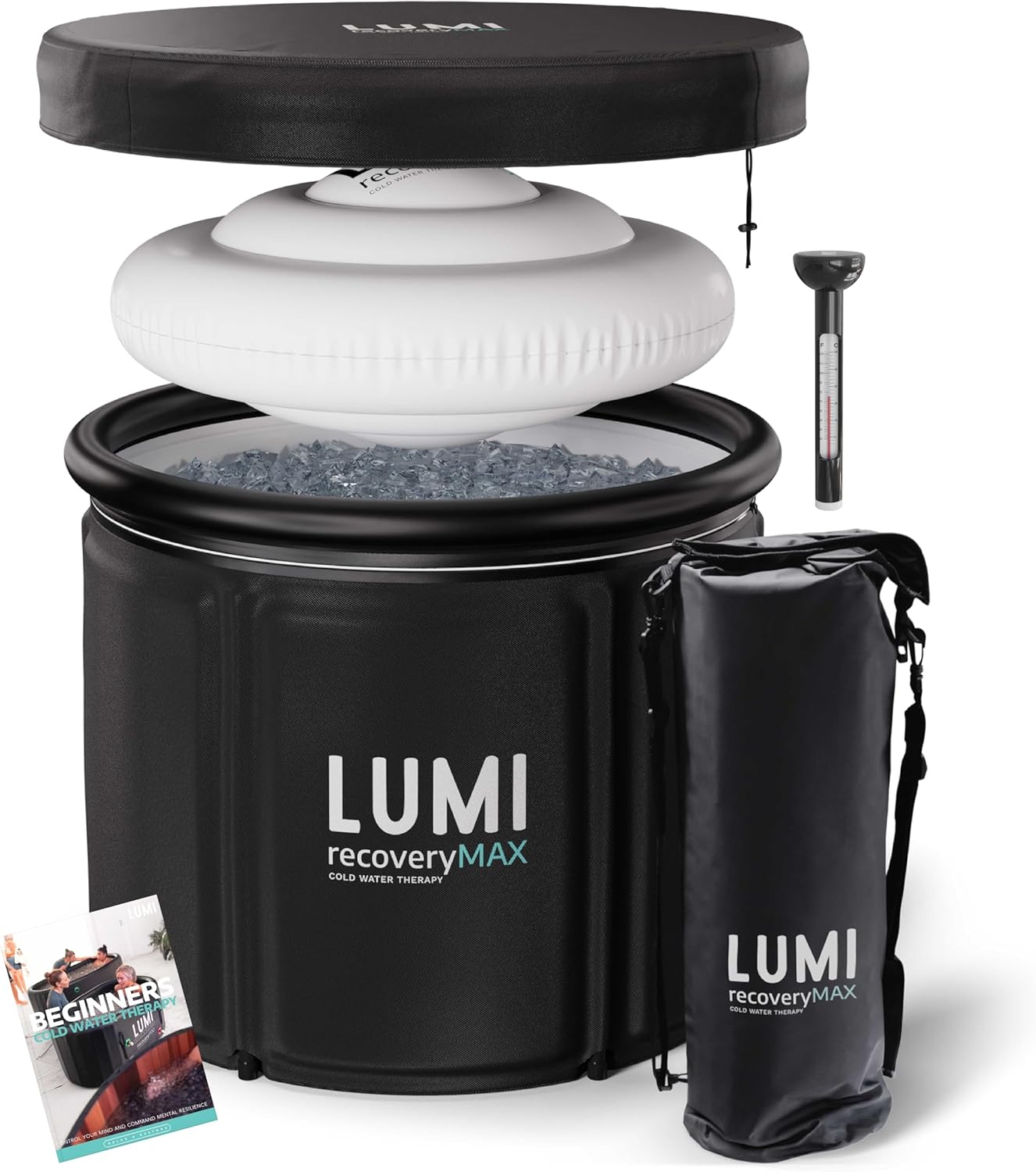
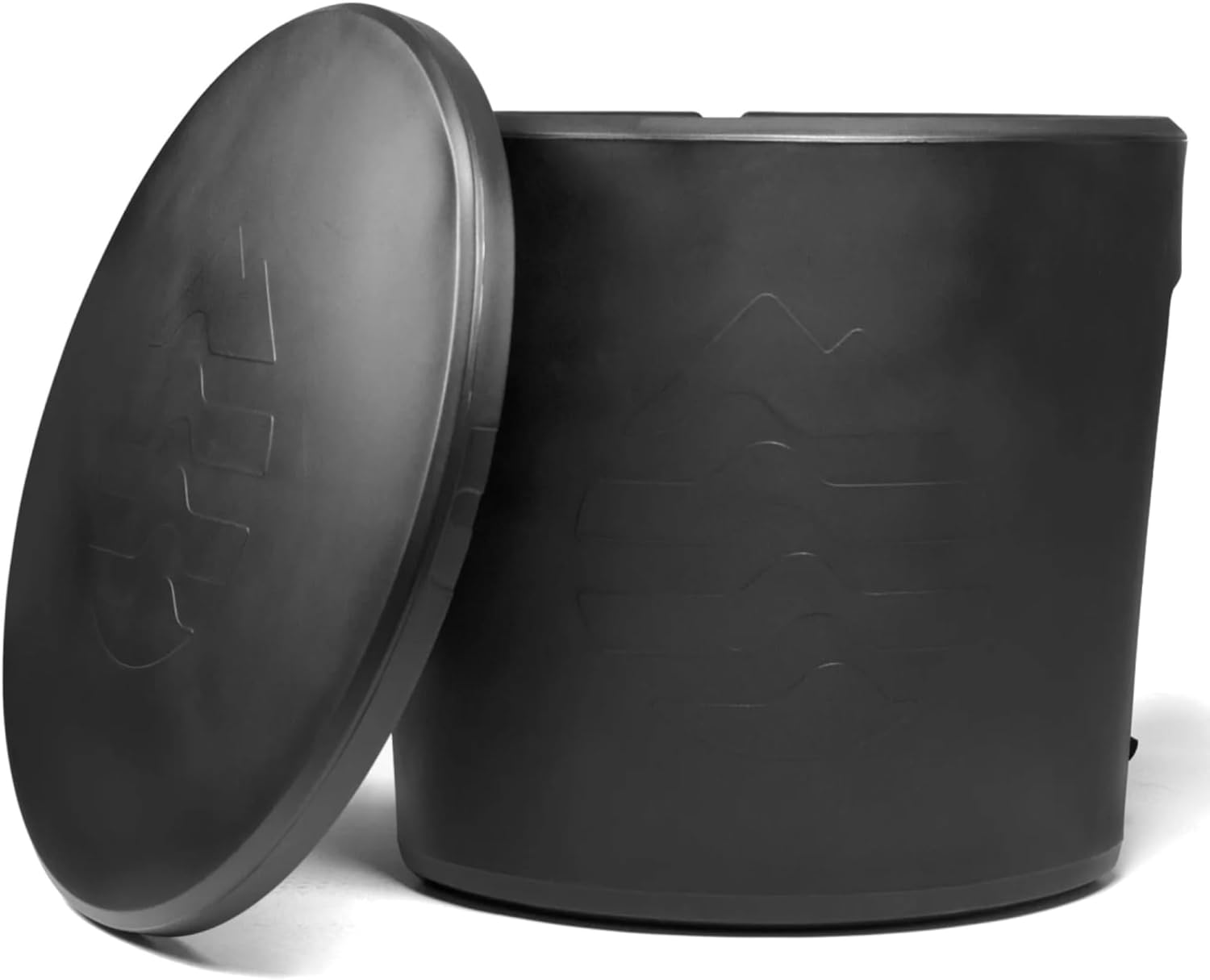
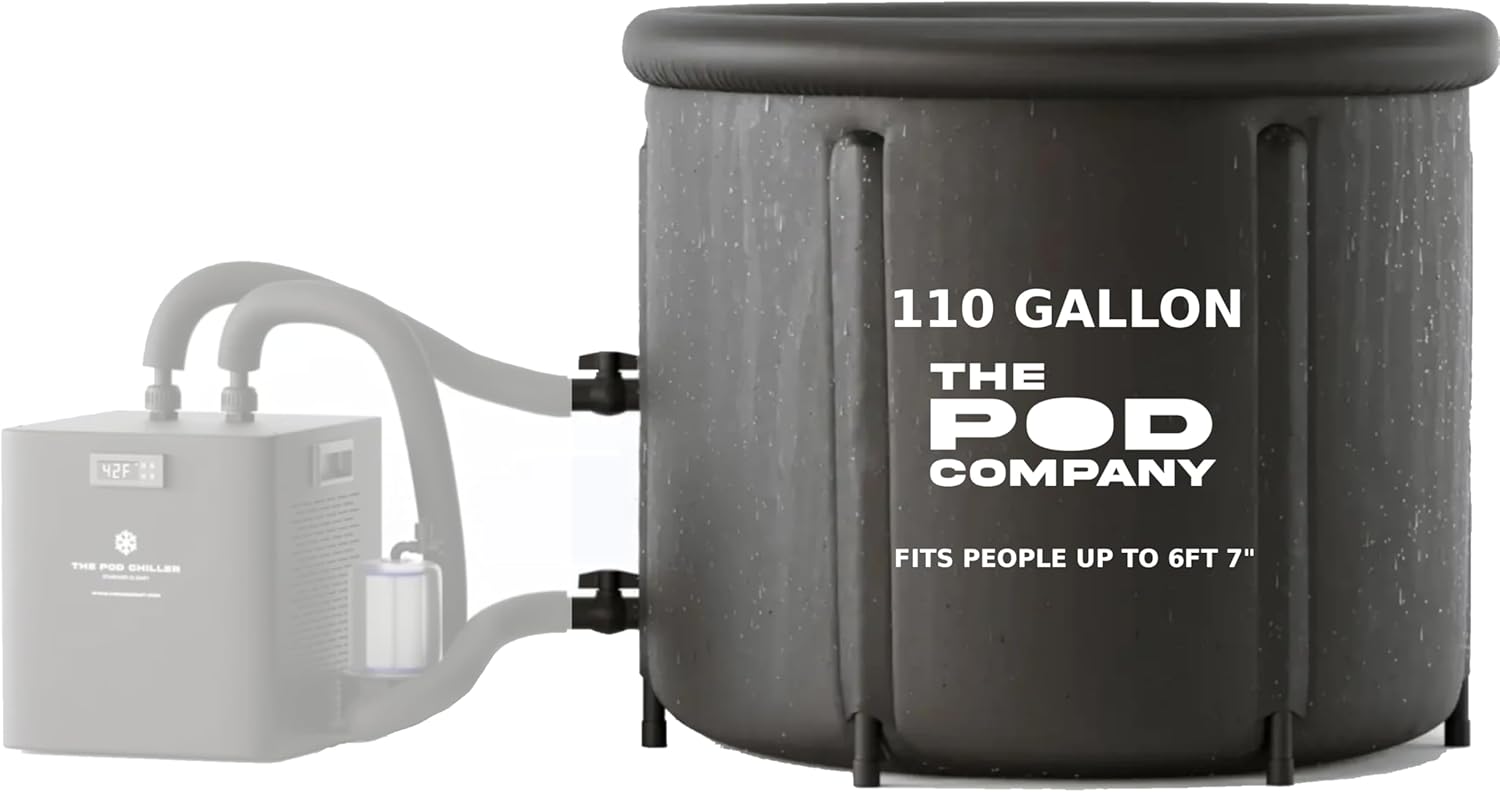
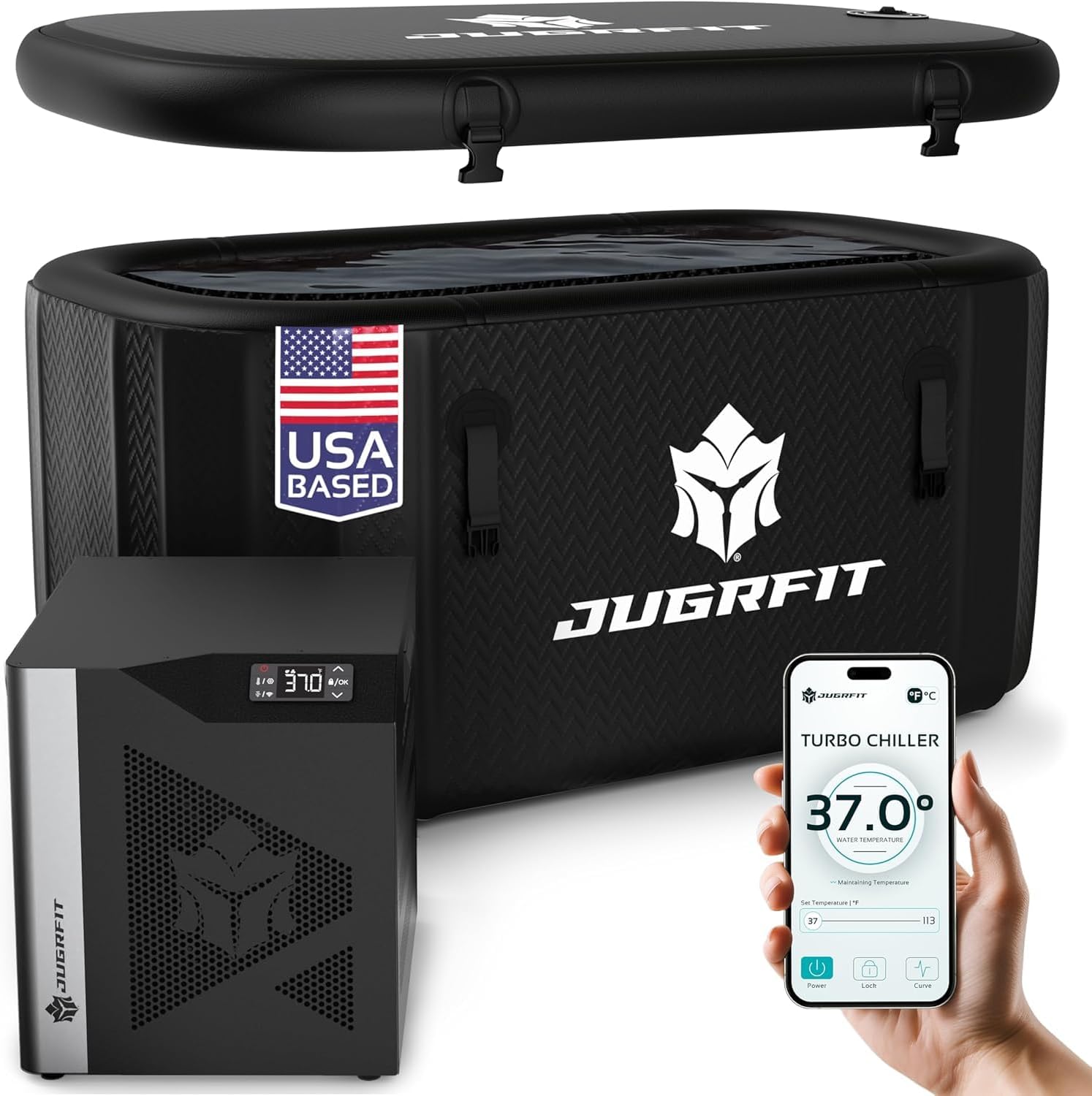
Most cold plunge enthusiasts learn the hard way that the chiller—not the tub—is what wakes the household at 4 a.m. Finding the quietest cold plunge chiller bedroom basement setup means looking past marketing decibel claims and digging into compressor type, fan curve, and how the unit handles short-cycling on quiet winter nights. If your plunge tub sits in a finished basement that shares a wall, ceiling, or HVAC return with a sleeping space, your real noise tolerance window is roughly 35-45 dB at the listener, not at the chiller faceplate. This 2026 guide breaks down what actually makes a chiller bedroom-adjacent quiet and covers complementary cold therapy tools that fit when a full plunge isn't realistic.
Why "quiet" specs lie in basement installs
Manufacturers usually publish a single decibel number measured at one meter in an open lab. Your basement is a closed room with hard concrete walls, ductwork that acts as a sound bridge, and possibly a sump pit that amplifies low-frequency hum. A chiller rated at 48 dB at one meter can easily register 55-60 dB at the ear of someone trying to sleep one floor up, because compressor vibration travels through the slab and joist system more efficiently than airborne sound. The quietest cold plunge chiller bedroom basement configuration always combines a low-noise unit with mechanical isolation—rubber feet, anti-vibration pads, and a corner placement away from shared walls.

The three noise sources you actually hear
A chiller produces three distinct noise signatures, and each needs a different fix:
- Compressor hum (40-200 Hz): This is the low rumble that telegraphs through floors. Inverter-driven rotary compressors run quieter than reciprocating piston units, and variable-speed models avoid the loud startup surge of fixed-speed designs.
- Fan whine (500 Hz-2 kHz): The condenser fan moves heat away from the refrigerant coil. EC (electronically commutated) fans with PWM speed control can drop to a whisper at idle, while AC shaded-pole fans run at one loud speed forever.
- Water pump cavitation (variable): If the chiller circulates water through an external loop, a poorly primed pump will gurgle and click. Mounting the pump on Sorbothane and keeping the loop fully bled solves most of this.
Decibel benchmarks for bedroom-adjacent rooms
For reference, a quiet bedroom at night reads about 30 dB. A refrigerator at three feet reads about 40 dB. A window air conditioner reads about 55 dB. Aim for a chiller that measures 48 dB or lower at one meter on its highest cooling cycle, and 40 dB or lower during idle/recirculation. Anything above 55 dB will be audible through a closed door and standard drywall, and anything above 60 dB will telegraph through floor joists no matter what you do. Our companion guide on cold plunge chiller noise reduction covers floating-floor mats and isolation enclosures in detail.
What to look for in a 2026 quiet chiller
Whether you're shopping a whole-tub chiller or a portable cold therapy unit for targeted recovery, these are the specs that correlate with real-world quiet operation in a basement environment:
- Inverter rotary compressor rather than fixed-speed piston.
- EC fan with PWM control instead of an AC shaded-pole fan.
- Programmable timer or smart cycling so the unit can pre-cool before sleep hours and idle silently overnight.
- Sealed insulated cabinet—double-wall construction with foam damping cuts radiated noise dramatically.
- External pump option so the noisiest moving part can sit on a rubber pad away from the tub.
- Quick-disconnect hoses to drain and store the unit between sessions, useful when a guest stays in the adjacent room.
Cold therapy machines: the bedroom-friendly alternative
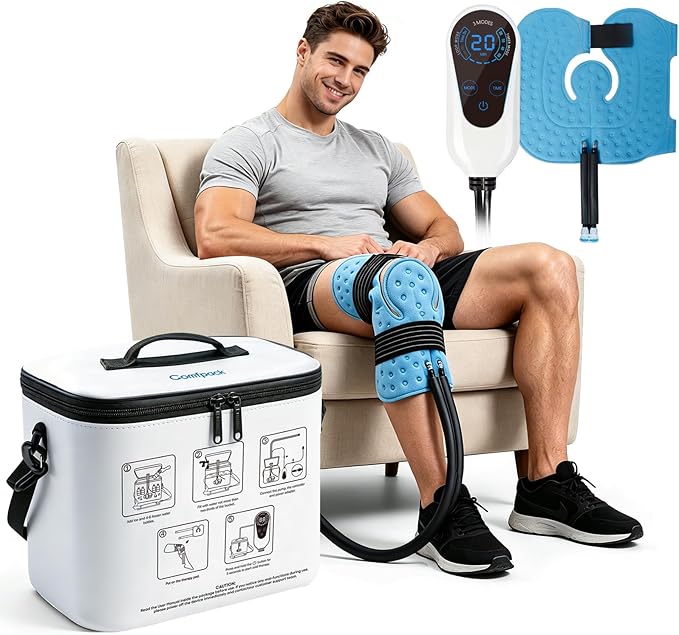
Not every basement can accommodate a 300-pound chiller and an 80-gallon plunge tub. If your install is constrained by ceiling height, drain access, or simply noise tolerance, a self-contained cold therapy machine can deliver continuous cold to a wrap or pad without any compressor whine at all—they use a circulating ice-water pump rather than refrigeration. These units are technically classified as recovery devices for joint and post-surgical use, but they overlap with the cold plunge category for targeted therapy. Several units below run at 35-45 dB, well within bedroom-adjacent tolerance.
Comparison table: quiet cold therapy units
| Model | Reservoir | Noise Profile | Best For |
|---|---|---|---|
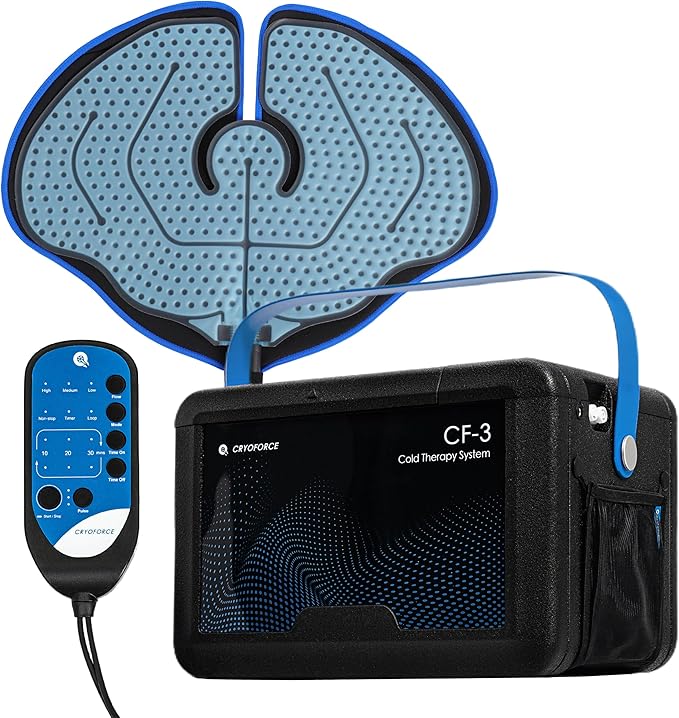
| CF-3 Pro 16.8QT | 16.8 quarts | Low, sealed pump | Larger joints, shoulder, full-leg wraps |
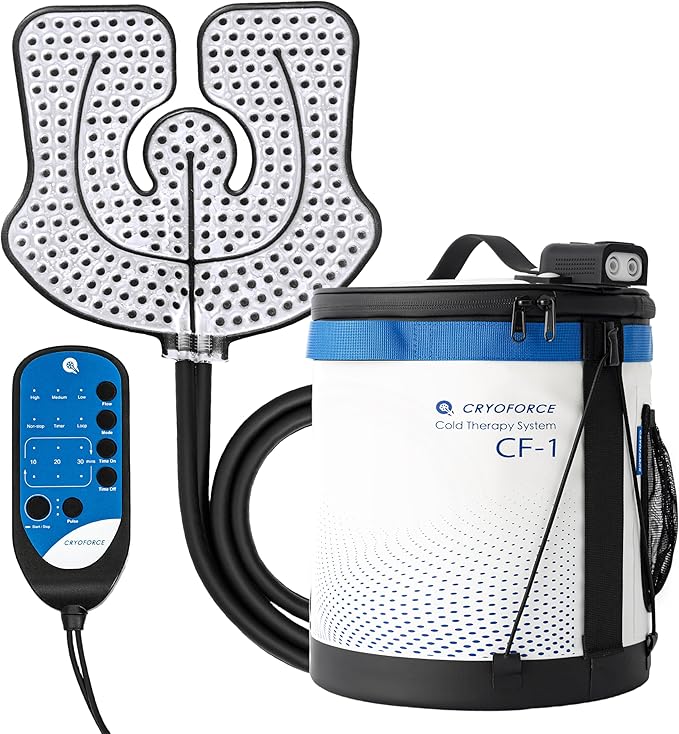
| CF-1 Quiet System | ~8 quarts | Marketed as quiet | Knee surgery recovery, overnight runs |
| ACL Recovery Machine | ~7 quarts | Standard whisper pump | Post-op knee, ACL rehab |
| Portable Programmable Timer | Portable | Low with timer cycling | Intermittent therapy, sleep hours |
Top quiet cold therapy picks for bedroom-adjacent setups
CF-3 Pro 16.8QT Large-Capacity Cold Therapy System
The CF-3 Pro is the unit to consider when you want long unattended runs without the pump kicking on every 20 minutes. The 16.8-quart reservoir holds enough ice and water to maintain therapy temperature for six to eight hours, which means the circulation pump cycles less frequently—a huge factor for bedroom-adjacent installs. It comes with both knee and shoulder wraps, so a single unit covers most household recovery needs. Place it on a Sorbothane pad on a concrete slab and the residual hum stays below the threshold of a closed-door bedroom. Check current price on Amazon.
CF-1 Quiet Cold Therapy Machine for Knee Surgery Recovery
The CF-1 is specifically marketed as a quiet ice therapy system, which matters when you are trying to sleep through a recovery cycle. The smaller reservoir means you'll need to refresh ice more often than the CF-3 Pro, but the trade-off is a more compact footprint that fits on a nightstand or under-bed cart. The pump is sealed and runs at a low, consistent pitch rather than the on-off chatter of cheaper units. This is the pick for users who want overnight knee therapy in a bedroom without a separate basement room at all. Check current price on Amazon.
Cold Therapy Machine for Knee After Surgery (ACL Recovery)
This unit targets the post-surgical ACL and knee recovery crowd, but the same low-noise circulation design that makes it suitable for hospital discharge use makes it well-matched for a bedroom-adjacent basement. The pump runs at a steady whisper, and the absence of a refrigeration compressor means no startup surge to wake a light sleeper. Best used in tandem with pre-frozen gel inserts to extend runtime. Check current price on Amazon.
Portable Cold Therapy Machine with Programmable Timer
The programmable timer is the feature that earns this unit a place in a bedroom-adjacent setup. Rather than running continuously, the pump cycles on for a set interval, off for a longer interval, and only consumes power and produces sound when actively delivering cold. Set it to a 15-on, 45-off pattern overnight and you get continuous therapeutic benefit without continuous noise. Portable enough to move between basement plunge area and upstairs bedroom as recovery needs shift. Check current price on Amazon.
Installation tips for a near-silent basement plunge area
Even the quietest chiller benefits from thoughtful placement. Set the unit on a half-inch rubber anti-vibration mat, ideally with cork underlayment beneath that, on a section of slab that isn't directly under a bedroom. If your basement is finished, build a small acoustic enclosure with two layers of 5/8" drywall, green glue between layers, and a vented panel for fresh-air intake to the condenser. Run the chiller's pre-cool cycle two hours before bedtime so the tub is at temperature and the compressor only needs short maintenance cycles overnight. For full setup walkthroughs see our basement cold plunge installation guide and the broader cold therapy recovery tools 2026 roundup.
Frequently Asked Questions
How many decibels is too loud for a chiller in a bedroom-adjacent basement?
Anything above 50 dB measured at one meter will likely be audible through standard drywall and a closed door. For light sleepers or thin floor assemblies, target 45 dB or lower during active cooling and under 40 dB during idle. Adding a rubber isolation mat and corner placement can knock another 3-5 dB off the perceived level at the listener.
Can I run a cold plunge chiller overnight without waking my family?
Yes, if you choose a unit with smart cycling or a programmable timer and let it reach target temperature before sleep hours. Most modern chillers only need to run the compressor 10-15 minutes per hour once the tub is cold, so the audible footprint is short bursts rather than continuous noise. Insulating the tub lid is the single biggest overnight quietness upgrade because the compressor cycles less often.
Are inverter compressors really quieter than fixed-speed for cold plunge use?
Considerably so. Inverter rotary compressors modulate output to match heat load, eliminating the loud on-off startup surge that defines fixed-speed units. The continuous low hum of an inverter is also easier to ignore than the intermittent thump of a piston compressor. Expect 8-12 dB lower perceived noise for the same cooling capacity.
Does a cold therapy machine work as a substitute for a cold plunge chiller?
For whole-body recovery, no—a wrap-based cold therapy machine can't replicate the systemic effect of immersion. For targeted joint recovery, sleep-quality protection, or apartment installs where a plunge isn't possible, a cold therapy machine is the quieter and more practical choice because it uses a circulating ice-water pump instead of a refrigeration compressor.
Where should I place a cold plunge chiller relative to my bedroom?
Ideally diagonally opposite the bedroom in the basement, with at least one interior wall between the chiller and the floor joists directly under the bedroom. Avoid placing the unit in a mechanical room that shares HVAC ductwork with the bedroom, because compressor vibration travels through duct sheet metal exceptionally well.
Will a sound-dampening enclosure cause my chiller to overheat?
It can if you don't design for airflow. Any enclosure needs unrestricted intake at the bottom and exhaust at the top, sized to match the condenser fan's CFM rating. A passive baffle made of two offset openings lined with acoustic foam can drop noise 6-10 dB without restricting airflow. Never fully seal a chiller enclosure—the compressor will short-cycle, get louder, and fail prematurely.
What's the quietest cold plunge chiller setup overall for 2026?
The combination that wins on quietness is an inverter-driven external chiller with EC condenser fan, mounted on a Sorbothane pad inside a vented acoustic enclosure, paired with an insulated tub lid and pre-cool timing two hours before sleep. For users who don't need full immersion, a programmable cold therapy machine like the CF-1 or the portable timer-based unit linked above provides bedroom-tolerable recovery with no compressor at all.
Key Takeaways
- Choosing the right quietest cold plunge chiller bedroom basement means matching capacity and output ports to your actual devices
- Always check actual watt-hours (Wh), not just watts — runtime depends on Wh, not peak output
- Also covers: silent cold plunge chiller
- Also covers: low decibel ice bath chiller
- Also covers: cold plunge near bedroom
- Compare price-per-Wh across models to find the best value for your budget