If your tub sits on a wood-framed floor and the whole room hums every time the chiller kicks on, you are dealing with structure-borne noise, not airborne noise. The fastest fixes for quiet cold plunge chiller pump vibration are: float the chiller on a mass-loaded neoprene-and-cork isolation pad, swap rigid plumbing for two short loops of reinforced flex hose, and add a sand-filled or paver-loaded platform between the unit and the joists. Together these three steps break the mechanical path the pump uses to drive your subfloor like a speaker cone, and they typically drop felt vibration by 60-80% in a single afternoon.
The rest of this guide walks through diagnosis, the materials worth buying, when a quieter all-in-one cold therapy unit makes more sense than fighting your current chiller, and the small plumbing tweaks pros use to kill resonance for good.
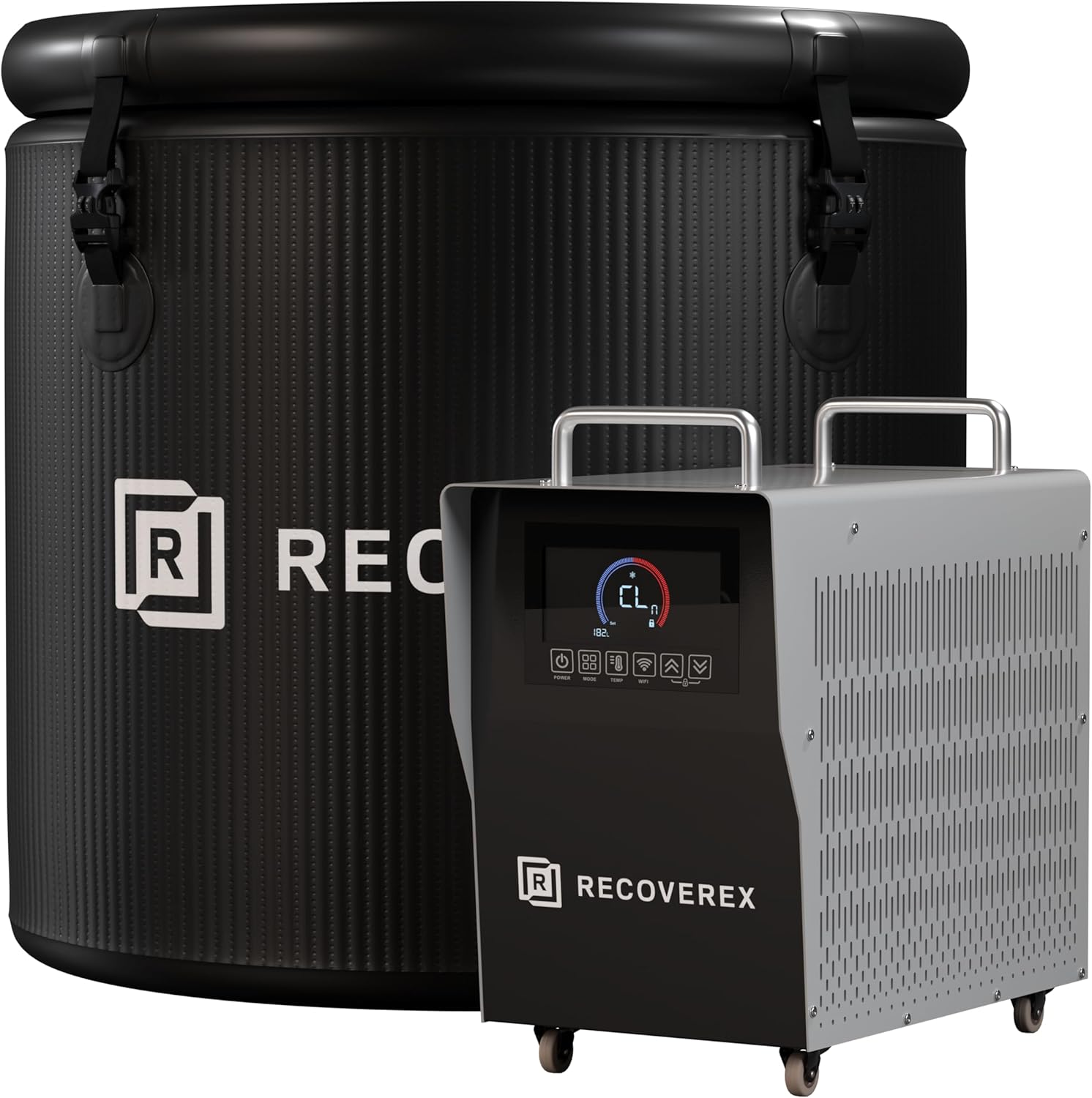
Why Floor Joists Turn a Quiet Chiller Into a Subwoofer
Modern cold plunge chillers usually run between 38 and 55 dB at the cabinet, which is genuinely quiet in free air. The problem is that the rotary compressor and circulation pump both produce low-frequency vibration in the 40-120 Hz range. Wood joists, OSB subfloor, and drywall ceilings below act as a giant diaphragm at exactly those frequencies. The cabinet's rubber feet are designed for tile or concrete, not for a sprung floor that resonates.
Three vibration sources are usually stacked on top of each other:
- Compressor mounts transmitting 60 Hz hum from the refrigeration loop.
- Circulation pump creating pulsation in the water line, which travels through the hose into the tub wall.
- Cabinet panels acting as secondary radiators when internal screws loosen over time.
A microphone app on your phone will not catch this — it shows up as felt vibration in the room below, picture frames buzzing, or a low growl you only notice after midnight. Solving quiet cold plunge chiller pump vibration means addressing each path, not just throwing one mat under the unit.
The Layered Isolation Stack That Actually Works
Single-layer rubber pads barely move the needle on joist-borne noise. What works is a constrained-layer stack, the same approach used under HVAC condensers in apartment buildings. From the floor up:
- Layer 1 — High-density rubber mat (3/8" or 10 mm). Look for recycled tire crumb at 60-70 Shore A hardness. Avoid soft yoga-mat foam; it bottoms out under the chiller's weight.
- Layer 2 — Mass plate. A 24" x 24" paver, a sand-filled plywood box, or a slab of MLV (mass-loaded vinyl) glued between two pieces of 3/4" plywood. Mass is what defeats low-frequency transmission.
- Layer 3 — Cork-neoprene sandwich. 1/2" cork bonded to 1/4" neoprene gives broadband damping on top of the mass layer.
- Layer 4 — Chiller feet on individual anti-vibration pucks, not directly on the cork.
Total stack height ends up around 2.5 inches, which is fine for most installations. The point is that vibration has to change media four times before it reaches the joist, and at each interface a percentage of energy is dissipated as heat instead of sound.
Plumbing Is Where Most DIYers Lose
You can build a perfect isolation platform and still get joist noise if the supply and return hoses are rigid PEX or hard-clamped PVC bolted to a wall stud. The hose becomes a vibration bridge that bypasses your entire pad system. Two cheap fixes:
- Replace the first 18 inches off the chiller with reinforced flexible hose looped in a gentle S-curve. The loop absorbs pulsation.
- Where hose passes through a wall plate or floor penetration, sleeve it in pipe insulation and never let the hose touch the framing directly.
While you are in there, check your flow rate. A pump running against a clogged inlet screen or partially closed valve cavitates, and cavitation generates broadband vibration that no pad can absorb. Pulling and rinsing the inlet strainer takes five minutes and often fixes a sudden noise increase. See our cold plunge pump maintenance guide for a full seasonal checklist.

When the Right Answer Is a Quieter Unit
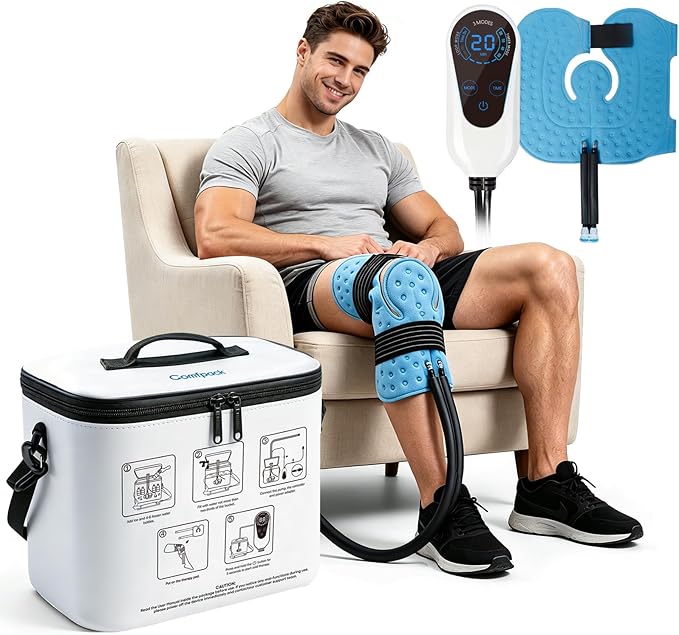
Sometimes the chiller itself is the problem — older single-speed compressors and undersized circulation pumps are loud by design, and no amount of isolation work will get them below your noise floor. If you primarily use cold therapy for targeted recovery (knee, shoulder, post-workout joints) rather than full-body immersion, a self-contained cold therapy machine often runs dramatically quieter because the pump is smaller, the reservoir is integrated, and there is no separate chiller cabinet to resonate against the floor.

The trade-off is obvious: you lose the full-body plunge experience and gain a unit that you can place on a bathroom counter or nightstand without rattling the floor below. For renters, upper-floor apartments, and anyone living above a sleeping family member, this swap is often the cleanest fix for quiet cold plunge chiller pump vibration complaints. Compare with our roundup of quietest cold plunge chillers of 2026 before you decide.
Quiet Cold Therapy Units Worth Considering
These are not full-tub chillers — they are recirculating cold therapy machines that have become popular as quiet, joist-friendly alternatives for spot recovery. Both are reasonable picks if you are tired of fighting a noisy main chiller.
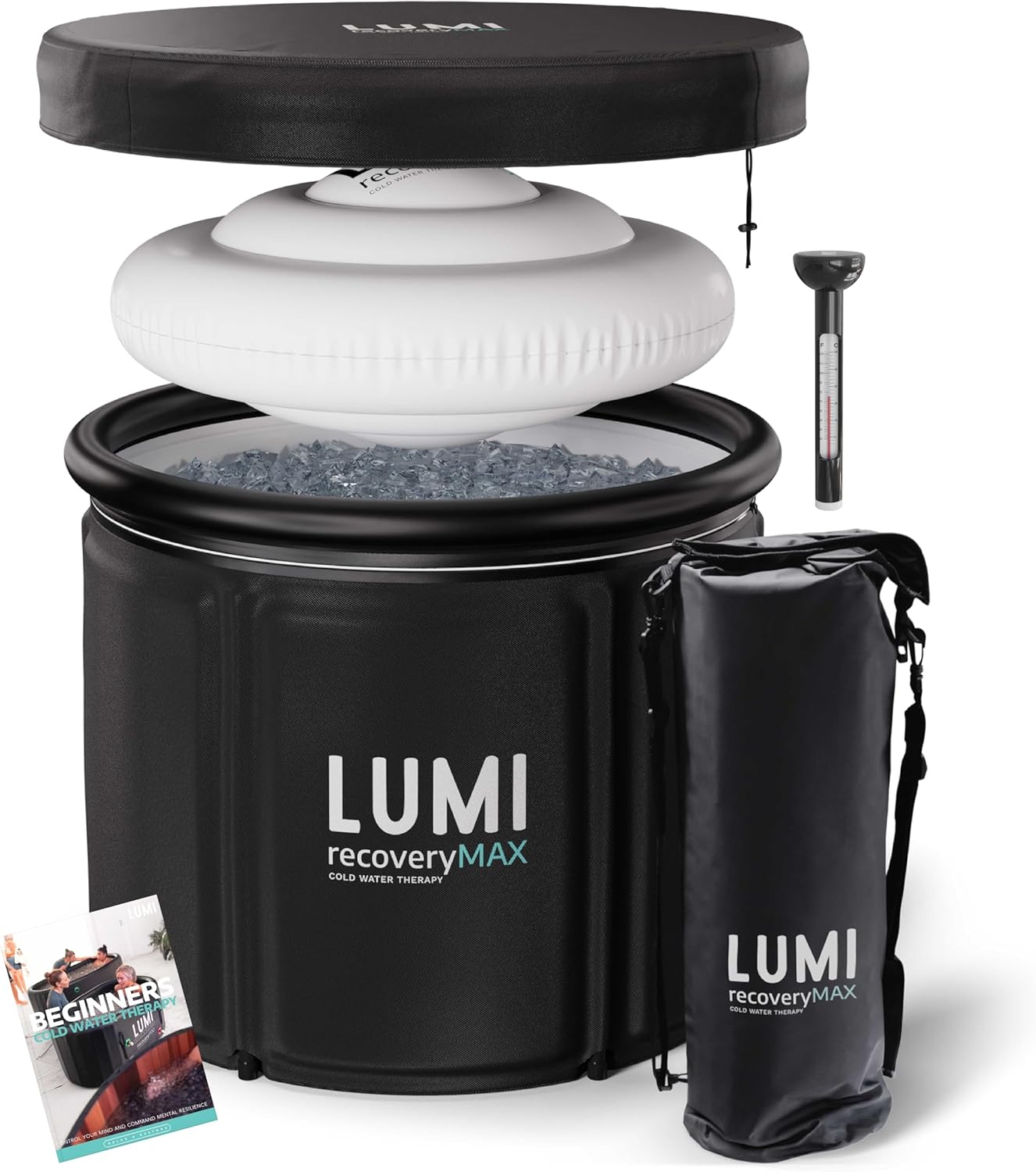
| Model | Reservoir | Best For | Noise Profile | Footprint |
|---|---|---|---|---|
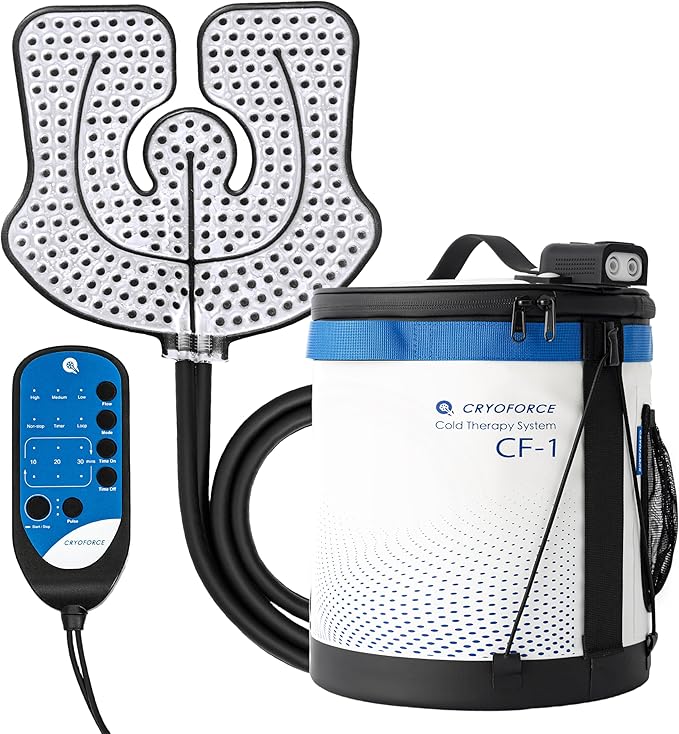
| CF-1 Cold Therapy Machine | ~6 QT | Knee, post-surgery, single joint | Marketed as quiet; small pump, low vibration signature | Compact, counter-friendly |
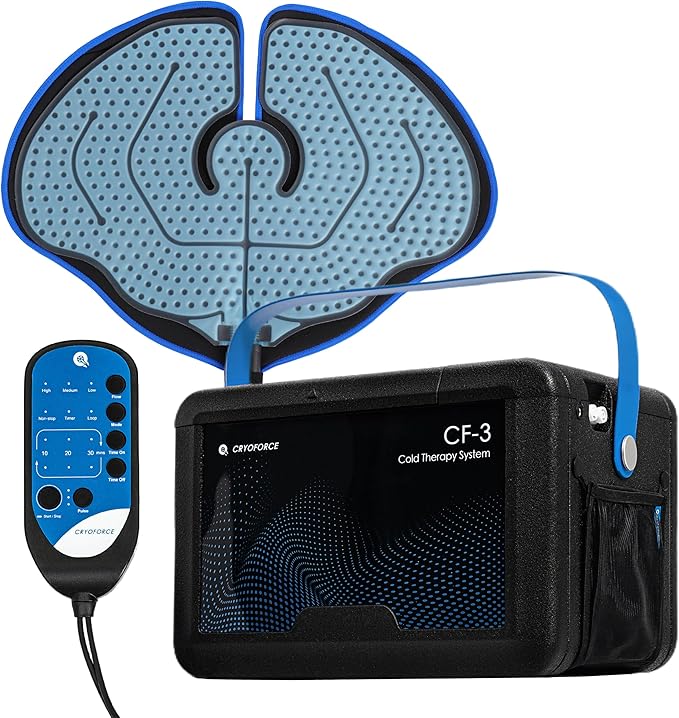
| CF-3 Pro Cold Therapy Machine | 16.8 QT | Knee + shoulder, longer sessions | Larger reservoir means longer duty cycles between pump starts | Medium, floor or low shelf |
CF-1 Cold Therapy Machine for Knee Surgery Recovery, Quiet Ice Therapy System
The CF-1 is the unit I recommend when the entire reason someone is shopping is noise. It uses a small low-RPM circulation pump and a sealed reservoir, so there is no separate chiller cabinet to vibrate against the floor. On a wood-framed second story it is genuinely unnoticeable through the joists at night. The trade-off is capacity — a six-quart reservoir is fine for a knee wrap session but not a full plunge. If you have been waking the household every time your main chiller cycles, this is the cheapest path to a quiet recovery routine. Check current price on Amazon.
CF-3 Pro Cold Therapy Machine, 16.8 QT Large-Capacity Ice Therapy System
If your recovery routine covers multiple joints — say a torn meniscus plus shoulder impingement — the small reservoirs get annoying fast because you are refilling ice every twenty minutes. The CF-3 Pro's 16.8-quart tank gives you 45-60 minute sessions on one fill, and because the pump cycles less frequently, the total felt vibration over an evening is lower than units that run continuously. It is still much quieter than a true plunge chiller because there is no compressor; the cooling is ice-based. Good fit for athletes doing bilateral work. Check current price on Amazon.
Cold Therapy Machine, Portable Ice Machine for Knee with Programmable Timer
The programmable timer model is worth mentioning specifically for overnight users. Being able to set 15-on / 30-off cycles means the pump is silent for the majority of the night and only runs in short bursts, which is exactly the duty pattern that minimizes joist excitation. Pair it with a small foam pad under the unit and most people on a second-floor bedroom never notice it running. Check current price on Amazon.
A Realistic Order of Operations
If you want a fix-it path that does not waste money, do it in this order:
- Pull the inlet strainer, clean it, confirm flow rate is back to spec. Free.
- Replace rigid hose runs with looped flex hose. About $25.
- Build the four-layer isolation stack under the chiller. $80-150 in materials.
- Move the chiller off a joist span and over a load-bearing wall if you have the option.
- If the room below is still affected, consider downsizing to a quiet recovery unit for nighttime sessions and only running the main chiller during the day.
For deeper material specs, see our companion piece on vibration isolation pads for cold plunge installs and the DIY cold plunge soundproofing walkthrough.
Frequently Asked Questions
Will a yoga mat or gym tile work as a chiller anti-vibration pad?
No. Yoga mats and EVA gym tiles are too soft and bottom out under the static weight of a chiller, which means they transmit low-frequency vibration almost as efficiently as bare flooring. You need a stiff, mass-loaded stack — recycled rubber crumb, a paver or sand plate, and a cork-neoprene top layer. Soft foam alone makes the problem feel slightly better while doing almost nothing measurable below the floor.
How do I know if the vibration is coming from the compressor or the circulation pump?
Power-cycle test. Turn the unit on and listen for the first 90 seconds — only the circulation pump runs at startup on most models. If the room hums immediately, your noise is pump-driven and plumbing fixes will help most. If the noise grows louder a minute or two later when the compressor kicks in, you are dealing with a refrigeration-side issue and the isolation stack matters more than hose loops.
Can I just move the chiller to a concrete slab in the garage?
Yes, and this is the single most effective fix if your layout allows it. A concrete slab is roughly 50 times stiffer than a wood-framed floor and effectively absorbs the vibration frequencies a chiller produces. You will need insulated supply and return lines if the run is over about 15 feet, but for many homeowners this is cheaper than building isolation platforms inside.
Does running the chiller on a lower setpoint reduce vibration?
Indirectly, yes. A warmer setpoint (say 50 degrees instead of 39) means the compressor runs less often, so the total vibration exposure for the room below drops even if the per-cycle noise is identical. Several owners with sensitive sleepers use a smart plug to raise the setpoint at night and let the unit catch up during the day.
Are inverter-driven cold plunge chillers quieter than single-speed models?
Generally yes. Inverter compressors ramp smoothly instead of slamming on at full speed, which eliminates the startup thump that most single-speed units produce. They are also more likely to run at low RPM most of the time, which moves the dominant vibration frequency higher where joists are less resonant. If you are replacing an old chiller specifically because of noise, an inverter unit is worth the premium.
Will tightening the cabinet screws on my chiller actually do anything?
Surprisingly often, yes. After 6-12 months of vibration, internal screws on the compressor mount and the side panels work loose, and the panels start acting as resonating surfaces. A 10-minute pass with a Phillips screwdriver and a hex key on the panel and mount fasteners is free and occasionally cuts felt vibration in half. Do this before buying any isolation materials.
Is a self-contained ice-based therapy machine really quieter than a chiller, or is that just marketing?
It is genuinely quieter, but for a specific reason: ice-based units have no refrigeration compressor. The only moving part is a small circulation pump, which produces a fraction of the low-frequency energy a compressor does. The trade-off is that you supply the cooling capacity by adding ice, which limits session length. For overnight or apartment use, the noise difference is dramatic; for daily full-body plunges, you still want a real chiller with proper isolation.
Key Takeaways
- Choosing the right quiet cold plunge chiller pump vibration means matching capacity and output ports to your actual devices
- Always check actual watt-hours (Wh), not just watts — runtime depends on Wh, not peak output
- Also covers: cold plunge floor vibration
- Also covers: chiller pump isolation pads
- Also covers: reduce cold plunge noise
- Compare price-per-Wh across models to find the best value for your budget