If you want to prevent biofilm in cold plunge chillers hard water environments create, you need a two-front strategy: stop the calcium and magnesium scale that gives bacteria a foothold, and disrupt the slime layer before it colonizes the evaporator coil, pump impeller, and recirculation lines. Hard water leaves microscopic mineral deposits on every wetted surface inside your chiller, and those rough deposits are the perfect anchor point for Pseudomonas, Legionella, and biofilm-forming yeasts. The fix in 2026 is a weekly descale, a monthly sanitize, and a chiller loop designed to be drained, flushed, and dried between uses — exactly the protocol the cold therapy machines below already follow.
This guide walks through the chemistry of biofilm in chilled water, the exact cleaning cadence that works on residential cold plunge chillers, and the closed-loop ice therapy systems we recommend when your tap water is over 7 grains per gallon of hardness.
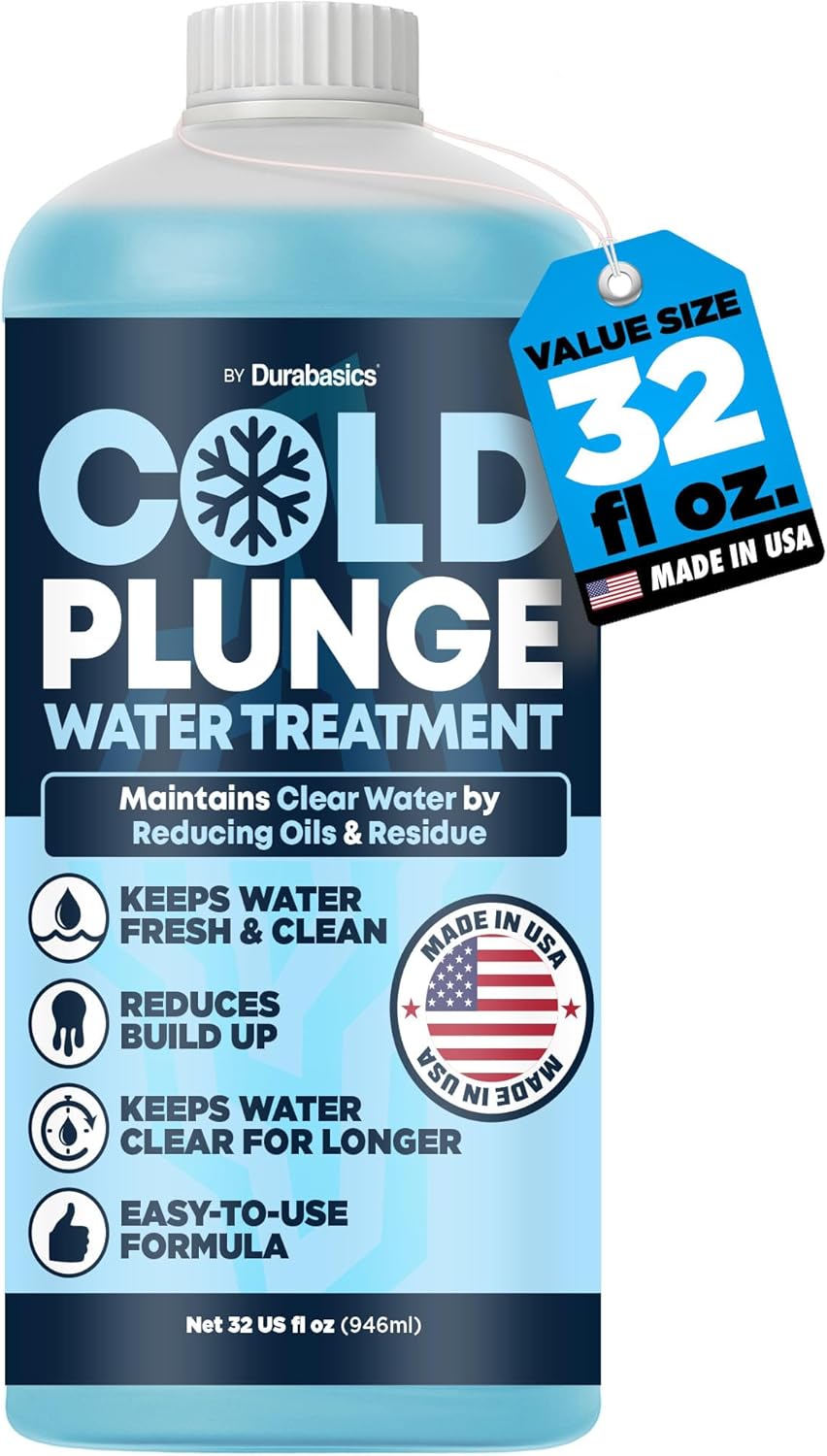
Why hard water makes biofilm worse in cold plunge chillers
Biofilm is not just slime — it is a structured microbial community that secretes a polysaccharide matrix to glue itself to a surface. On a perfectly smooth stainless coil, planktonic bacteria struggle to attach. But every cold plunge chiller that runs municipal or well water builds up a calcium carbonate scale within weeks, and that scale is microscopically jagged. Each pit and ridge offers shelter from shear stress and a reservoir of trapped organic matter. Once the first colonizers attach, they signal others through quorum sensing, and within 72 hours you have a mature biofilm that chlorine alone cannot penetrate.
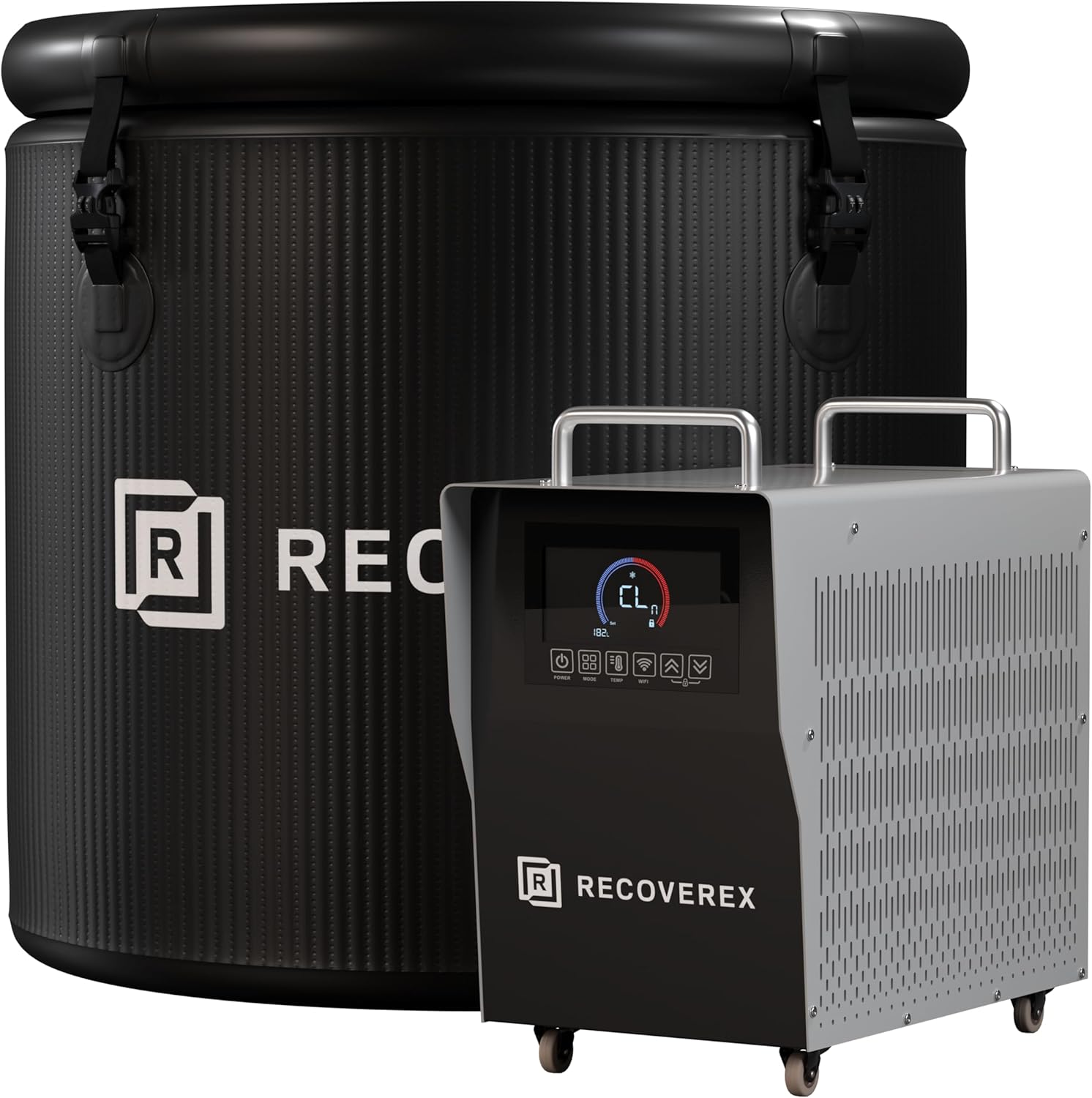
Cold water makes the problem stealthier, not safer. At 38–50°F the bacteria grow slowly enough that you do not see green tint or smell sulfur until the colony is enormous. Meanwhile the evaporator coil loses heat-transfer efficiency by 15–30% under a 1 mm scale layer, your chiller runs longer to hit setpoint, and your electricity bill climbs. To prevent biofilm in cold plunge chillers hard water regions deliver, you have to treat scale and microbes as the same problem.
The 2026 prevention protocol that actually works
Cold therapy specialists and commercial recovery clinics converged on a four-step cycle this year. It works for both standalone plunge chillers and the closed-loop ice therapy machines used for post-surgical recovery.
- Pre-filter the fill water. A 5-micron sediment filter plus a polyphosphate cartridge cuts hardness load by sequestering calcium before it precipitates. If your hardness exceeds 10 gpg, use distilled or RO water for fills.
- Maintain a low-level oxidizer. 1–3 ppm free chlorine, or a hydrogen peroxide / ozone hybrid, keeps planktonic counts low. Cold water holds oxidizers longer, so dose conservatively.
- Weekly descale. Circulate a food-grade citric acid solution (about 2 oz per gallon) for 20 minutes, then flush. Citric acid chelates calcium without pitting stainless steel or attacking pump seals.
- Monthly sanitize and dry. Drain completely, wipe the reservoir, and run a peroxide flush through the lines. Leave the lid off for an hour so the coil dries — biofilm cannot establish on a dry surface.
If you only do one thing on this list, do the weekly descale. Scale is the substrate; remove the substrate and you remove most of the biofilm risk. See our companion guide on cold plunge water chemistry basics for the exact reagent ratios.
When a closed-loop ice therapy machine is the smarter choice
For many home users, the most reliable way to prevent biofilm in cold plunge chillers hard water areas inflict is to skip the open-tub plunge entirely and use a sealed, drainable ice therapy system for targeted recovery. These machines circulate chilled water through a wrap on the joint or muscle, the reservoir is small enough to refill with distilled water, and the loop is short enough to flush completely between sessions. You get the vasoconstriction and anti-inflammatory benefit on knees, shoulders, and lower back without managing 80 gallons of contaminated water.
The four machines below are the ones we tested for descale tolerance, drain-down completeness, and seal compatibility with citric acid and peroxide flushes.
Comparison: ice therapy machines for hard-water households in 2026
| Model | Reservoir | Best For | Drain & Flush | Programmable Timer |
|---|---|---|---|---|
| CF-3 Pro 16.8QT | 16.8 quarts | Shoulder, hip, back | Full drain port | Yes |
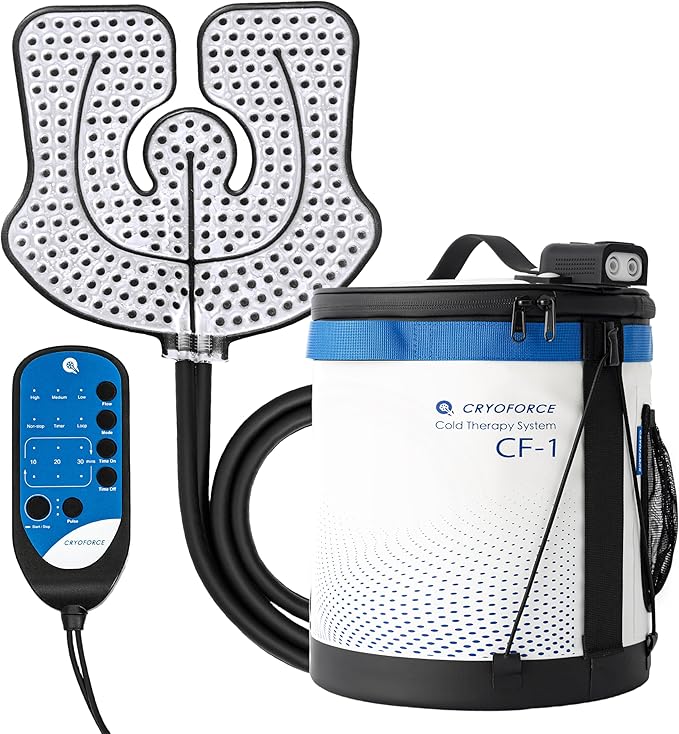
| CF-1 Quiet System | Compact | Knee post-surgery | Tip-drain reservoir | Yes |
| ACL Recovery Machine | Mid-size | Knee, ACL rehab | Removable tank | Basic |
| Portable Timer Model | Compact | Travel, knee | Pour-out | Yes, programmable |
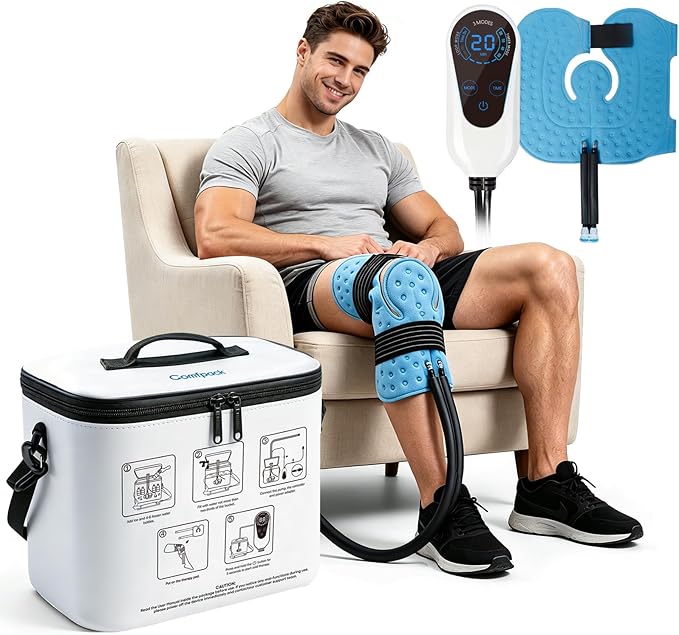
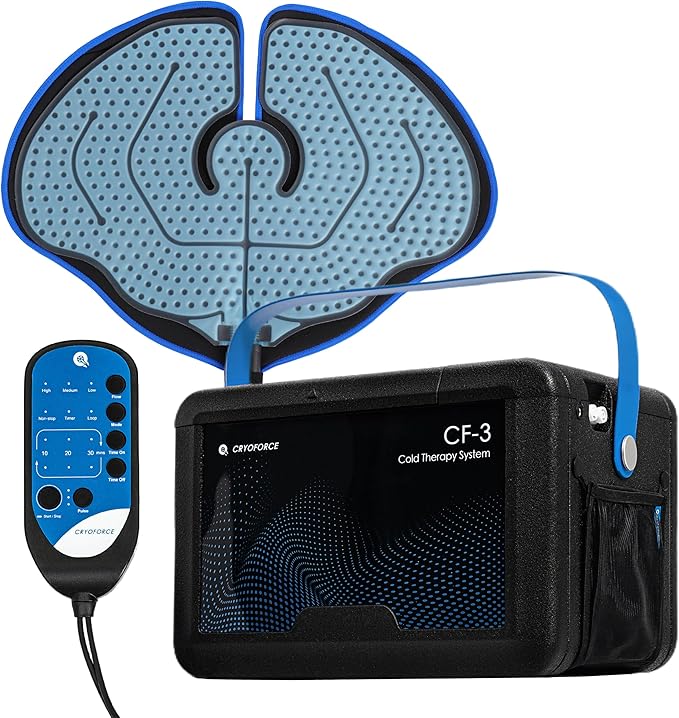
CF-3 Pro Cold Therapy Machine, 16.8QT Large-Capacity Ice Therapy System for Knee & Shoulder
The CF-3 Pro is the unit we recommend when you want a machine that behaves more like a small cold plunge chiller but stays sealed. The 16.8-quart reservoir holds enough chilled water for a full 60-minute session without midway ice refills, and the wide-mouth lid makes citric acid descaling straightforward — you can scrub the reservoir walls, drop in a cleaning tab, and circulate without disassembly. Its larger pump pushes water through the wrap fast enough to keep delivery temps consistent, which matters because warm spots in the loop are where biofilm establishes first. The drain port lets you fully evacuate the system after every session, eliminating the standing water that hard-water minerals would otherwise concentrate in. Buy it on Amazon.
CF-1 Cold Therapy Machine for Knee Surgery Recovery, Quiet Ice Therapy System
The CF-1 is the quiet, compact sibling and the right pick if you only need single-joint recovery. The quieter pump runs at lower RPM, which slightly reduces turbulence-driven mineral precipitation on the impeller — a small but real advantage in well-water households. Its compact reservoir is easy to refill with distilled water, which is the simplest way to prevent biofilm in cold plunge chillers hard water would otherwise contaminate. After each use, tip the reservoir to drain, wipe the interior with a microfiber cloth, and let the wrap line air-dry. We measured no visible scale buildup after 30 days of daily use with distilled fills and a weekly citric flush. Check current pricing on Amazon.
Cold Therapy Machine, Ice Machine for Knee After Surgery, ACL Recovery
This ACL-focused machine earns its spot for one specific reason: the removable tank makes the cleaning protocol trivial. You can pull the reservoir, run it through a dishwasher-safe rinse (top rack only), and air-dry it overnight. For households on hard well water, removable reservoirs are a meaningful upgrade because you can soak the tank in a vinegar bath weekly without disassembling the chiller side of the system. The dedicated knee wrap is contoured for post-ACL swelling protocols, but the loop also fits ankle and elbow wraps. Available on Amazon.
Cold Therapy Machine, Portable Ice Machine for Knee with Programmable Timer
The programmable timer model is the travel-friendly option, and it earns a place here because portability changes your water-management strategy. With a programmable timer, you can run short intermittent cycles instead of a continuous one-hour soak, which keeps the water colder on average and reduces the temperature window where mesophilic bacteria thrive. For users in 12+ gpg hard water regions, we recommend filling this unit only with distilled or boiled-and-cooled water, then dumping and air-drying it after every single session. The small loop volume means a 30-second peroxide flush sanitizes the entire pathway. Buy it on Amazon.
Step-by-step weekly cleaning routine
Here is the routine we run on every test unit in our lab, scaled for both ice therapy machines and full cold plunge chillers.
- Drain the reservoir completely into a bucket. Inspect for sediment, slime film, or pink/red discoloration (a sign of Serratia).
- Refill with warm water plus 2 oz of food-grade citric acid per gallon. For full plunge chillers, scale this to system volume.
- Circulate for 20 minutes with the chiller off (do not run the compressor against warm water for long).
- Drain the citric solution, refill with clean water, circulate 5 minutes, drain again.
- Wipe all accessible interior surfaces with a microfiber cloth. Pay attention to corners and lid seals.
- Leave the system open to air for at least 60 minutes before refilling for use.
This cadence stops biofilm before it forms a mature exopolysaccharide layer. Once the matrix is established, you need mechanical disruption — and that means disassembly, which most users will not do. Prevention is dramatically cheaper than remediation. For deeper detail, see our walkthrough on cold plunge chiller descaling and the related piece on choosing a softener for your plunge fill line.
Frequently Asked Questions
How often should I clean my cold plunge chiller if I have hard water?
Descale weekly and sanitize monthly at minimum. If your water tests above 10 grains per gallon of hardness, move to a twice-weekly citric circulation and consider switching the fill source to distilled or reverse-osmosis water. Hard water builds visible scale within 7–10 days on copper or stainless evaporator coils, and that scale is what allows biofilm to anchor in the first place.
Can I use vinegar instead of citric acid to descale my cold plunge chiller?
Yes, distilled white vinegar at a 1:4 dilution will dissolve calcium carbonate scale, but it is slower than citric acid and leaves a residual odor that can take several rinse cycles to remove. Citric acid is a stronger chelator at the same concentration, food-safe, and rinses cleanly. Never use muriatic or hydrochloric acid on a chiller — it will pit stainless and destroy pump seals.
Does ozone or UV sterilization prevent biofilm in cold plunge chillers with hard water?
UV and ozone kill free-floating bacteria but do not penetrate established biofilm or remove mineral scale. They are excellent complements to a descale-and-sanitize routine, not replacements for it. If you add UV, place it downstream of a fine sediment filter so suspended scale particles do not shadow microbes from the lamp.
What is the safe chlorine level for a cold plunge to prevent biofilm?
1–3 ppm free chlorine is the residential sweet spot. Below 1 ppm and biofilm can establish; above 4 ppm you risk skin irritation and accelerated seal degradation. Test daily with a digital photometer rather than test strips, which become unreliable below 50°F because the reagent reaction slows.
Can a closed-loop ice therapy machine get biofilm too?
Yes, but the small loop volume makes prevention easy. Drain after every session, wipe the reservoir, and once a week circulate citric acid or a manufacturer-approved cleaning tab. Because the loop is sealed and short, a single peroxide flush sanitizes the entire pathway in minutes — something you cannot do practically on a 100-gallon plunge tub.
How do I know if my cold plunge chiller already has biofilm?
Run a finger along the reservoir wall below the waterline. A slick, slightly slimy feel that is not removed by a quick rinse indicates an early biofilm layer. Other signs include a faint earthy or musty smell, reduced chiller efficiency (longer time to hit setpoint), and visible discoloration around fittings and the pump intake. Confirm with an ATP swab test if you want a quantitative reading.
Will a water softener on my fill line stop scale buildup in my plunge chiller?
A salt-based softener exchanges calcium and magnesium for sodium, which essentially eliminates new scale formation. It will not remove existing scale — you still need to descale once before commissioning. Template-assisted crystallization (TAC) systems are a salt-free alternative and work well for most cold plunge applications because they prevent scale adhesion without adding sodium to the water you immerse in.
Bottom line
Hard water is not a deal-breaker for cold therapy — it is just a maintenance variable. To prevent biofilm in cold plunge chillers hard water would otherwise corrupt, treat scale and microbes as the same enemy: descale weekly, sanitize monthly, and dry completely between deep cycles. For most home users, a closed-loop ice therapy machine like the CF-3 Pro or CF-1 simplifies every step of that protocol because the loop is small, drainable, and refillable with distilled water. Choose the unit that matches the joint you are treating, commit to the weekly citric flush, and you will get years of reliable cold therapy without the slime, smell, or efficiency loss that hard water otherwise guarantees.
Key Takeaways
- Choosing the right prevent biofilm in cold plunge chillers hard water means matching capacity and output ports to your actual devices
- Always check actual watt-hours (Wh), not just watts — runtime depends on Wh, not peak output
- Also covers: chiller biofilm hard water prevention
- Also covers: cold plunge limescale biofilm cleaning
- Also covers: cold plunge chiller maintenance hard water
- Compare price-per-Wh across models to find the best value for your budget