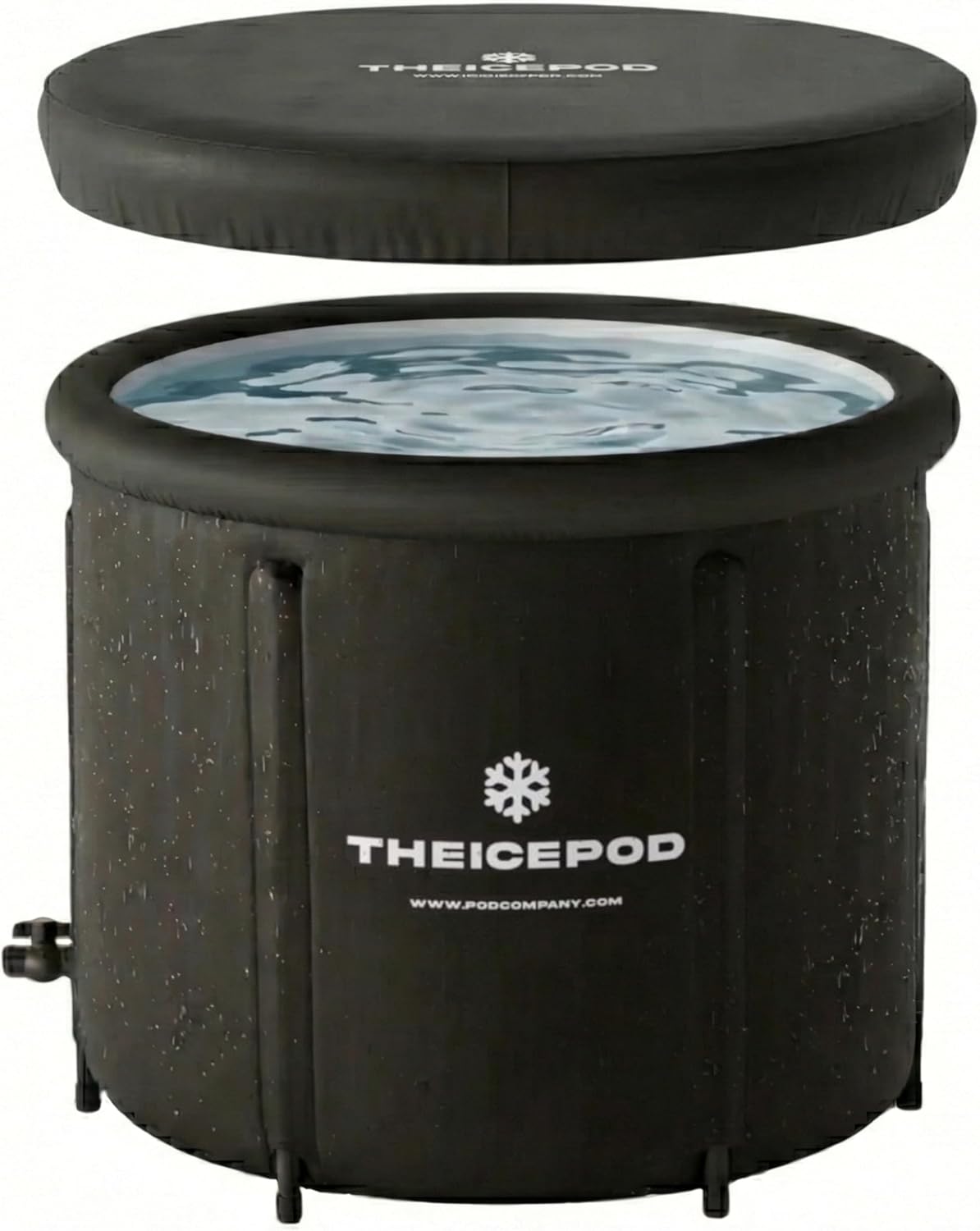
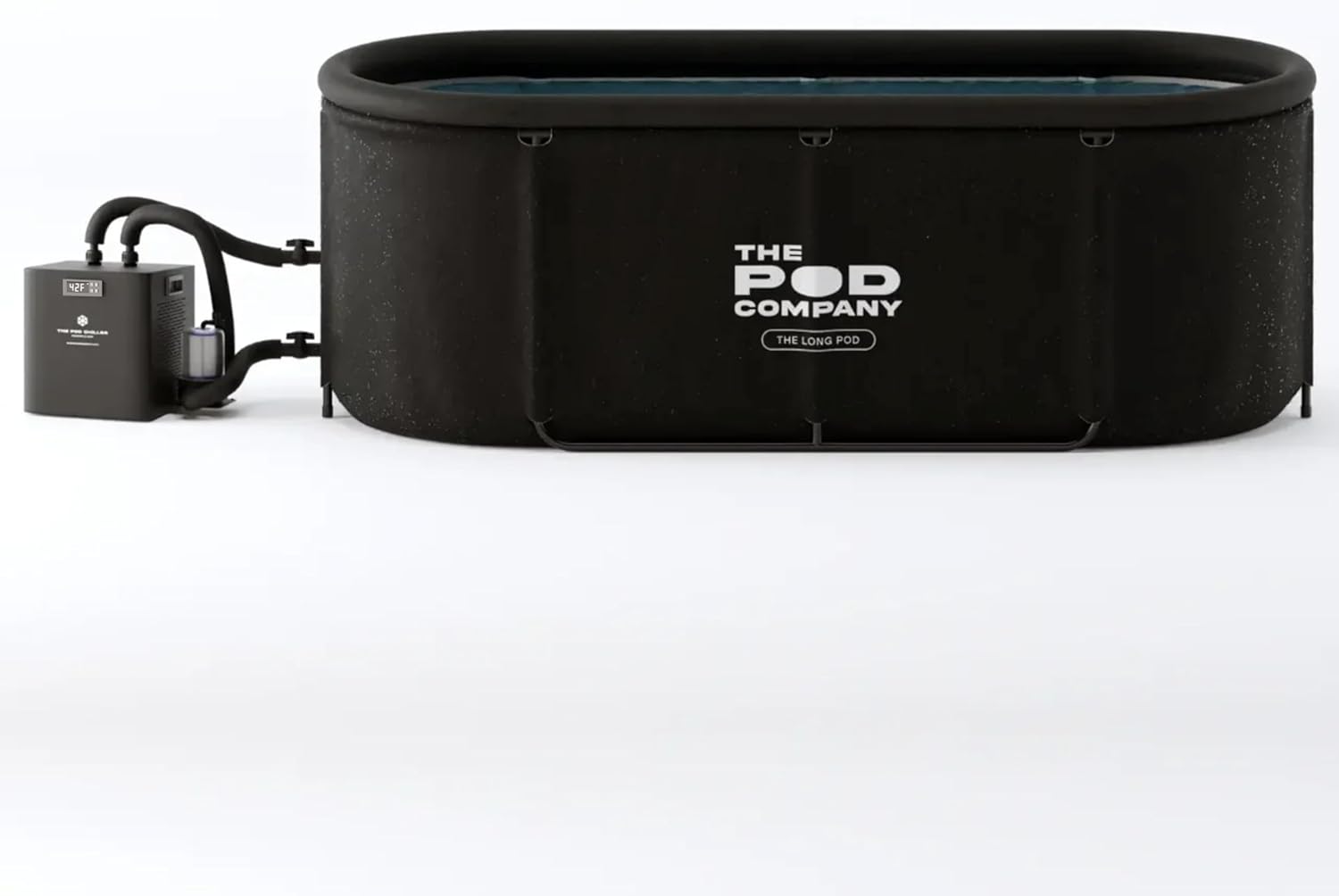
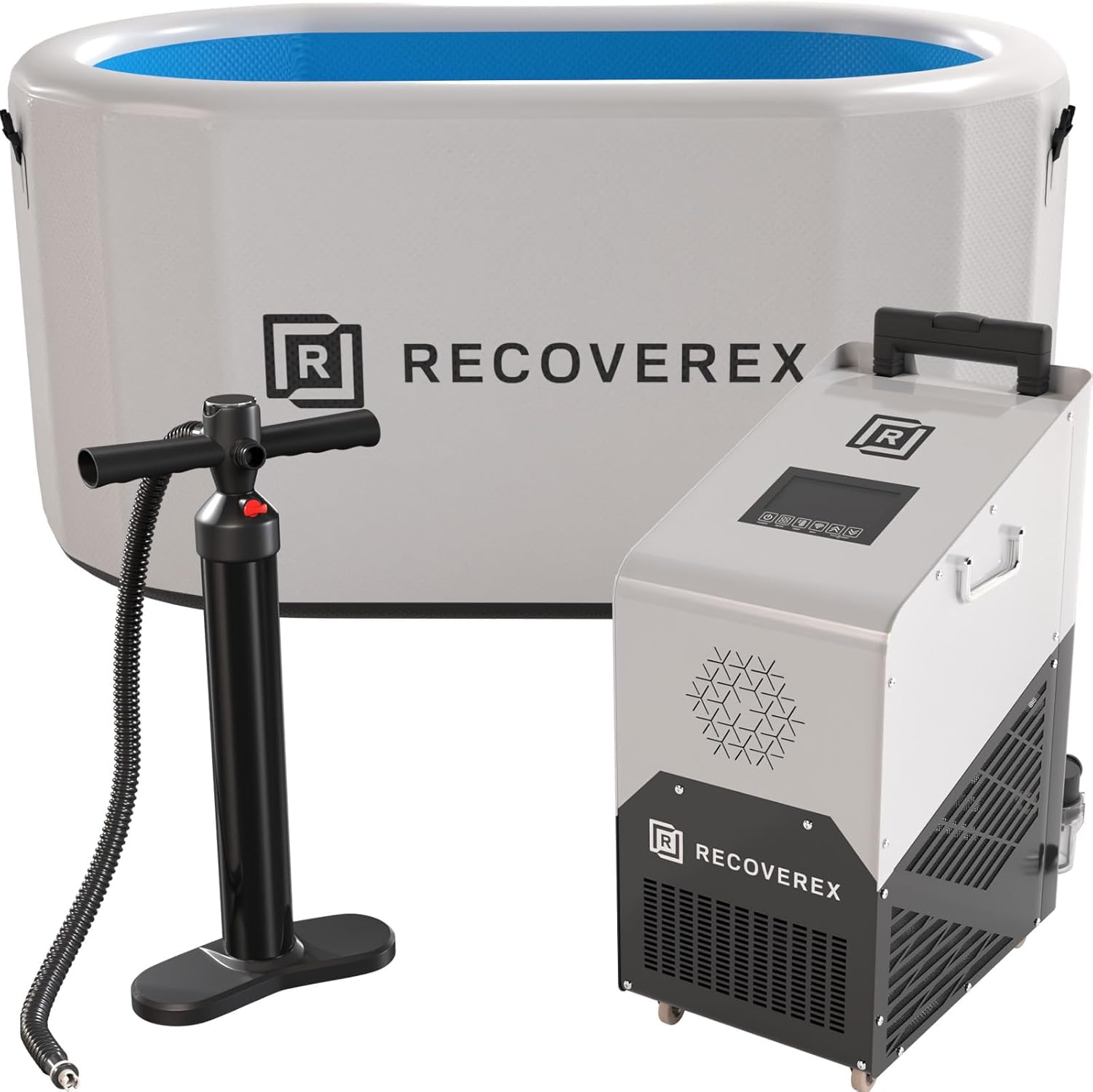
Balancing cold plunge ozone UV water chemistry means coordinating three things at once: a low-residual oxidizer (ozone), a kill-on-contact light source (UV-C), and the background water parameters (pH, total alkalinity, calcium hardness, ORP) that let both technologies actually work. Done right, you keep biofilm, algae, and bather waste under control without dumping heavy chlorine into 38°F water that you sit in three or four times a week. Done wrong, you end up with cloudy water, scaled heat exchangers, or a sanitizer system that reads “active” but is doing almost nothing because the pH drifted to 8.4. This guide walks through targets, dosing logic, testing cadence, and a few cold therapy tools worth pairing with a sanitized tub.
Why ozone and UV need help from water chemistry
Ozone (O₃) and UV-C are both supplemental sanitizers in the cold plunge world. Ozone oxidizes organics on contact but off-gases within seconds and leaves almost no residual. UV-C destroys microbes only as water passes through the lamp chamber. Neither one protects the bulk of standing water between sessions. That is why nearly every cold plunge manufacturer still asks you to maintain a small residual sanitizer (usually 0.5–1.0 ppm chlorine or a non-chlorine alternative) plus balanced pH and alkalinity. The ozone/UV combination simply lets you run that residual at the low end of the range.
Cold water complicates things further. At 39–50°F, chemical reactions slow dramatically. Chlorine demand drops, but so does the speed at which ozone breaks down contaminants. Test strips designed for hot tubs can read inaccurately on cold samples, and pH probes need temperature compensation. If you are migrating from a hot tub mindset, expect your dosing intervals to stretch — but expect biofilm to creep in faster around the waterline and jets, because oils and dead skin don’t dissolve well in cold water.
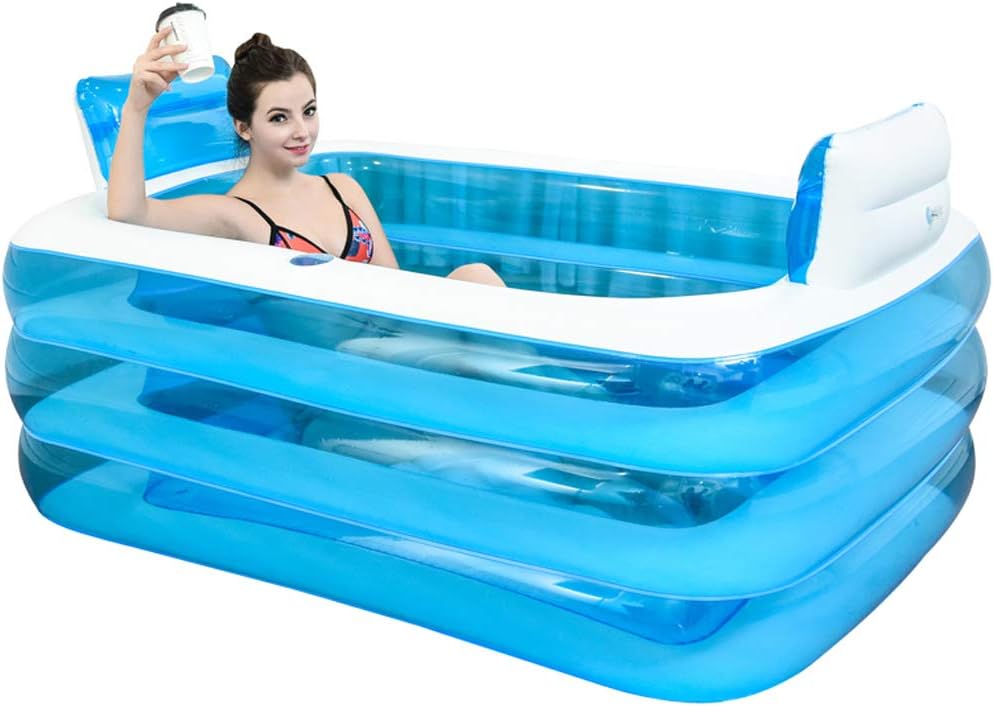
Target ranges for a cold plunge with ozone + UV
Here is the working window most cold plunge builders converge on for 2026 hardware that combines ozone injection with an inline UV-C chamber:
- pH: 7.2–7.6. Below 7.2 corrodes stainless and chiller coils; above 7.6 cripples chlorine’s killing power and lets scale form on the UV sleeve.
- Total alkalinity: 80–120 ppm. This is your pH buffer — without it, pH bounces every time ozone hits the water.
- Calcium hardness: 150–250 ppm. Too low and the water leaches calcium from concrete or scale on heater elements; too high and your UV quartz sleeve fogs in weeks.
- Free chlorine (residual): 0.5–1.0 ppm. With ozone + UV doing the heavy lifting, you stay at the bottom of the range.
- ORP (oxidation reduction potential): 650–750 mV. This is the single best real-time measure that your stack is actually sanitizing.
- Cyanuric acid (stabilizer): 0–20 ppm. Indoor tubs need none; outdoor tubs benefit from a small amount.
How ozone, UV, and a residual sanitizer divide the work
Think of it as a three-shift kill chain. Ozone runs on a schedule (typically 15–30 minutes per hour while the pump cycles) and oxidizes organics, sweat, and skin oils on contact. UV-C runs whenever the pump runs and inactivates bacteria, viruses, and protozoa as water flows past the lamp. The residual — chlorine, bromine, or a mineral system — provides the “between sessions” protection in the bulk water that ozone and UV cannot reach.
Getting the cold plunge ozone UV water chemistry balance right means letting each shift do its job. If you over-chlorinate, you wear out your UV lamp and ozone generator faster (and irritate your skin). If you under-chlorinate, every shock dose has to do triple duty. The sweet spot is a stable 0.5 ppm residual, ORP above 650 mV, and weekly verification with drop tests rather than just strips.
Dosing logic in plain language
Most home cold plunges hold between 80 and 130 gallons. A typical balancing routine looks like this:
- Test first, dose second. Always check pH and alkalinity before adding sanitizer. Adjusting pH after dosing chlorine wastes the chlorine.
- Raise alkalinity before pH. Sodium bicarbonate (baking soda) raises TA with minimal pH movement. Get TA to 80–120 first.
- Nudge pH gently. Use sodium bisulfate (dry acid) to lower or soda ash to raise. Add at the return jet, with circulation running, in halves of the calculated dose — retest after 30 minutes.
- Maintain residual. If you use dichlor or a chlorine concentrate, add a pinch (typically 1/4 teaspoon per 100 gallons) two to three times per week, not after every plunge.
- Let ozone and UV do the daily oxidation. Confirm the ozone bubbler is producing fine white mist when the cycle runs; confirm UV lamp indicator is green and that quartz sleeves are wiped clean monthly.
Comparison: cold therapy machines that pair with a sanitized plunge
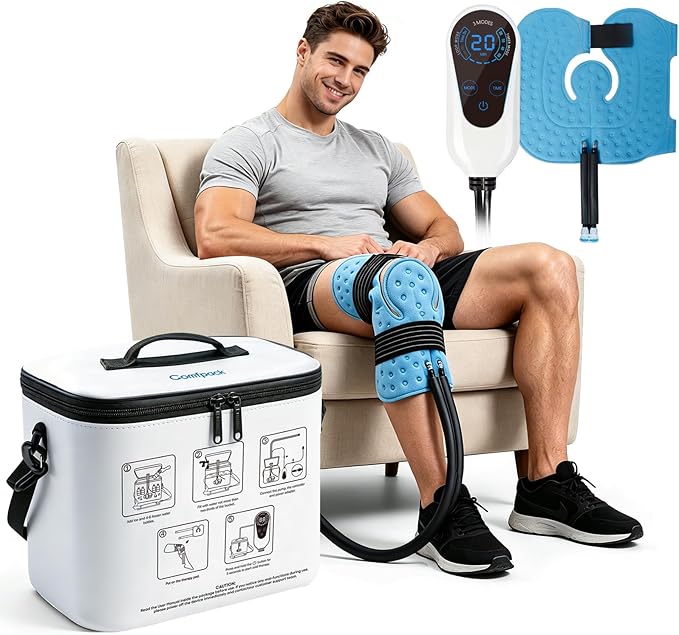
While the article focuses on plunge water chemistry, many readers also keep a localized cold therapy machine for joint-specific recovery between plunges. Here is how three commonly cross-shopped options compare:
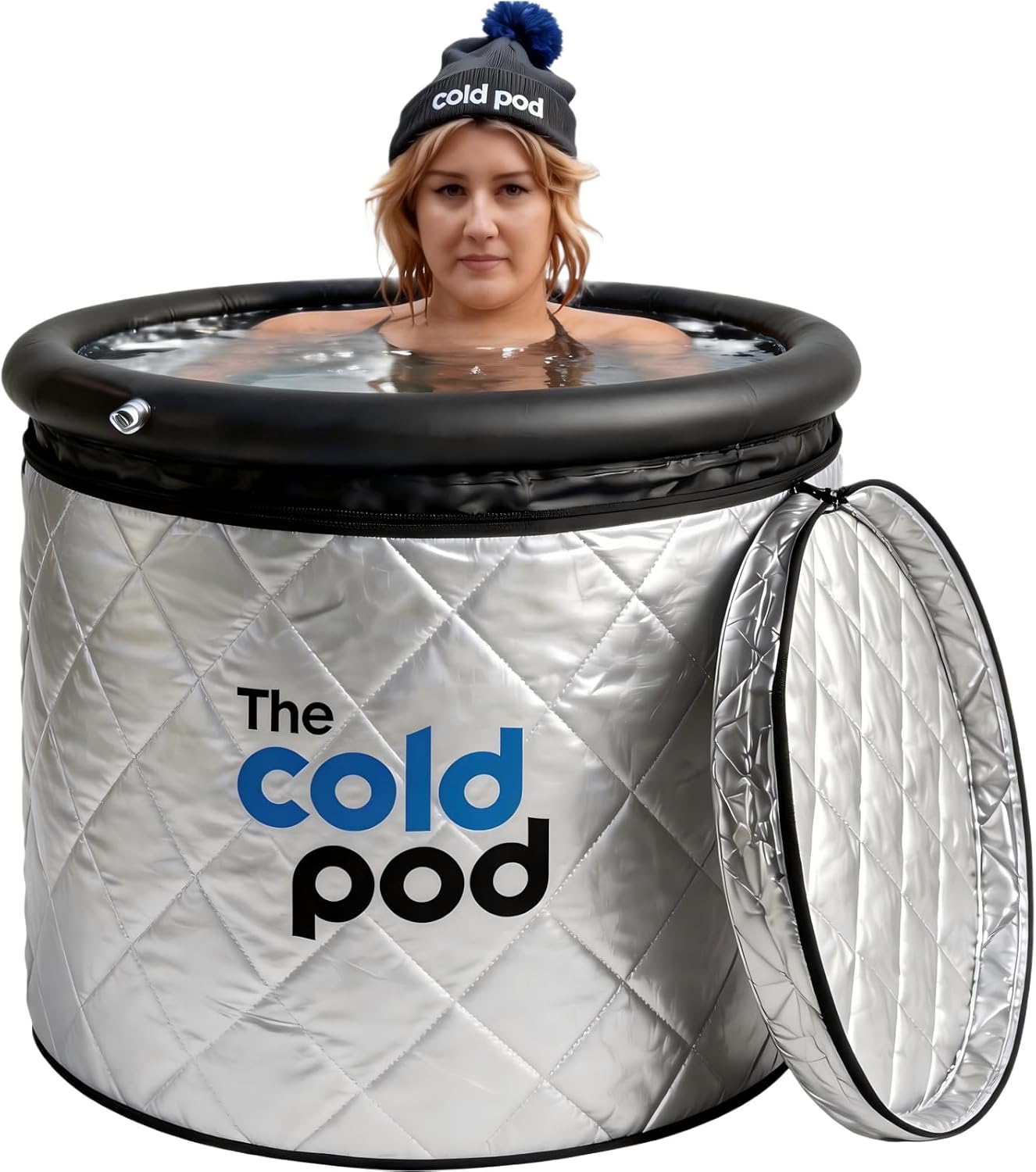
| Model | Reservoir | Best Use | Noise Profile | Programmable Timer |
|---|---|---|---|---|
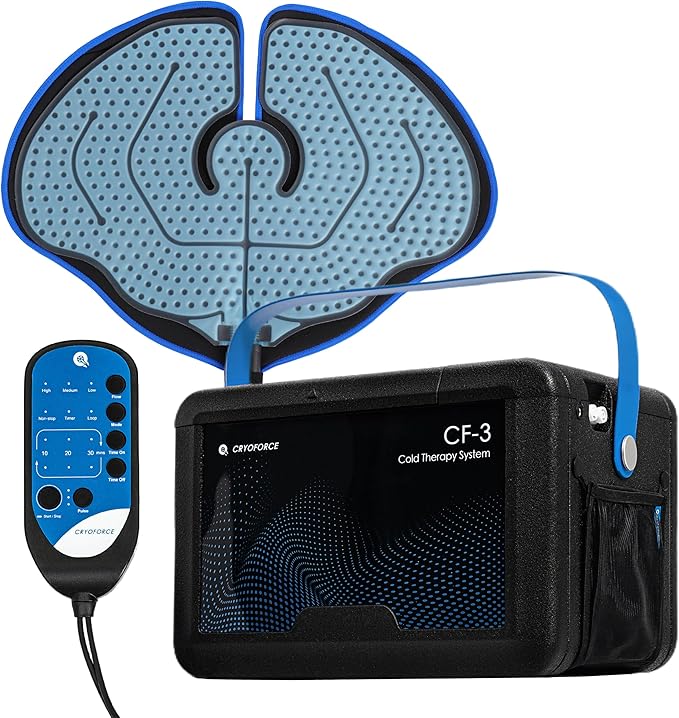
| CF-3 Pro 16.8QT | 16.8 qt (large) | Shoulder, hip, knee post-op — long sessions without refills | Moderate | Yes |
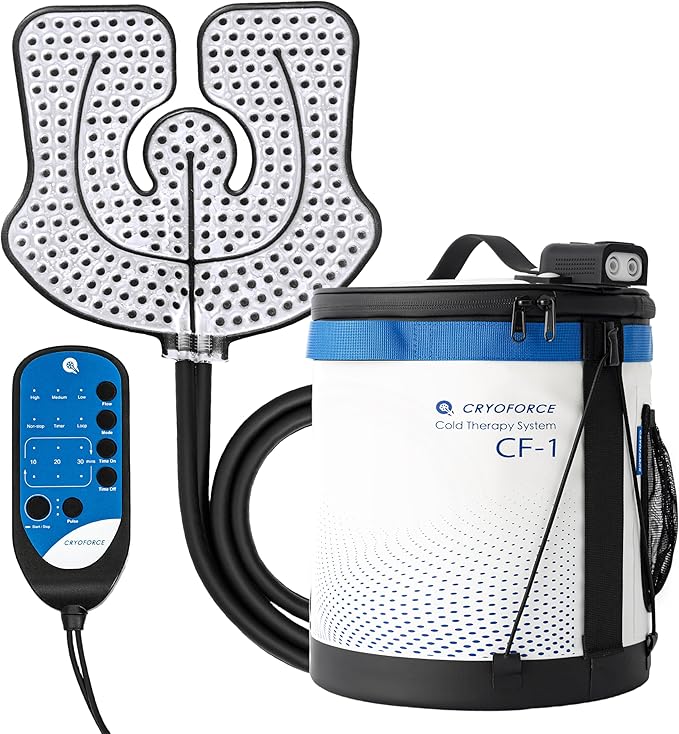
| CF-1 Quiet System | Standard | Knee surgery recovery, bedside overnight use | Quiet (sleep-friendly) | Yes |
| Portable Ice Machine with Timer | Standard | Travel, ACL rehab, daytime icing | Moderate | Yes (programmable) |
CF-3 Pro 16.8QT Cold Therapy Machine
The CF-3 Pro is the unit to consider if you want a large reservoir that can run a 30-to-45-minute icing session on a knee or shoulder without you getting up to add more ice water. The 16.8-quart tank also means the water temperature drifts less during a session, which matters for athletes chasing consistent contrast protocols. See current pricing at CF-3 Pro Cold Therapy Machine, 16.8QT Large-Capacity Ice The.
CF-1 Quiet Cold Therapy Machine
If you are recovering from knee surgery and need to run cold therapy overnight or during early sleep, the CF-1 emphasizes a quieter pump cycle. That trade-off — quieter motor for a slightly smaller reservoir — tends to be the right call for bedside use, where pump noise wakes you up more than the cold does. Check the current listing at CF-1 Cold Therapy Machine for Knee Surgery Recovery, Quiet I.
Portable Ice Machine with Programmable Timer
The programmable timer on this portable unit is the differentiator: you can set on/off intervals (for example, 20 minutes on, 10 off) which is the cadence most physical therapists actually prescribe for ACL and rotator cuff rehab. It is the lightest of the three for travel. Available at Cold Therapy Machine, Portable Ice Machine for Knee After Su.
ACL Recovery Cold Therapy Machine
For users specifically post-ACL or post-meniscus, a dedicated knee-focused cold therapy machine simplifies pad placement and keeps the cuff close to the joint line where swelling concentrates. Review the current model at Cold Therapy Machine Ice Machine for Knee After Surgery, Ice.
Common mistakes that break the ozone/UV balance
Three failure modes show up over and over:
- Letting pH drift to 7.8–8.2. At that range, free chlorine is mostly inert hypochlorite ion, and calcium starts precipitating onto your UV quartz sleeve. Output looks normal; actual kill rate collapses.
- Skipping calcium hardness. Many cold plunge owners fill with RO or softened water and never add calcium. Soft water etches stainless and pulls calcium out of concrete shells.
- Ignoring ozone contact time. If your ozone is injected too close to the return jet, it off-gasses before reacting. A proper system has a degas chamber or mixing loop. If yours doesn’t, run shorter, more frequent cycles.
Pair these with a weekly waterline wipe using a non-foaming enzyme cleaner, and you will dramatically extend bulb life on your UV lamp and cell life on your ozone generator. For more on session protocols, see our companion guide on contrast therapy with cold plunge and sauna, and for filtration upgrades read choosing a cold plunge filter cartridge.
Testing cadence and tools
For 2026, the cleanest setup is a digital ORP/pH meter checked twice a week, backed up monthly by a DPD drop test for free chlorine and a titration test for alkalinity and calcium hardness. Strips alone drift in cold water and degrade fast in humid bath houses. ORP above 650 mV with pH between 7.3 and 7.5 means your cold plunge ozone UV water chemistry stack is working — even if the strip color looks faint, the water is sanitized.
Track the readings. A simple notebook (or a notes app) recording pH, ORP, and free chlorine after each adjustment will reveal patterns — for example, that your pH always climbs 0.2 after heavy use days, or that ORP dips on Mondays because the ozone cycle reset overnight. Patterns are what let you stop reacting and start predicting.
When to drain and refill
Even a well-balanced ozone/UV plunge accumulates total dissolved solids (TDS) over time. As TDS climbs above 1500 ppm, water gets harder to balance and starts feeling “heavy.” Most cold plunge manufacturers recommend draining every 3–6 months for residential use, more often for households with multiple daily users. Right before a drain is the perfect time to descale the UV quartz sleeve with a diluted citric acid soak and inspect the ozone check valve for cracks. For broader maintenance ideas, see our cold plunge maintenance schedule.
Frequently Asked Questions
Can I run a cold plunge with ozone and UV only, no chlorine at all?
Technically yes, practically no. Ozone and UV provide no residual protection between sessions. Without at least a minimal sanitizer residual (0.3–0.5 ppm chlorine, a mineral cartridge, or a non-chlorine shock weekly), biofilm forms in plumbing within days. The safest no-chlorine routes use a copper/silver mineral system combined with weekly potassium monopersulfate shock.
Does ozone raise or lower pH in a cold plunge?
Ozone itself is pH-neutral, but its byproducts (mostly oxygen and trace hydroxyl radicals) can nudge pH slightly upward over time, especially in soft water. Expect to add small amounts of dry acid weekly to keep pH in the 7.2–7.6 range. Monitor alkalinity first — if TA is below 80 ppm, pH will swing wildly regardless of how much ozone you generate.
How do I know if my UV lamp is still working?
Most UV-C cold plunge lamps include a sensor or hour counter. Lamps typically last 9,000–12,000 hours (roughly 12–16 months of continuous use). If your ORP starts trending downward despite normal chlorine levels, suspect the lamp first. A fogged or filmed quartz sleeve can cut UV output by 50% without any visible warning — clean it monthly with a soft cloth and diluted vinegar.
What ORP reading tells me the water is safe?
The World Health Organization references 650 mV as the threshold at which most pathogens are inactivated within seconds. For cold plunge use, 700–750 mV is a comfortable working range. Below 600 mV, sanitation is slow; above 800 mV, you likely have too much chlorine and will get skin irritation.
Will hard water damage my ozone or UV system?
Yes — calcium and magnesium precipitate onto the UV quartz sleeve and inside the ozone venturi, reducing efficiency. If your fill water is above 250 ppm hardness, consider a pre-filter or partial dilution with RO water. Avoid using fully softened water (sodium-exchange), which is too aggressive and corrodes metal components.
How often should I shock a cold plunge that has ozone and UV?
Weekly with non-chlorine shock (potassium monopersulfate) for normal home use; twice weekly if more than two adults use the tub daily. Even with ozone running, organics build up faster than ozone can fully oxidize them, especially around the waterline where ozone never reaches.
Can I use the same chemistry kit as my hot tub?
The chemicals are the same (sodium bicarbonate, dry acid, dichlor, calcium chloride), but the dosing scale is different because cold plunges hold less water and have far lower chlorine demand. Use 1/3 to 1/4 of a hot tub dose as a starting point, test, then adjust. Never use trichlor pucks — they over-stabilize cold water quickly and crash the pH.
Key Takeaways
- Choosing the right cold plunge ozone UV water chemistry means matching capacity and output ports to your actual devices
- Always check actual watt-hours (Wh), not just watts — runtime depends on Wh, not peak output
- Also covers: ozone ice bath sanitation
- Also covers: UV sterilizer cold plunge install
- Also covers: ORP cold plunge testing
- Compare price-per-Wh across models to find the best value for your budget