If you rent your home, finding a cold plunge for renters no drilling no plumbing setup is the single biggest hurdle between you and a daily ice bath habit. Landlords rarely permit cutting into walls for a chiller line, drilling deck boards for drainage, or running a dedicated 20-amp circuit. The good news in 2026: the market has finally caught up with apartment dwellers. You can now get genuine 37°F–55°F cold immersion using freestanding, fill-and-drain tubs, plug-in chillers that sit beside the tub, and ice-only inflatables that need nothing more than a garden hose or bathtub fill. Below are the renter-friendly formats that actually work, plus a few portable cold-therapy machines that handle localized recovery when a full plunge is impractical.
What "renter-friendly" actually means for a cold plunge
Three constraints define a true cold plunge for renters no drilling no plumbing setup:
- No permanent modifications. Nothing screwed into joists, no holes in tile, no hardwired electrical.
- Standard 110V outlet only. Chillers must run on a normal household plug, ideally under 12 amps so they share a circuit safely.
- Manual fill and drain. Water goes in with a hose or bucket and out via a gravity-fed hose to a tub, toilet, balcony drain, or yard.
That rules out most built-in chiller-tub combinations marketed to homeowners, but it opens the door to four formats that work beautifully in apartments, condos, townhomes, and rentals with a balcony or small patio.
The four renter-friendly cold plunge formats in 2026
1. Inflatable ice-only barrels
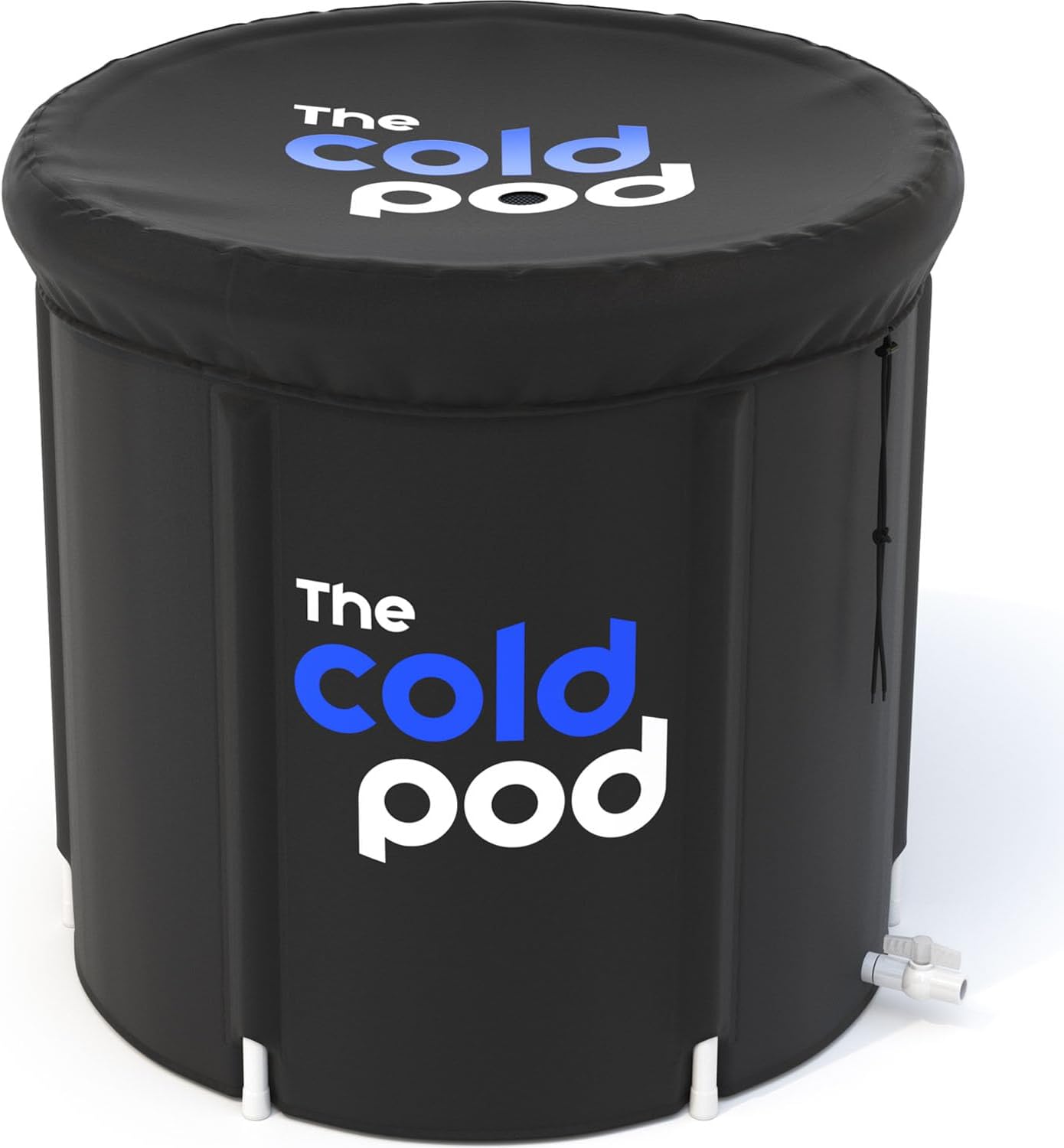
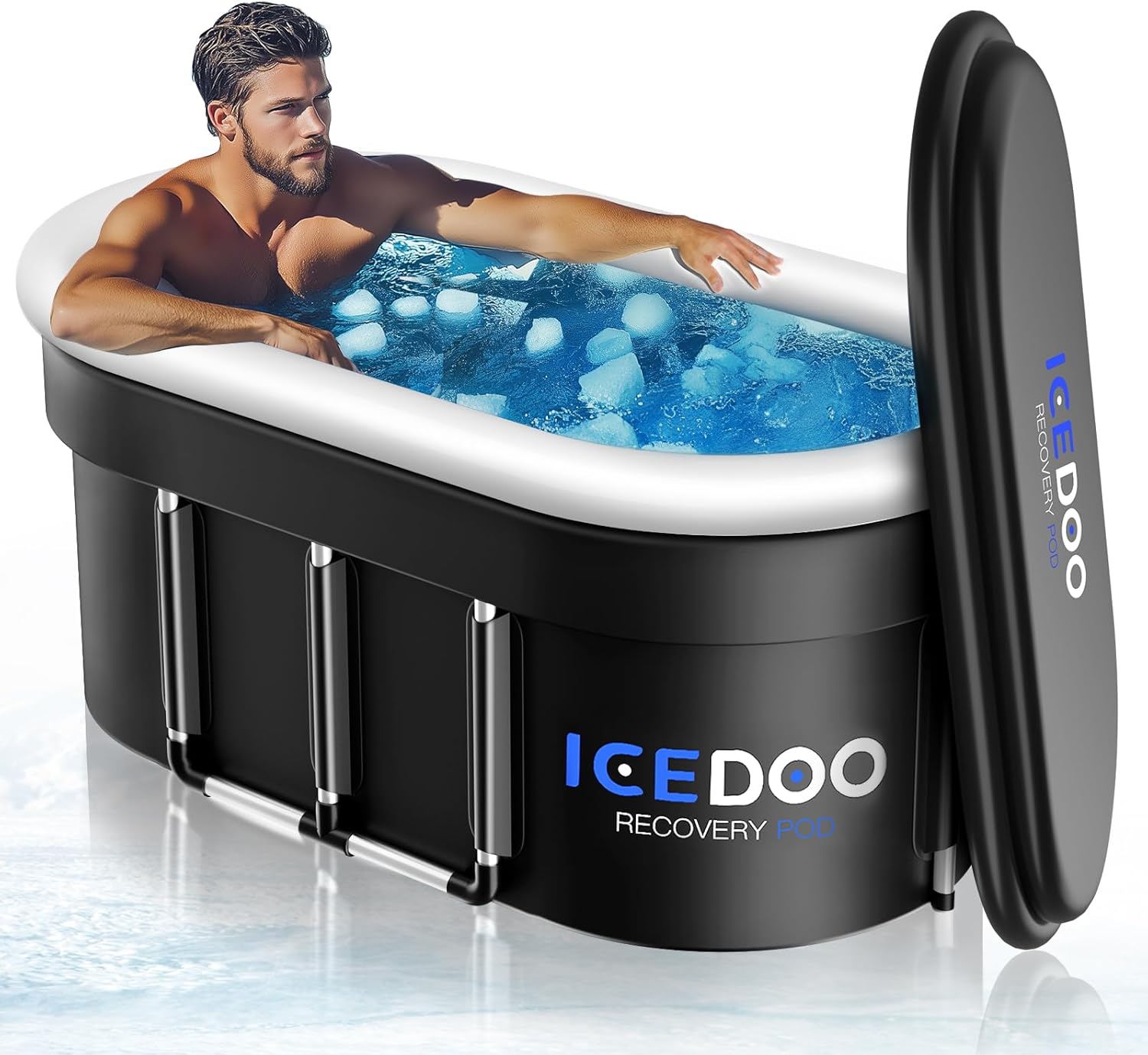
The cheapest entry point. A drop-stitch inflatable tub (think 26–31 inches tall, 80–100 gallons) sits on the floor, fills from a tap, and gets chilled with bagged ice from a gas station or a countertop ice maker. No chiller, no plumbing, no electricity required. Drain it through a garden hose into the bathtub. Expect $120–$300 for the tub and roughly $4–$8 in ice per session if you cycle the water every few uses.
2. Insulated tubs with a separate plug-in chiller
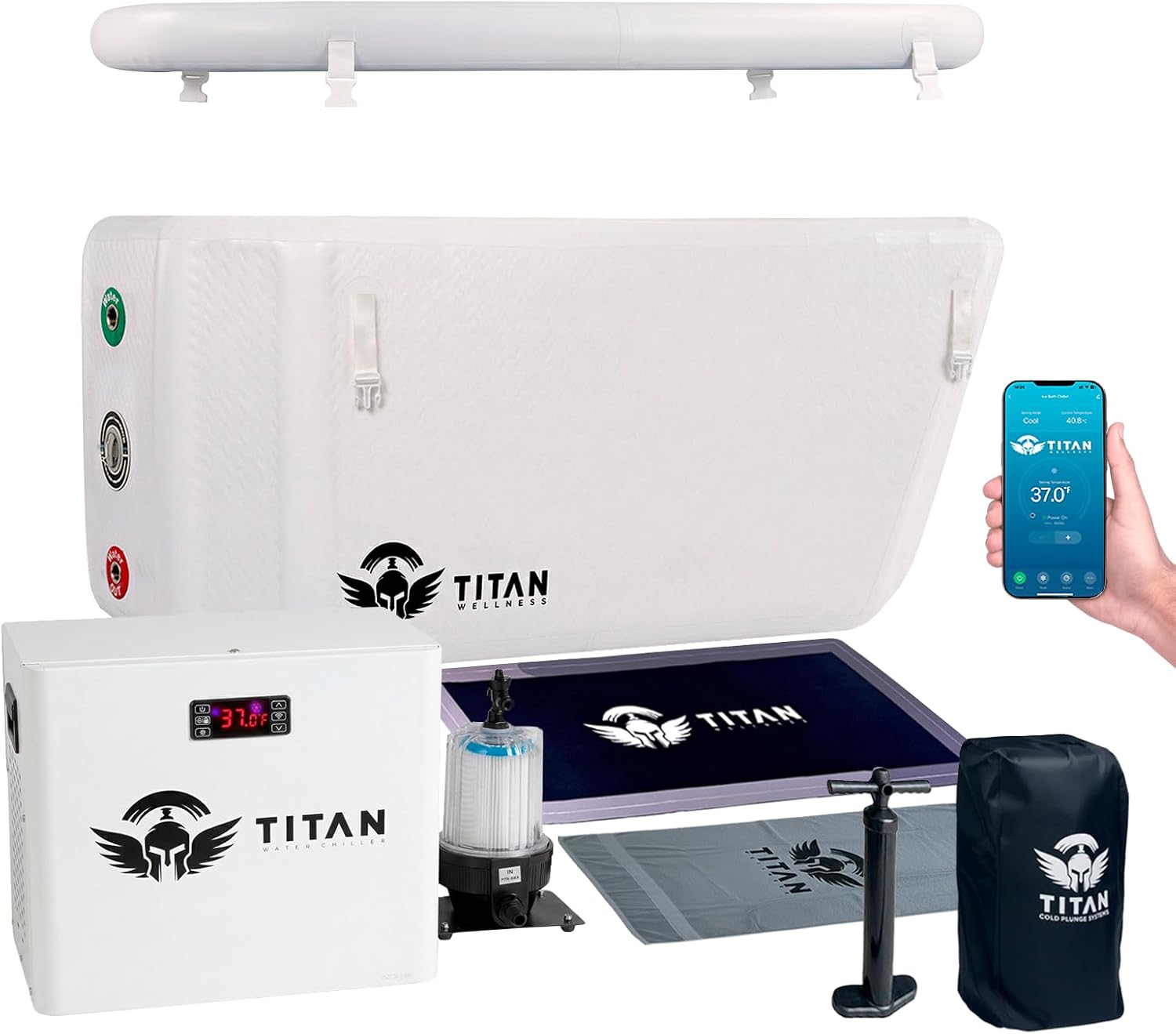
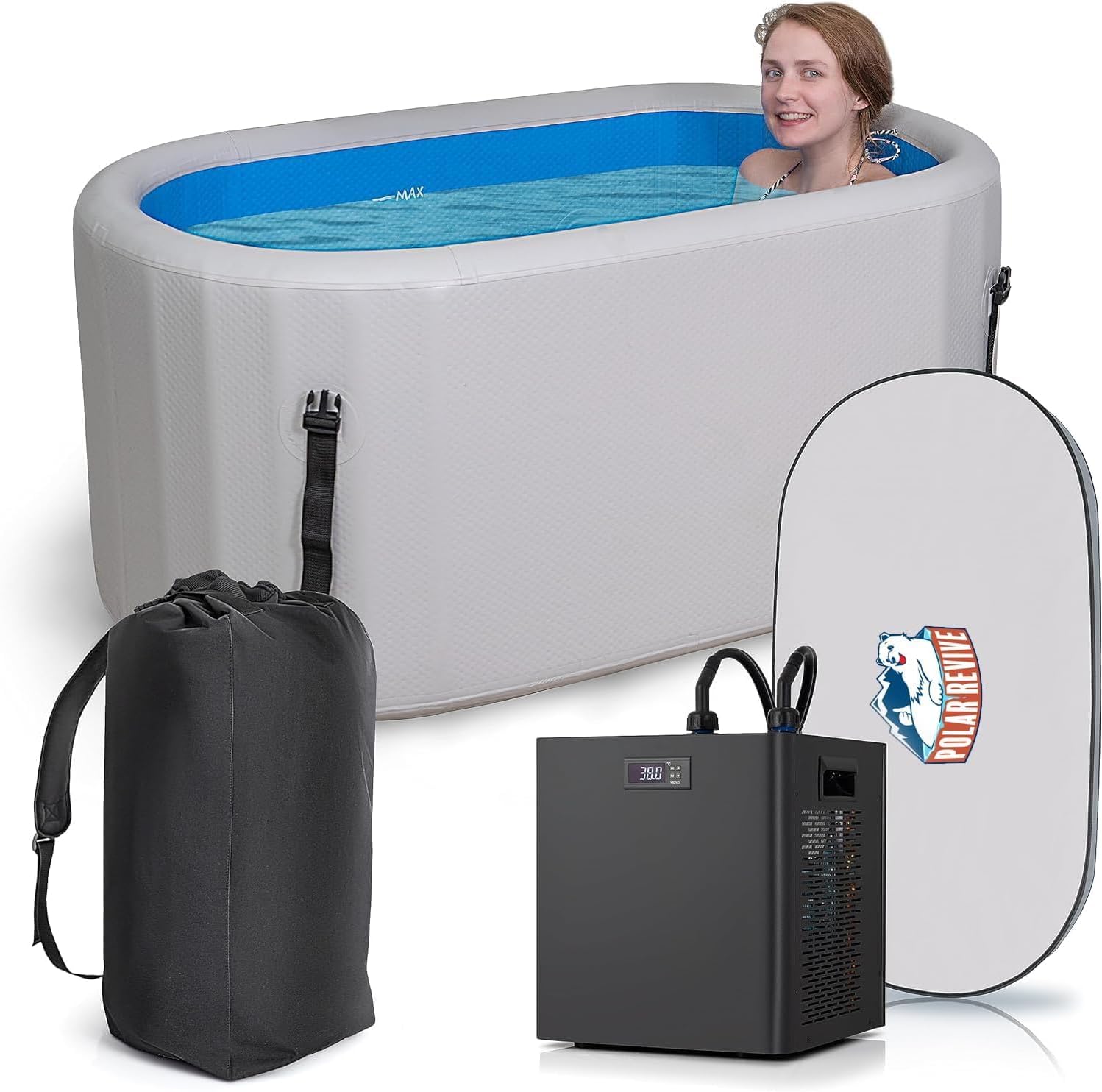
The most popular setup in 2026. A rigid or inflatable insulated barrel pairs with a freestanding chiller (about the size of a small dehumidifier) that sits beside the tub. Two food-grade hoses loop water in and out. The chiller plugs into a regular outlet, holds 37–55°F continuously, and includes a built-in filter and UV or ozone sanitizer so the same water lasts 4–8 weeks. Total footprint: roughly 3×5 feet.
3. Stock-tank-style hard plunges with external chillers
Galvanized or roto-molded plastic tubs (like an oversized cattle trough) on a balcony or patio, again paired with a plug-in chiller. Heavier and harder to move, but bulletproof and great for couples who share. Still no drilling required — the tub simply sits on the ground.
4. Localized cold therapy machines
Not a full plunge, but worth mentioning: portable cold therapy units circulate icy water through a wrap on a knee, shoulder, or back. They are the renter-friendliest cold tool of all — the entire system fits on a nightstand, draws 60 watts, and needs zero plumbing. If your goal is post-workout joint recovery rather than the full vagal-nerve cold-water response, these can replace a plunge entirely. We cover four solid options below.
Comparison: portable cold therapy machines that need no plumbing
When a full tub is not realistic — small studio, no balcony, ground-floor leak risk — a self-contained cold therapy machine handles targeted recovery for knees, shoulders, ankles, and lower backs. All four units below are reservoir-and-pump designs: you fill the tank with water and ice, and they circulate chilled water through a body wrap. None require drilling or plumbing.
| Model | Reservoir | Best for | Noise | Programmable timer |
|---|---|---|---|---|
| CF-3 Pro 16.8QT | 16.8 quarts | Shoulders, large joints, longer sessions | Quiet | Yes |
| CF-1 Quiet | ~6 quarts | Knee surgery recovery, bedside use | Very quiet | Basic |
| ACL Recovery Machine (B0DK2VFZZW) | ~7 quarts | Post-op knee/ACL rehab | Moderate | Yes |
| Portable Timer Unit (B0FXK3GW9B) | ~9 quarts | Travel, multi-body-part rotation | Quiet | Programmable |
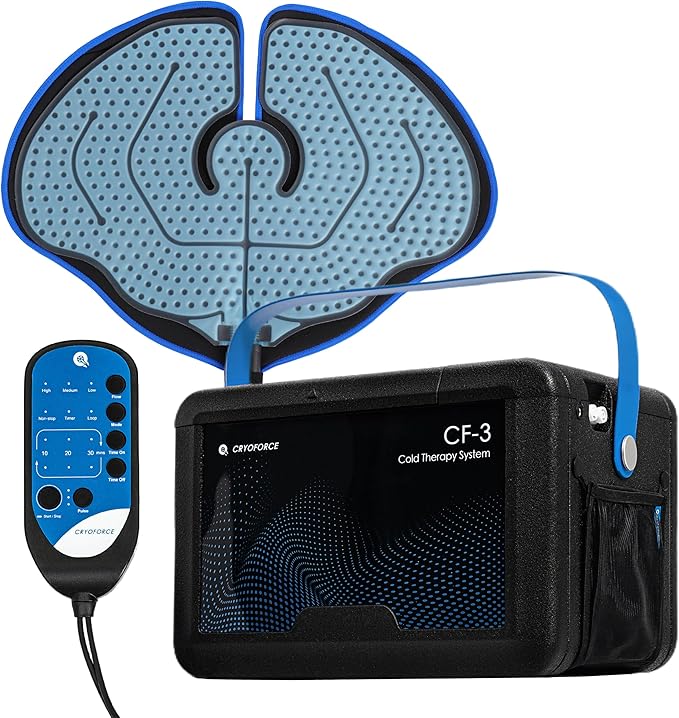
CF-3 Pro Cold Therapy Machine, 16.8QT Large-Capacity Ice Therapy System
The CF-3 Pro is the unit to pick if you want the longest runtime between ice refills. A 16.8-quart reservoir holds enough ice-water to deliver a steady 40–50°F flow for 5–7 hours, which is enough for two or three full recovery sessions in a row without getting up. The pad fits shoulders, knees, and hips, and the pump is whisper-quiet enough to run beside the couch while you watch TV. For a renter who cannot install a real plunge, this is the closest thing to an always-on cold source. Check current price on Amazon.
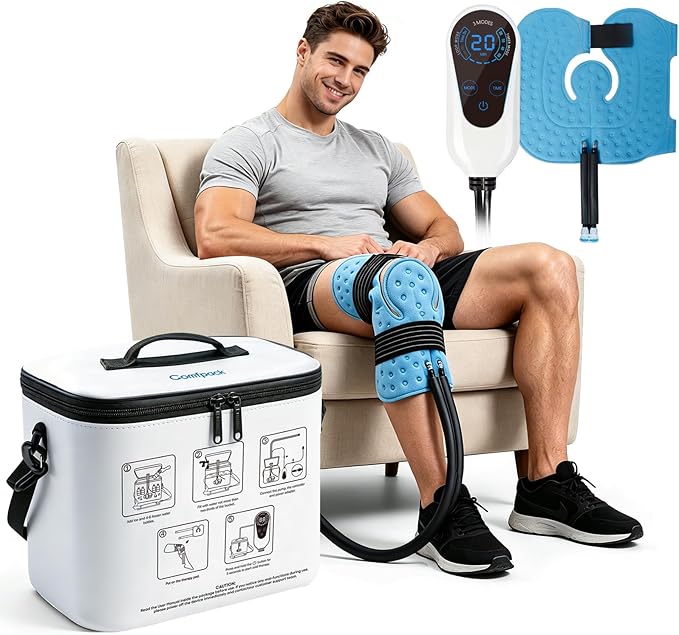
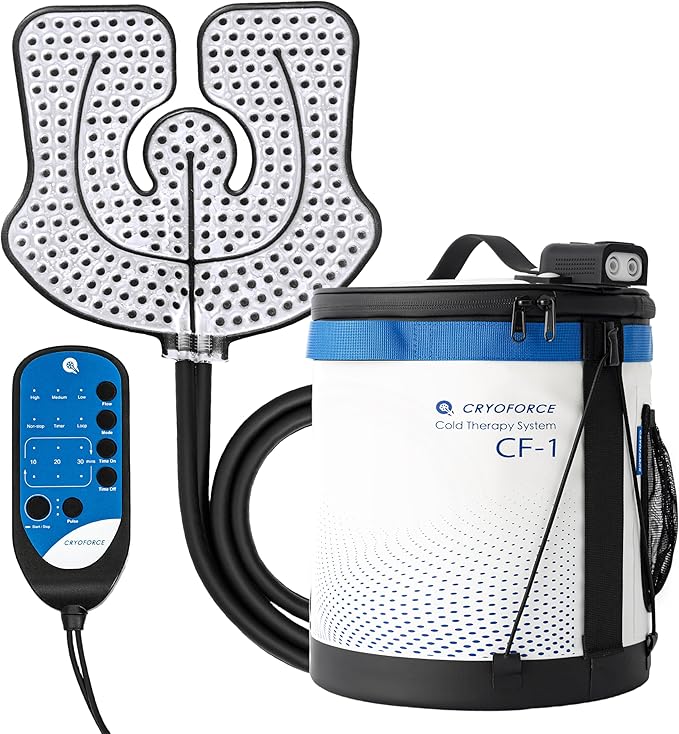
CF-1 Cold Therapy Machine for Knee Surgery Recovery
If you are recovering from a knee scope, ACL repair, or meniscus surgery in a rental, the CF-1 is the most apartment-friendly option here. Its smaller reservoir means lighter weight and faster ice changeouts, and the pump is notably quieter than larger units — important when you are using it at 2 a.m. because your knee woke you up. Pair it with the included knee wrap and a bag of crushed ice from any gas station. See it on Amazon.
Cold Therapy Machine for ACL and Post-Surgery Recovery
This unit (ASIN B0DK2VFZZW) is purpose-built for the first six weeks after orthopedic surgery, when continuous cold compression dramatically reduces swelling. The pump-and-pad combo wraps tightly around the knee for circumferential cooling, and the programmable cycle prevents skin damage from over-icing. Renters appreciate that the entire system stows in a closet between uses — no dedicated space required. View on Amazon.
Portable Cold Therapy Machine with Programmable Timer
The most travel-friendly of the bunch. The programmable timer lets you set 15-on / 45-off intervals so you can fall asleep with it running without worrying about frostbite or pad migration. Light enough to throw in a duffel for a weekend trip, and the wrap is universal enough to rotate between a knee one day and a shoulder the next. Check Amazon for current pricing.
How to set up a no-drill plunge in an apartment, step by step
- Pick the room. Bathrooms are ideal because of the floor drain and tile, but a balcony, garage, or sunroom also works. Avoid carpeted areas without a waterproof mat underneath.
- Lay down protection. A 4×6 foot pond liner or commercial-grade vinyl tarp under the tub catches splashes and protects flooring — critical for getting your security deposit back.
- Fill from a tap. Use a washing-machine hose adapter on the bathroom sink, or fill 5-gallon buckets from the tub. A standard 80-gallon plunge takes 15–20 minutes to fill this way.
- Place the chiller. Within four feet of the tub, on a flat dry surface, plugged into a GFCI outlet. Never run a chiller off an extension cord.
- Drain into the tub or toilet. A 25-foot garden hose siphons water out by gravity in 10–15 minutes. No pump required.
For deeper guidance on chiller sizing, sanitation, and water-change frequency, see our companion guide on the best chillers for apartment cold plunges and our breakdown of inflatable vs. hard-shell cold plunges. If you are weighing cost trade-offs, our 2026 cold plunge cost calculator shows total first-year spend across ice-only, chiller, and DIY setups.
Frequently Asked Questions
Can I really run a cold plunge chiller on a normal apartment outlet?
Yes. Nearly every consumer cold plunge chiller sold in 2026 draws 6–10 amps on a standard 110V circuit — well under the 15-amp limit of a typical bedroom or bathroom outlet. The exceptions are commercial-grade 1HP+ units intended for gyms. As long as you are not sharing the circuit with a space heater or microwave, a plug-in chiller will run continuously without tripping the breaker.
How do I drain a cold plunge without plumbing access?
Three options work without any modification to the unit or the apartment. First, gravity-siphon through a 25-foot garden hose into the bathtub or toilet. Second, use a battery-powered submersible utility pump (about $30) to push water uphill into a sink. Third, on a ground-floor patio, run the hose straight to a planter bed or yard. None require touching the building's plumbing.
Will my apartment floor support a full cold plunge tub?
A typical 80-gallon plunge with a person inside weighs roughly 850 pounds, distributed over about 8 square feet — about 105 pounds per square foot. Residential floor codes require 40 PSF live load with a safety factor that handles concentrated loads like a bathtub or refrigerator. If your apartment can hold a filled bathtub or a waterbed, it can hold a cold plunge. Place the tub near a load-bearing wall or directly above a support beam if you're nervous, and avoid the dead center of a long unsupported span.
What's the cheapest cold plunge setup that still works for renters?
Under $200 total: a $120 inflatable drop-stitch tub plus $20 in bagged ice per week. You fill the tub from the bathtub tap, add three to four 10-pound bags of ice, plunge for 2–5 minutes, and drain into the tub afterward. No chiller, no plumbing, no electricity. The trade-off is daily ice runs and water that has to be dumped after each session because there's no filtration.
Can I use a portable cold therapy machine instead of a full plunge?
For joint-specific recovery, yes. A unit like the CF-3 Pro or CF-1 delivers continuous 40–50°F water to a single joint for hours, which is actually more effective than a 3-minute plunge for reducing swelling after surgery or hard training. What you lose is the systemic cold shock response — the dopamine spike, brown-fat activation, and vagal-tone benefits that come from full-body immersion. Many renters use both: a therapy machine on injured joints daily, and a full plunge two or three times a week.
How long does water last in a renter-friendly chiller plunge?
With a built-in filter and ozone or UV sanitizer, the same water typically stays clear and safe for four to eight weeks of daily use by one person, or two to four weeks with two people. Shower thoroughly before each plunge, skim debris weekly, and check pH and chlorine if your unit supports it. When the water starts to smell or look cloudy, drain through a hose to your bathtub and refill from the tap — a 30-minute job.
Do landlords usually allow cold plunges in apartments?
Most leases prohibit waterbeds, hot tubs, and aquariums over a certain gallonage, but cold plunges occupy a gray area because they aren't named in standard lease language. The safest path is to email your property manager describing the unit (a freestanding, unplumbed, non-heated tub), confirm it's acceptable in writing, and place a waterproof mat underneath. Renters insurance covering accidental water damage (usually $5–$10 per month extra) is strongly recommended.
Bottom line
A true cold plunge for renters no drilling no plumbing setup is entirely achievable in 2026 — the question is only how much you want to spend and how much daily friction you'll tolerate. If budget is tight and you don't mind ice runs, an inflatable barrel plus bagged ice gets you cold immersion for under $200. If you want push-button cold any day of the week, an insulated tub plus a plug-in chiller runs $1,200–$2,500 all-in and lasts years. And if a full plunge isn't realistic for your space, a portable cold therapy machine like the CF-3 Pro handles localized recovery with the smallest possible footprint. None of these options requires a single drilled hole, a plumber's visit, or a conversation you'd rather not have with your landlord.
Key Takeaways
- Choosing the right cold plunge for renters no drilling no plumbing means matching capacity and output ports to your actual devices
- Always check actual watt-hours (Wh), not just watts — runtime depends on Wh, not peak output
- Also covers: apartment cold plunge no plumbing
- Also covers: portable cold plunge for rentals
- Also covers: cold plunge no drain hookup
- Compare price-per-Wh across models to find the best value for your budget