To clean inflatable cold plunge after saltwater exposure, drain the tub immediately, rinse the interior twice with fresh water, wipe with diluted white vinegar, then air-dry completely before refilling or storing. Saltwater is corrosive and can degrade PVC seams, shorten filter life, and leave mineral residue that breeds bacteria if you ignore it. This 2026 guide walks through a step-by-step maintenance routine, the cleaning agents that are safe for inflatable liners, and the recovery gear you can lean on while your plunge dries out. Treat your inflatable like a marine asset, not a hot tub, and it will last seasons longer.
Why saltwater accelerates wear on inflatable cold plunges
Salt is hygroscopic, electroconductive, and chemically reactive. Those three traits are what make ocean-style cold plunges feel so good and what punish their containers. Most inflatable tubs are built from drop-stitch PVC or TPU laminated over a polyester core. Sodium chloride seeps into seam glue, attacks zinc-plated drain fittings, and forms microscopic crystals that abrade the inner liner every time you swirl the water.
If you use natural sea salt, magnesium flakes, or Epsom-style blends to mimic ocean immersion, the corrosion rate climbs further. Magnesium sulfate is gentler on skin but tougher on pump impellers, and trace iron oxidizes on contact with air, leaving rust-colored streaks that are nearly impossible to bleach out once they set.
The practical result: an inflatable that only gets a quick freshwater hose-down after saltwater use will deteriorate two to three times faster than one cleaned with a proper protocol. The good news is that the protocol itself takes about 20 minutes of active work per session.
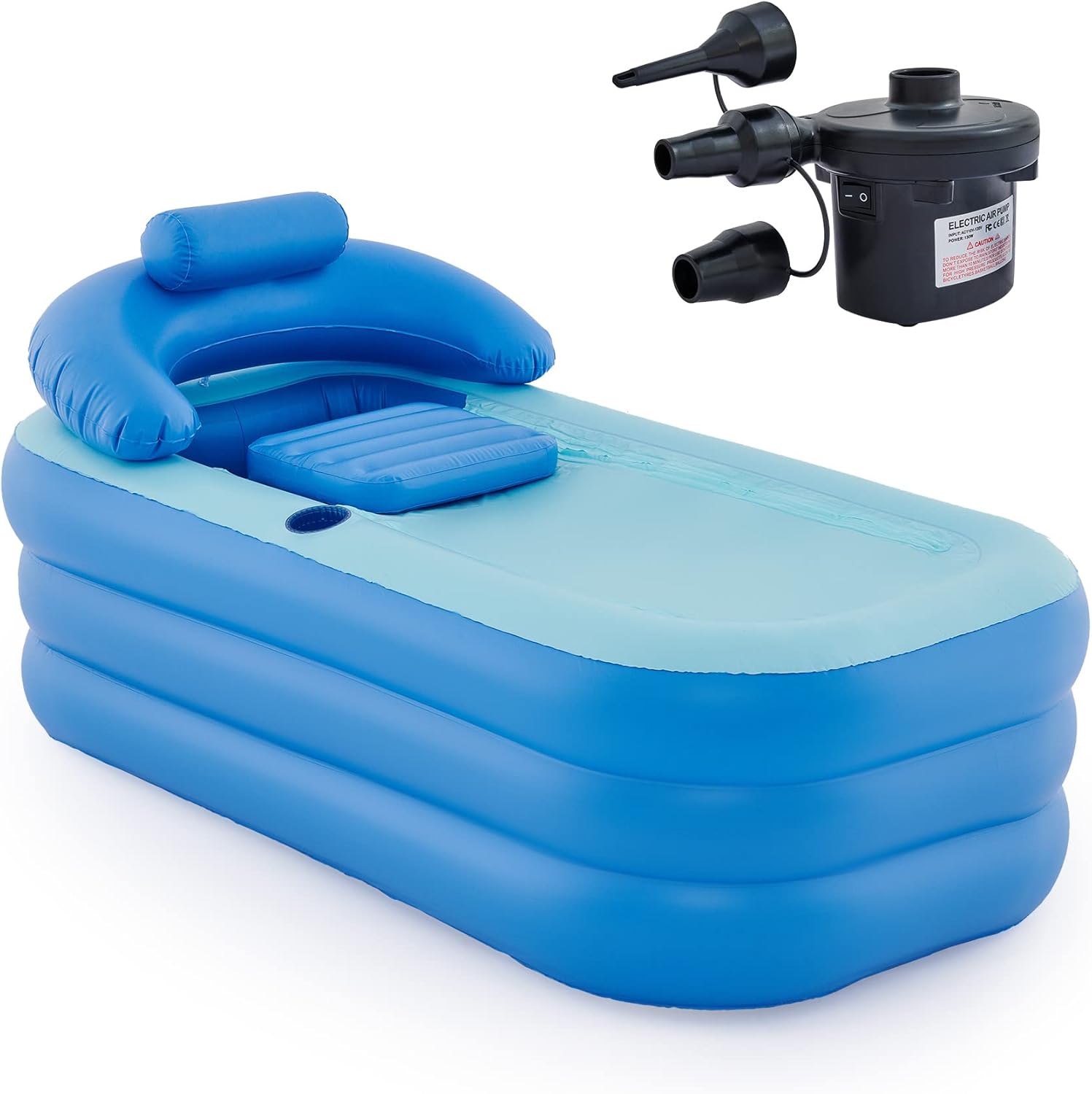
Step-by-step: how to clean inflatable cold plunge after saltwater use
1. Drain immediately, never overnight
Salt concentration rises as water evaporates. Even a partially covered tub left for 12 hours will deposit a salt ring around the waterline that bonds to the PVC. As soon as your session is finished, open the drain valve and route the brine away from concrete patios and planted beds. Salt brine kills grass and pits stamped concrete within a season.
2. Rinse twice with fresh water
Refill the tub to roughly 20% capacity with cool tap water, run the circulation pump for 60 seconds if your model has one, then drain. Repeat. This double-flush dissolves the bulk of residual salt before any cleaning agent touches the liner, which protects both the material and your skin during the next session.
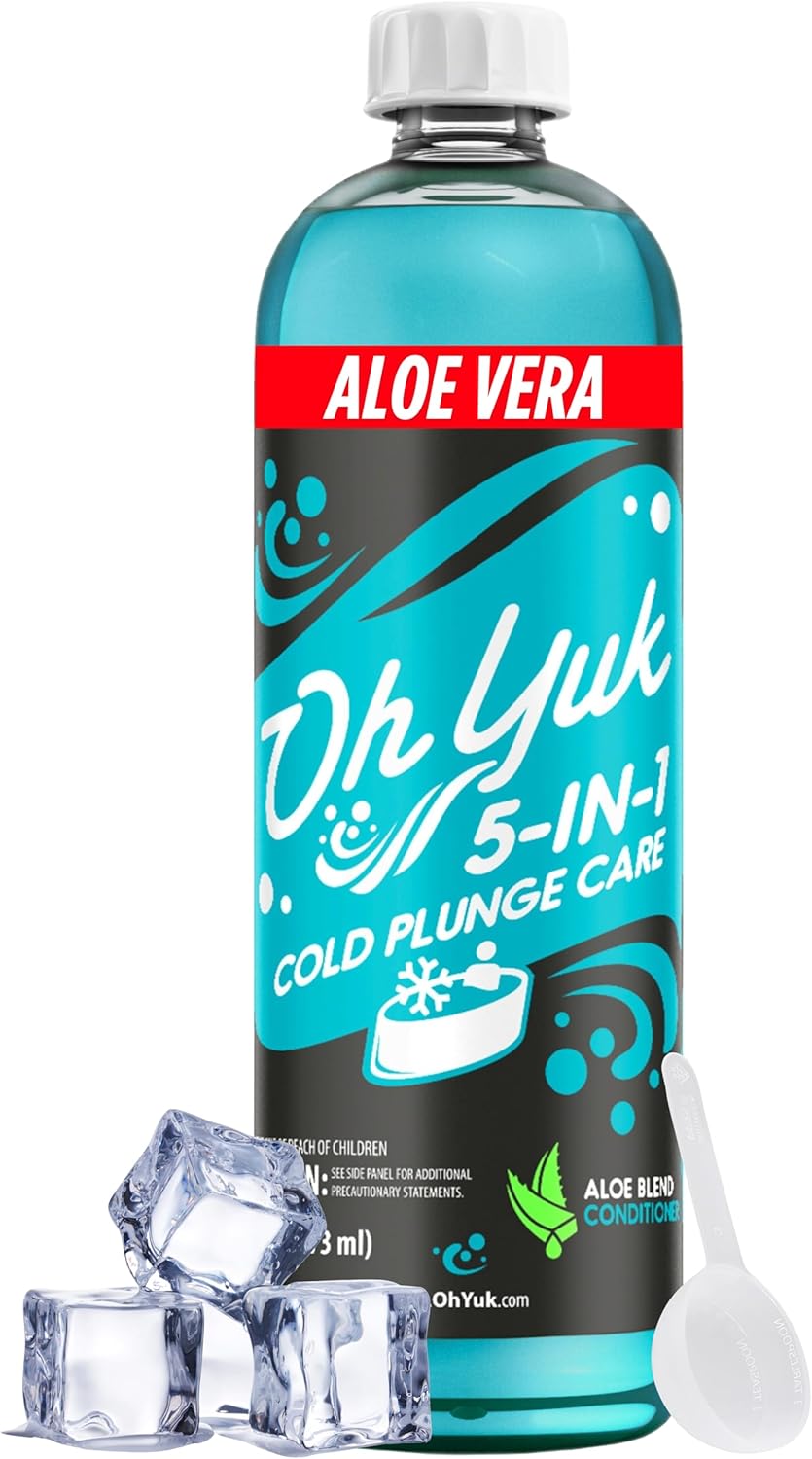
3. Wipe with diluted white vinegar
Mix one part distilled white vinegar to four parts warm water in a spray bottle. Spritz the entire inner surface, including the headrest area, drain port, and floor seam. Wipe in circular motions with a soft microfiber cloth or a non-abrasive sponge. Vinegar dissolves calcium and magnesium scale without harming PVC or the lamination glue underneath.
4. Spot-treat the waterline ring
The waterline is where salt, body oils, and sunscreen converge. If a faint ring remains after the vinegar pass, sprinkle a pinch of baking soda on a damp cloth and buff gently. Never use Magic Eraser melamine pads; they look harmless but slowly polish the printed pattern off the liner and leave dull, chalky patches that catch dirt.
5. Final rinse and inspect
Rinse all cleaning residue with fresh water and inspect seams, drain threads, and pump connections under bright light. Look for white crystalline buildup, soft spots, or seam separation. Catching a 2 mm seam lift now means a free fix with a vinyl patch; ignoring it can mean a $400 replacement tub next summer.
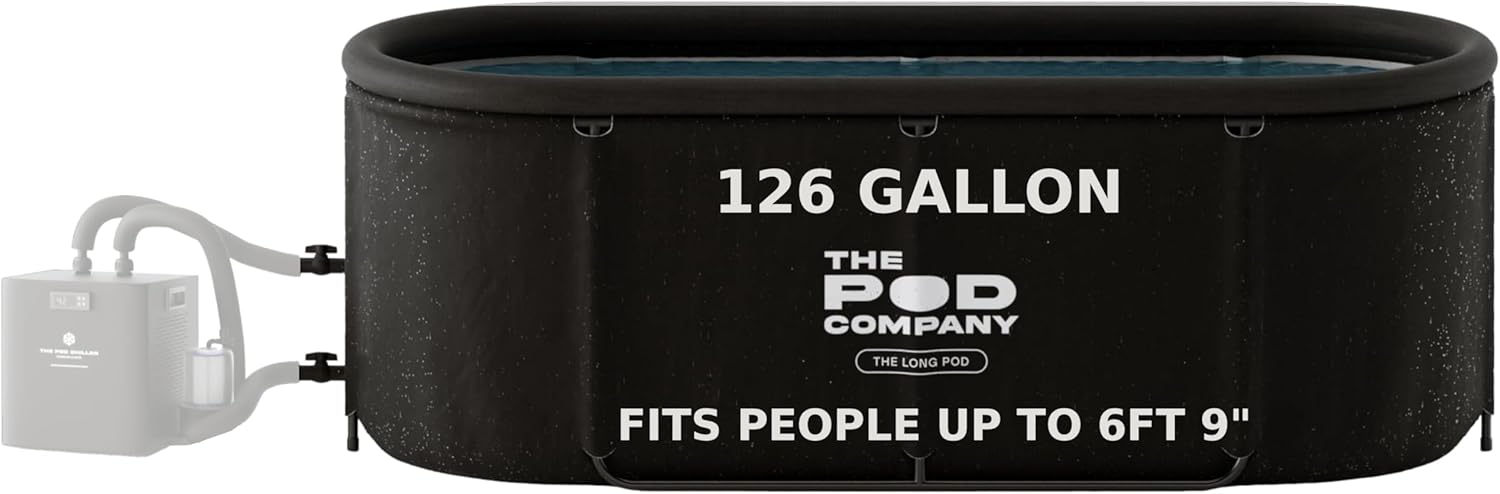
Best cleaning agents to clean inflatable cold plunge after saltwater
Stick to a short list. Cold plunge liners are tougher than air mattresses but more delicate than fiberglass spas, so the chemistry needs to match.
Safe and effective:
- Distilled white vinegar (5% acidity) for salt scale and mineral deposits.
- Baking soda paste as a mild abrasive for waterline rings.
- Hydrogen peroxide 3% to kill mildew in seams without bleaching graphics.
- Spa-grade enzyme cleaner to break down body oils and sunscreen residue.
Avoid:
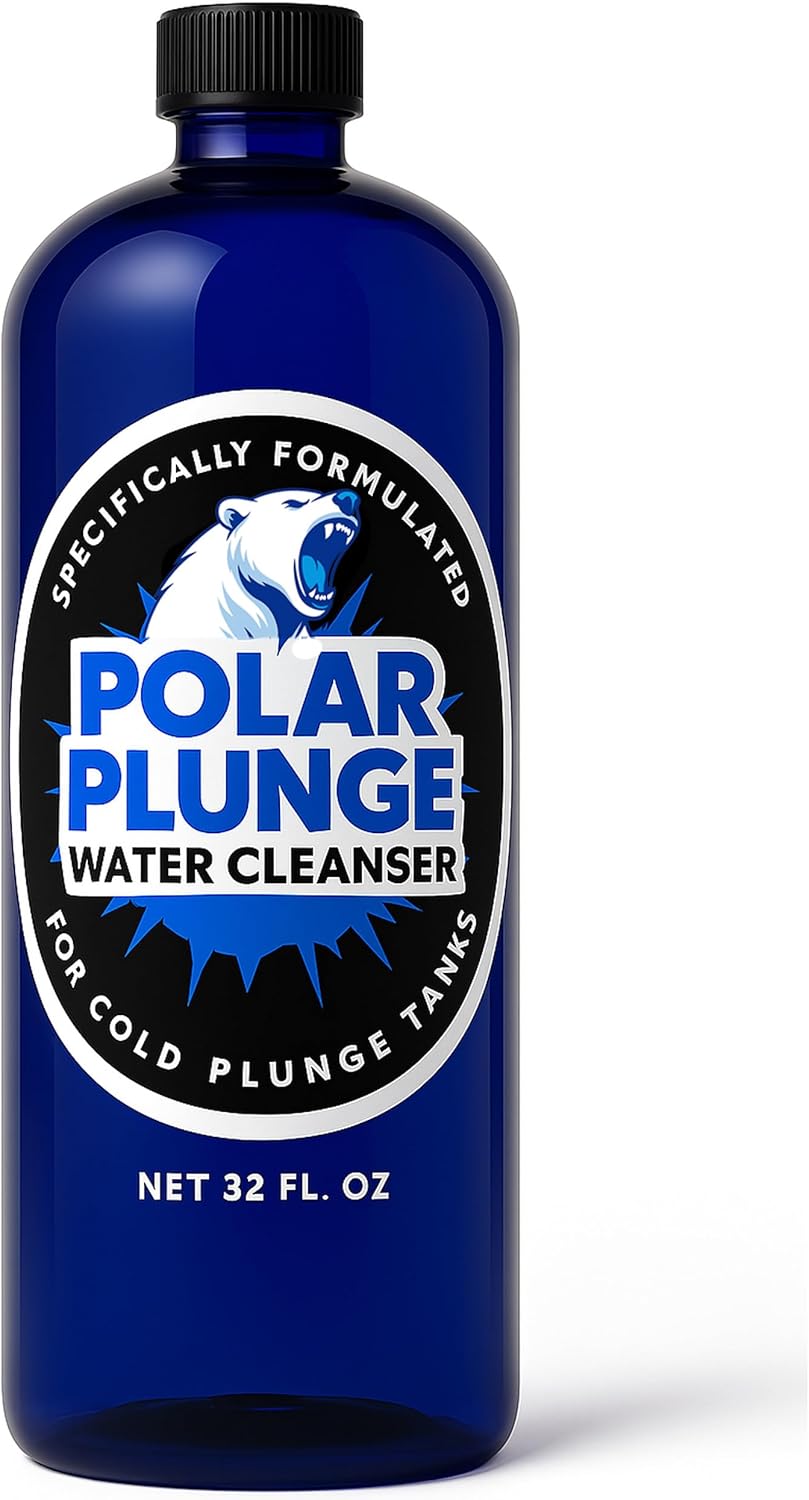
- Chlorine bleach, which degrades PVC plasticizers and voids most warranties.
- Acetone or alcohol above 40%, which clouds the liner surface.
- Pressure washers, which lift seams instantly.
- Steel wool, stiff brushes, and melamine sponges.
Drying and storing between sessions
After the rinse-and-wipe routine, you need to dry the inflatable thoroughly. Trapped moisture is what turns a clean tub into a mildew farm by week two. Stand the tub on a slight incline so any residual water pools at the drain. Open every valve, port, and zipper. If your model uses a removable filter cartridge, pull it, rinse it under fresh water, and let it dry on a slatted surface. A box fan aimed into the open tub for two hours finishes the job.
For storage longer than a week, lightly dust the inner surface with cornstarch (not talc) to absorb humidity and prevent the PVC walls from sticking together when folded. For a deeper look at filter chemistry and ozone add-ons, see our cold plunge water filter guide, which covers cartridge ratings and how they handle high-salinity water.
Recovery options while your plunge dries
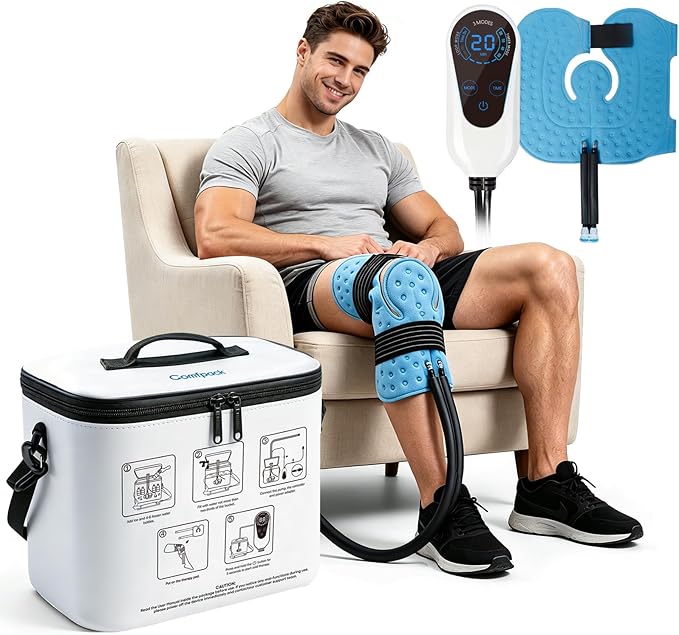
A proper saltwater clean-and-dry cycle takes 24 to 48 hours. That is a long gap if you train daily or are nursing a joint injury. This is where targeted cold therapy machines bridge the recovery window. They are not whole-body plunges, but they deliver focused cooling to a specific knee, shoulder, or ankle without needing fresh water and salt every session.
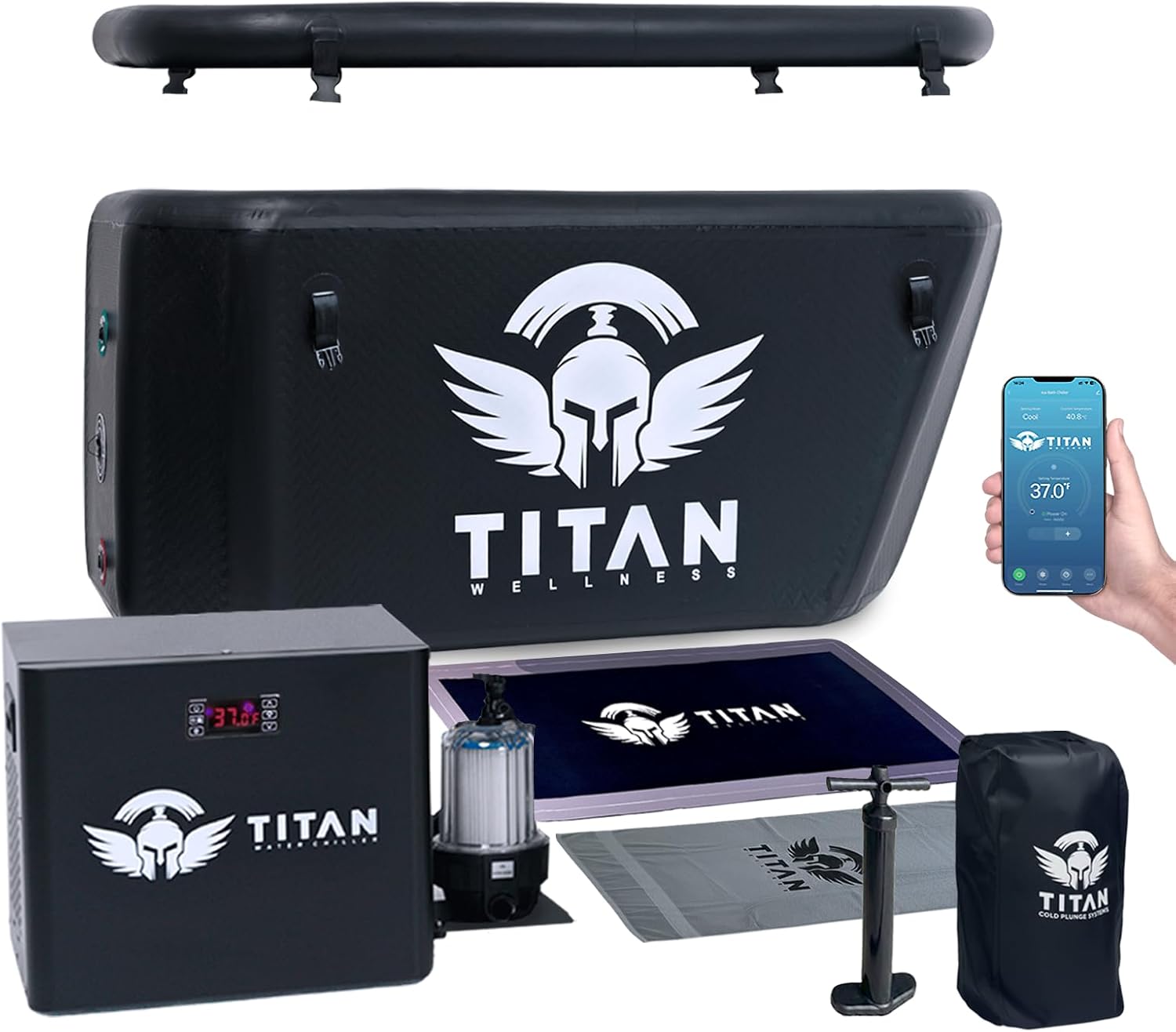
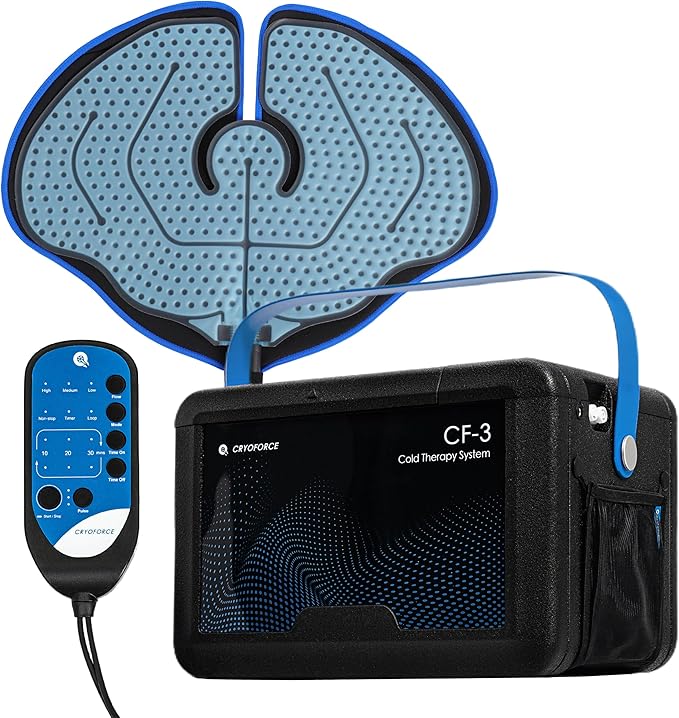
CF-3 Pro Cold Therapy Machine, 16.8QT Large-Capacity
The CF-3 Pro holds enough ice and water to run continuous cold therapy for roughly six hours on a single fill, which is the longest unattended runtime in this class. Its 16.8-quart reservoir is what makes it stand out for athletes who want to chain two or three icing sessions in an evening without refilling. The included shoulder and knee wraps swap easily, and the digital timer prevents the overcooling that causes nerve irritation. If your inflatable cold plunge is out for the full 48 hours of cleaning and drying, this is the closest substitute for joint-focused recovery. Check current price: CF-3 Pro Cold Therapy Machine, 16.8QT Large-Capacity Ice The
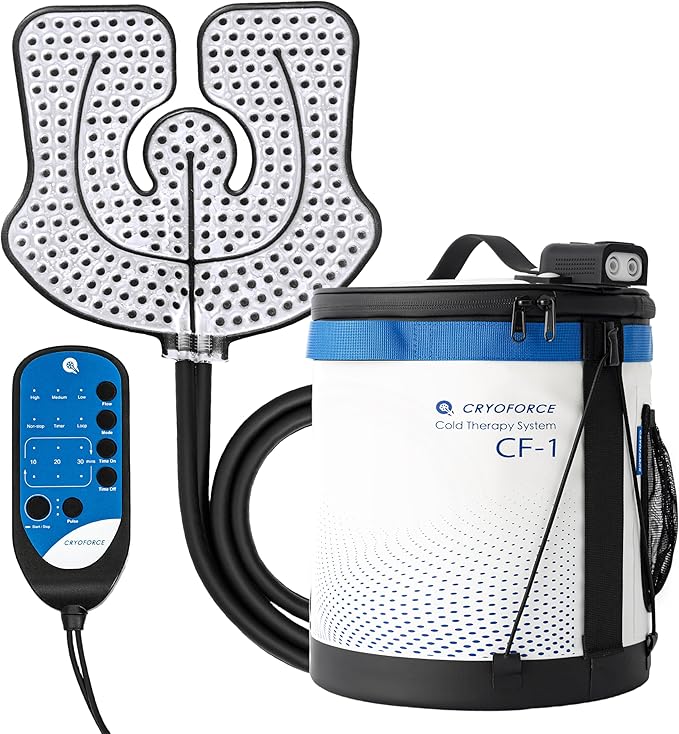
CF-1 Cold Therapy Machine, Quiet Operation
The CF-1 is the model to reach for in the evening because it runs at a measured 38 dB, quiet enough to use during sleep. It is smaller than the CF-3 Pro, which means more frequent ice refills, but the silent pump matters if you are recovering on the couch or in bed. Knee surgery patients and ACL rehab users tend to gravitate toward this one for its programmable cycles and gentler temperature gradient. Check current price: CF-1 Cold Therapy Machine for Knee Surgery Recovery, Quiet I
Portable Ice Machine with Programmable Timer
This compact unit sits in the middle of the range. Programmable timer, decent reservoir, and a price point that makes it a sensible backup rather than a primary device. It is the one I would keep in a gym bag or take on travel weekends when your inflatable plunge is at home being maintained. Check current price: Cold Therapy Machine, Portable Ice Machine for Knee After Su
Quick comparison
| Model | Reservoir | Best For | Runtime per fill |
|---|---|---|---|
| CF-3 Pro (B0G3QVHNZF) | 16.8 QT | Long sessions, multiple joints | ~6 hours |
| CF-1 (B0FVXT2RH9) | ~6 QT | Quiet nighttime, post-surgery | ~3 hours |
| Programmable Timer (B0FXK3GW9B) | ~7 QT | Travel, gym bag backup | ~3 hours |
For a deeper take on when targeted cooling beats whole-body immersion, see our cold therapy machine vs cold plunge comparison.
Long-term maintenance schedule
A simple calendar keeps your inflatable plunge in service for the typical three-to-five-year lifespan, even with regular saltwater use:
- After every saltwater session: drain, double-rinse, vinegar wipe, dry.
- Weekly: inspect seams under bright light, check pump intake for salt crystals.
- Monthly: deep clean with enzyme cleaner, replace the filter cartridge.
- Quarterly: apply a UV-protectant marine vinyl conditioner to the exterior.
- Annually: pressure-test seams and replace any rubber drain gaskets.
If you are still shopping for a more salt-tolerant tub, our roundup of the best inflatable cold plunge tubs of 2026 flags which models use TPU liners (more salt-resistant) versus standard PVC.
Frequently Asked Questions
How often should I clean my inflatable cold plunge after saltwater sessions?
After every session if the water sat with salt for more than 30 minutes. For brief five-minute dips followed by an immediate drain, a double freshwater rinse may be enough for two or three sessions before you do a full vinegar wipe. Once you see any haze or feel grit on the liner, do the full protocol the same day.
Can I use chlorine or bromine to sanitize an inflatable plunge with sea salt?
Avoid chlorine. It oxidizes salt into corrosive chloramine byproducts and degrades PVC plasticizers, which voids most 2026 warranties. If you need sanitation between sessions, use a UV wand or food-grade hydrogen peroxide at roughly 0.1% concentration. Bromine is gentler than chlorine but still not recommended for inflatables.
What is the ideal salt concentration for an inflatable cold plunge?
For an ocean-like feel without aggressive corrosion, aim for 0.5 to 1.5% salinity, which is 5 to 15 grams per liter. Real seawater sits near 3.5%, which is too harsh for inflatable liners and accelerates seam failure considerably. Magnesium flake blends at the lower end of that range feel similar without the same corrosion penalty.
Will saltwater void my inflatable cold plunge warranty?
Many brands explicitly exclude saltwater damage from their warranty. Read the fine print before your first salt session. Some 2026 models marketed for ocean simulation use reinforced TPU liners and warranty saltwater use up to a specified concentration, usually 1% or lower. If your model is standard PVC, assume saltwater is at-your-own-risk.
How do I remove mineral stains that vinegar will not lift?
Apply a paste of cream of tartar mixed with 3% hydrogen peroxide, let it sit for 15 minutes, then rinse. For stubborn iron staining from magnesium-rich salt blends, food-grade citric acid powder dissolved at one tablespoon per cup of warm water works without harming the liner. Always test a small hidden patch first.
Can I leave saltwater in my inflatable plunge between sessions to save effort?
No. Stagnant saltwater concentrates as it evaporates, breeds halophilic bacteria within 48 hours, and bonds salt to the PVC at the waterline. Drain after every session even if you plan to use the tub again the next day. The time saved is not worth the long-term liner damage and the bacterial risk.
Does an ozone generator help reduce cleaning frequency in saltwater plunges?
Ozone helps with bacterial control but does not address mineral buildup, which is the main saltwater issue. It pairs well with a weekly vinegar wipe but does not replace it. If you go this route, use marine-rated ozone units; consumer hot tub ozone modules corrode notably faster in saline conditions and often fail inside one season.
Key Takeaways
- Choosing the right clean inflatable cold plunge after saltwater means matching capacity and output ports to your actual devices
- Always check actual watt-hours (Wh), not just watts — runtime depends on Wh, not peak output
- Also covers: epsom salt cold plunge cleaning
- Also covers: saltwater ice bath maintenance
- Also covers: inflatable plunge after salt soak
- Compare price-per-Wh across models to find the best value for your budget