Quick verdict for Arizona summer outdoor installs
For the Desert Plunge vs Cold Life Tub Arizona summer question, the deciding factor is chiller wattage relative to ambient heat load — not the tub shell itself. Phoenix, Tucson, and Mesa patios routinely sit at 105–115°F from June through September, and most consumer cold plunges are rated for 90°F ambient operation. A Desert Plunge configured with the upgraded 1 HP chiller and a shaded equipment enclosure will hold a 45°F setpoint through a Phoenix afternoon, while a stock Cold Life Tub typically drifts to 50–55°F under the same load. If you can shade the chiller and run a dedicated 240V circuit, either tub will perform; the final pick comes down to shell warranty, water treatment, and serviceability in the desert Southwest.
Why Arizona summer changes the rules for cold plunges
A cold plunge chiller is essentially an air-source heat pump running in reverse. Its rated output (BTU/hr) is measured at a 75°F ambient. At 110°F ambient — a typical July afternoon in the Valley of the Sun — effective output drops by 30–40% because the condenser coil cannot dump heat as efficiently. That is why a chiller advertised as “good to 39°F” on a manufacturer spec sheet often refuses to drop below 50°F in a Scottsdale backyard. For the Desert Plunge vs Cold Life Tub Arizona summer matchup, this physics is non-negotiable: oversize the chiller, shade it, give it airflow, or accept warmer water.
Direct sun on the tub shell adds another 4,000–10,000 BTU/hr of radiant load depending on shell color and finish. Black or charcoal shells — popular for the “stealth” look — act like solar collectors and will fight the chiller all afternoon. Lighter shells, vinyl thermal covers, and pergola shading routinely cut runtime by half. Anyone comparing these two tubs should budget for shade structure alongside the equipment itself.
When shopping for Desert Plunge vs Cold Life Tub Arizona summer, it pays to compare specs, capacity, and real-world runtime before committing.
Desert Plunge: build, chiller, and Arizona-specific options
Desert Plunge markets itself as an Arizona-built brand, and the configuration sheet reflects that. The 2026 lineup ships with a roto-molded LLDPE shell rated for UV exposure up to 5 years before noticeable chalking, and the standard chiller is a 3/4 HP R32 unit with a 1 HP upgrade option that is essentially mandatory south of Flagstaff. The chiller comes in a separate weatherproof cabinet — useful because you can place the tub in sun and tuck the equipment under a soffit or in a garage with a refrigerant line set.
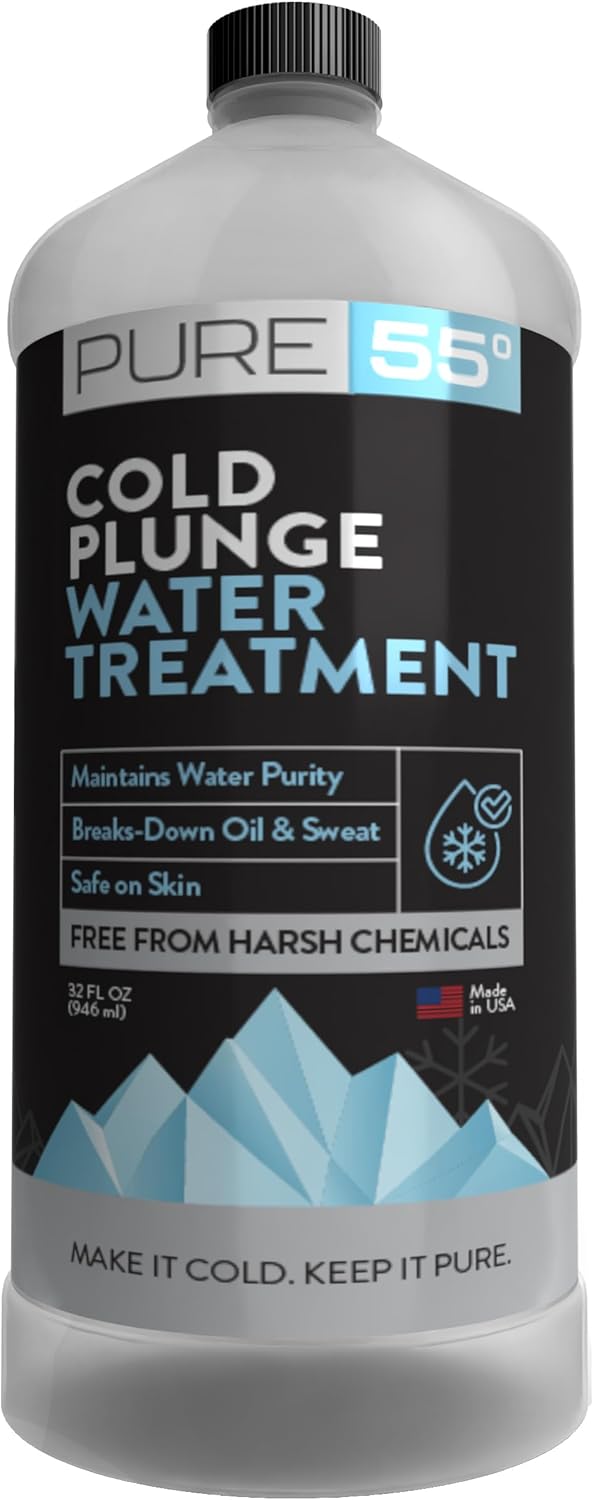
Insulation is closed-cell spray foam between an inner and outer shell, roughly R-12 equivalent. Water treatment is ozone plus a 20-micron filter on a recirculating loop; no chlorine or bromine required for typical residential use. The control head is Wi-Fi enabled and exposes a setpoint range of 37–60°F, with a recovery timer and a freeze-protect cutoff at 35°F. Warranty is 5 years on the shell, 2 years on the chiller, and 1 year on the control head.
Cold Life Tub: build, chiller, and outdoor durability
Cold Life Tub uses a similar roto-molded shell but in a smaller footprint (60" L vs Desert Plunge's 67"), which can be a deciding factor on a tight patio. The standard chiller is a 1/2 HP R290 unit with a 3/4 HP upgrade; even the upgrade is undersized for the worst weeks of an Arizona summer if the equipment is in direct sun. Cold Life integrates the chiller into the tub skirt, which looks clean but limits placement — you cannot run a refrigerant line set to a shaded utility area the way you can with Desert Plunge.
Insulation is a polyurethane sandwich rated around R-10. Water treatment is a UV-C lamp plus filter, which is slightly more maintenance-friendly than ozone (no off-gas), but the UV bulb is a wear item that costs roughly $90 to replace annually. The control app is functional but cloud-dependent; if your patio Wi-Fi drops, the on-tub buttons still work but scheduled cycles do not. Warranty is 3 years shell, 2 years chiller, 1 year electronics.
Side-by-side comparison for Arizona summer use
| Spec | Desert Plunge (1 HP upgrade) | Cold Life Tub (3/4 HP upgrade) |
|---|---|---|
| Chiller refrigerant | R32, split design | R290, integrated |
| Rated min temp @ 75°F ambient | 37°F | 39°F |
| Realistic min temp @ 110°F ambient, shaded | 43–46°F | 50–54°F |
| Shell length | 67" | 60" |
| Shell UV warranty | 5 years | 3 years |
| Insulation rating | ~R-12 closed-cell foam | ~R-10 polyurethane |
| Water treatment | Ozone + 20µ filter | UV-C + filter |
| Power requirement | 240V / 20A dedicated | 120V / 15A (240V optional) |
| Chiller placement flexibility | Split — up to 25 ft line set | Integrated only |
| Best for | Permanent shaded patio install | Covered porch or pergola spot |
Install considerations specific to the Southwest
A Desert Plunge or Cold Life Tub on an Arizona patio is not a plug-and-play purchase. The deck slab needs to support roughly 1,200 lb when filled. Most homeowners pour a 4" reinforced pad or place the tub on existing pavers with a load-spreading mat. Both tubs require GFCI protection; Desert Plunge's 240V circuit usually means a permit and a licensed electrician, while Cold Life Tub can sometimes piggyback on an existing 120V patio outlet — though that 120V circuit will struggle to hold setpoint during July heat waves.
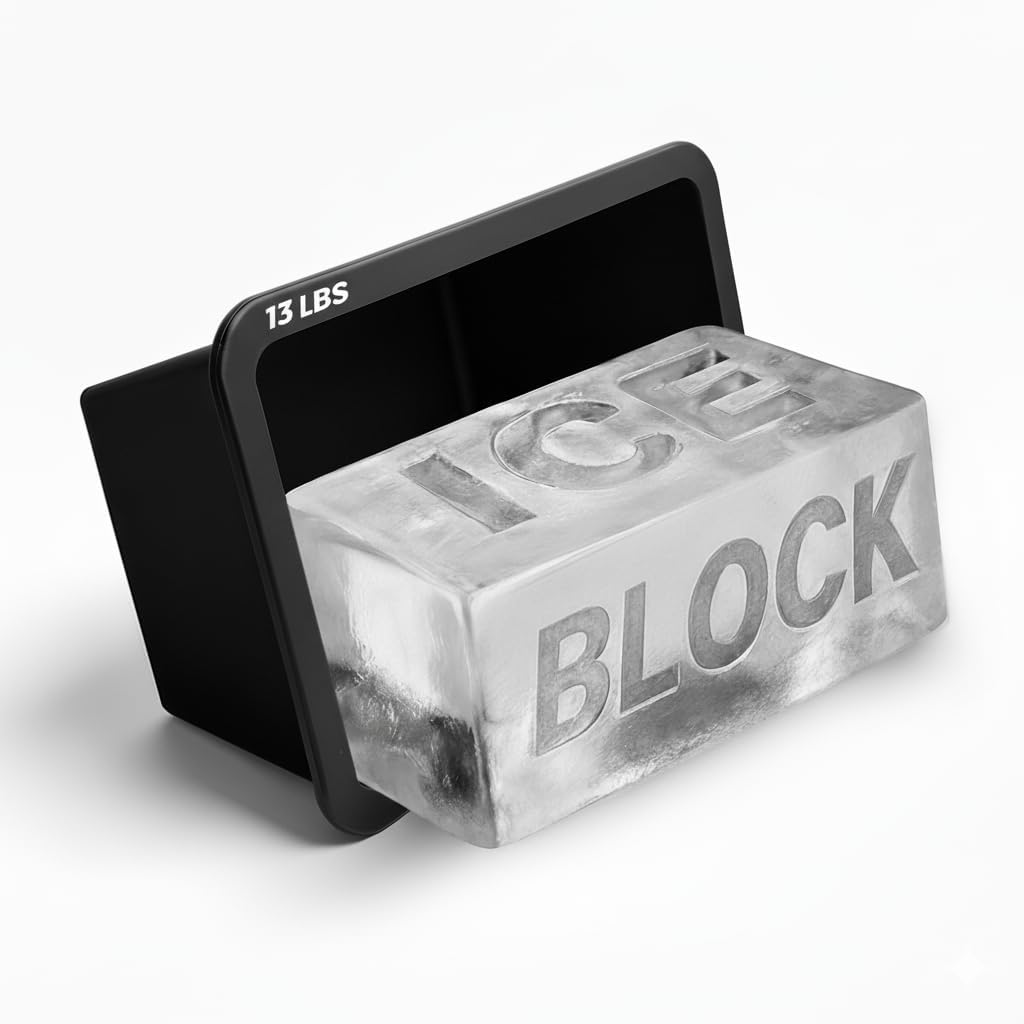
Shade is the single highest-ROI accessory. A simple 8x8 shade sail over the chiller cabinet (for Desert Plunge) or over the entire tub (for Cold Life Tub) routinely reduces runtime by 40–60%. If you are designing a new patio, orient the equipment north or under the eave of the house. Consider drainage too — monsoon storms drop two inches in an hour, and a recessed install without a floor drain will float the equipment off its pad.
Recovery tools to pair with your cold plunge
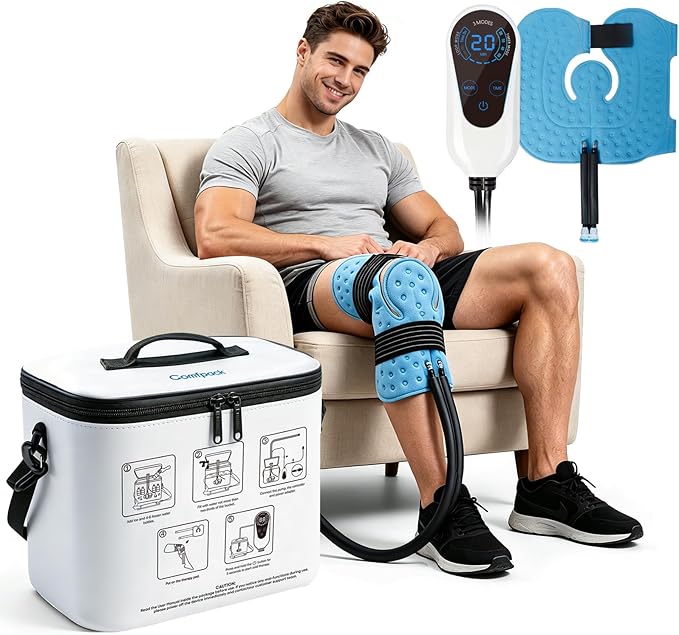
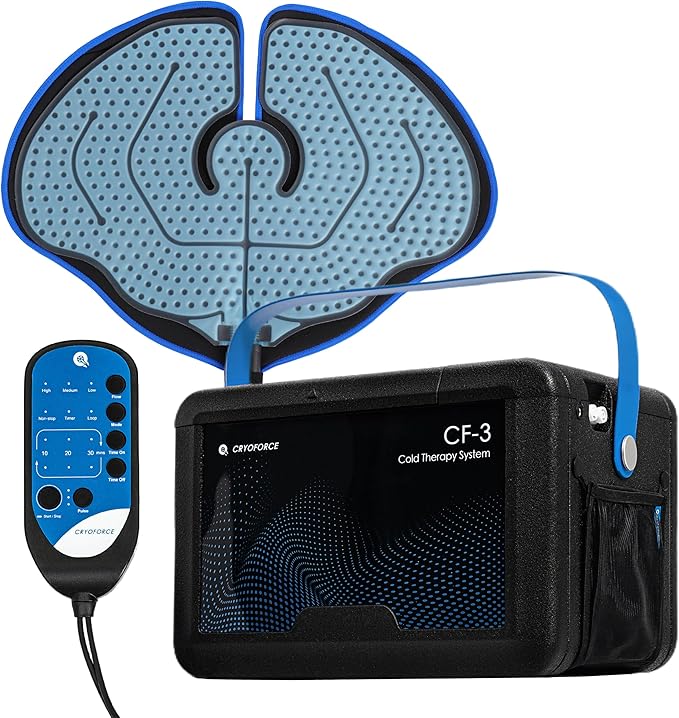
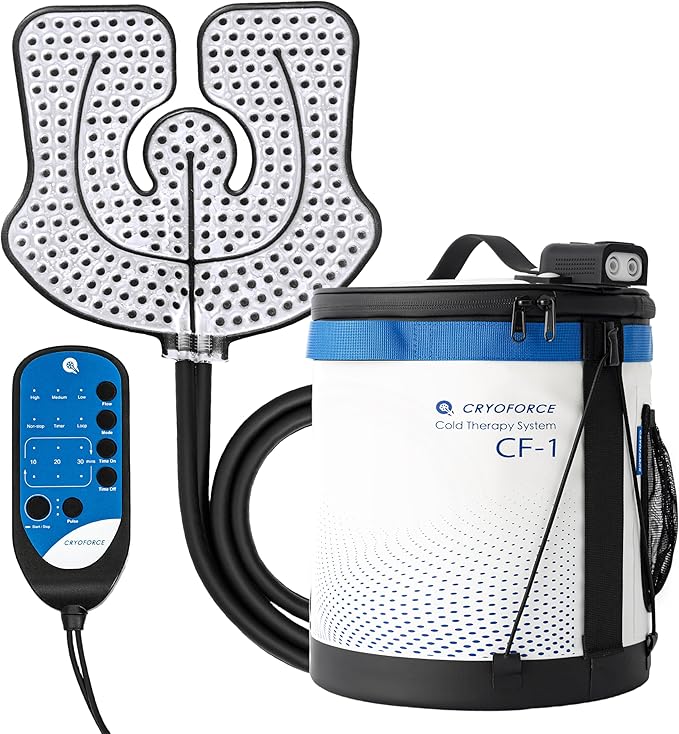
Whole-body cold plunges are excellent for systemic recovery, but they are blunt instruments. If you are recovering from a specific joint injury — ACL surgery, rotator cuff repair, meniscus trim — a targeted cold therapy machine sustains 40°F flow over a wrap for 4–6 hours without you sitting in the tub. Many Arizona athletes use the plunge for daily recovery and a circulating wrap for post-op or post-flare-up periods. The picks below are units that hold up to dry desert air and have large reservoirs that do not need ice refills every 90 minutes.
CF-3 Pro 16.8QT Large-Capacity Cold Therapy Machine
For shoulder, hip, or knee recovery sessions that run several hours, the 16.8-quart reservoir on the CF-3 Pro is the differentiator. Smaller units force you to top up ice every 60–90 minutes; the CF-3 Pro will hold therapeutic temps for a full afternoon nap or work session. The programmable timer cycles flow at intervals you set, which prevents the skin numbness and frost-burn risk of continuous contact. This is the unit I would put next to a Desert Plunge for an athlete with a chronic knee or shoulder issue. Check the CF-3 Pro on Amazon.
CF-1 Quiet Cold Therapy Machine for Knee Surgery Recovery
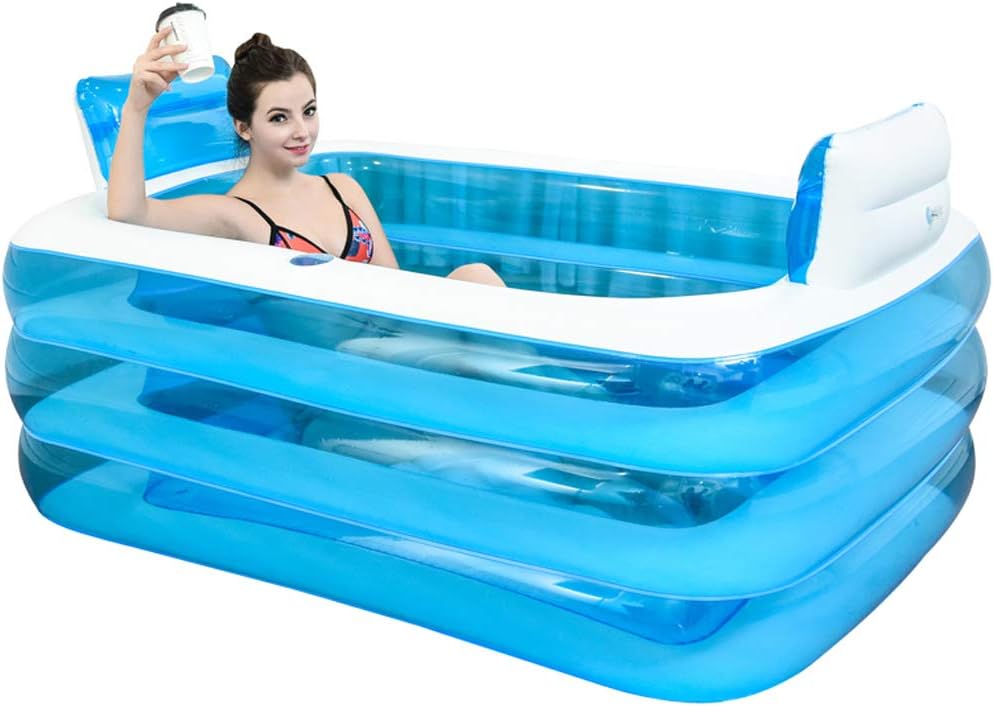
The CF-1 is the quieter, smaller sibling — better suited to nighttime use in a bedroom adjacent to the patio where the plunge lives. Pump noise is well under conversational volume, which matters if you are running a continuous 6-hour overnight cycle after an ACL or meniscus repair. Reservoir is smaller than the CF-3 Pro, so plan on a mid-cycle refill for sessions over 4 hours. See the CF-1 on Amazon.
Cold Therapy Machine for Knee After Surgery (ACL Recovery)
This is the budget pick — a straightforward circulating ice machine without the programmable timer of the CF-3 Pro or the noise tuning of the CF-1. It does one thing: hold cold water against a wrap. If your use case is short post-workout sessions after the plunge rather than post-surgical recovery, the simpler control set is fine and the price is roughly half. View on Amazon.
Portable Cold Therapy Machine with Programmable Timer
The portable form factor and programmable timer make this a good travel companion if you split time between an Arizona home and a cooler-climate cabin. The interval timer is the key feature — you set 20 minutes on / 10 minutes off, walk away, and the machine cycles automatically. Pairs naturally with either tub for targeted joint work after a 5-minute plunge. Check the portable unit on Amazon.
Which tub wins for an Arizona summer install
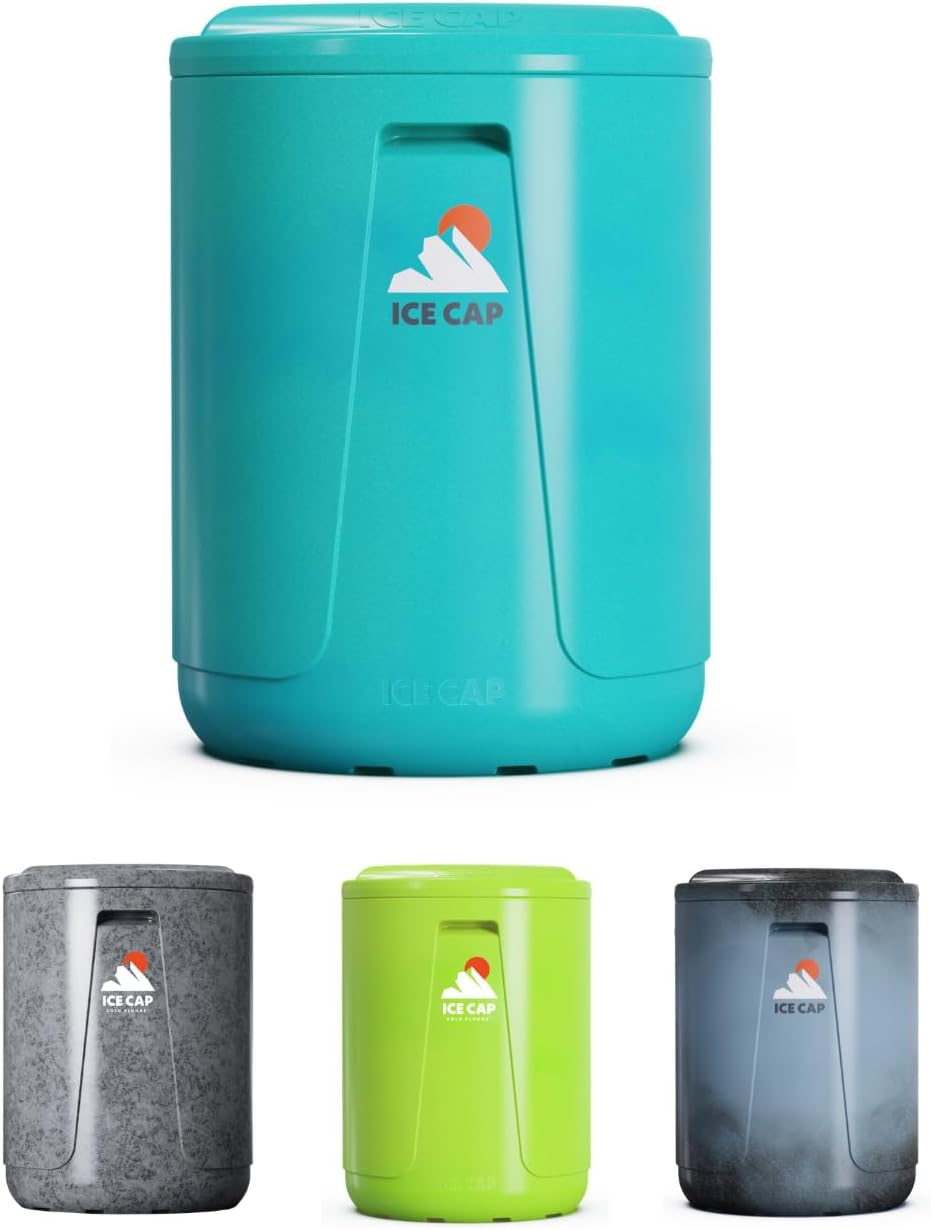
If you have a shaded patio with room for a split chiller, Desert Plunge is the stronger pick — the 1 HP upgrade, R32 refrigerant, and split equipment cabinet are purpose-built for the conditions. If your install spot is a covered porch with a 120V outlet and you are willing to live with 50°F water in late July, Cold Life Tub is the cleaner, less invasive install and saves the electrician visit. For a deeper look at sizing chillers to climate, see our cold plunge chiller sizing guide, and for shell material trade-offs read the roto-molded vs acrylic shell comparison. If you are still deciding between a full plunge and a stock-tank-plus-chiller DIY, our DIY stock tank vs prebuilt breakdown covers cost, maintenance, and resale across the 2026 model year.
Frequently Asked Questions
Can a Desert Plunge or Cold Life Tub reach 39°F in a Phoenix summer?
Only with the upgraded chiller, full shade over both tub and equipment, and an insulating cover when not in use. A stock Desert Plunge with 3/4 HP chiller in partial sun will hover at 48–52°F from late June through August. A stock Cold Life Tub in the same conditions typically holds 53–58°F. Reaching true ice-bath temps (sub-40°F) in July requires the larger chiller plus a north-facing or pergola-shaded install.
Do I need a 240V circuit for a cold plunge in Arizona?
For Desert Plunge's 1 HP chiller, yes — the unit is wired for 240V/20A dedicated. Cold Life Tub runs on a standard 120V/15A outlet, but during peak summer the compressor will run nearly continuously on 120V and may trip a shared circuit. Most installers recommend a dedicated 240V circuit for either tub if the install is permanent and outdoor.
How often do I need to change the water in an outdoor cold plunge?
With ozone (Desert Plunge) or UV-C (Cold Life Tub) plus a clean filter cartridge, water changes run every 8–12 weeks for a single user, every 4–6 weeks for a household. Arizona's low humidity actually helps — less evaporation, less mineral concentration. Hard tap water still scales the chiller heat exchanger, so an inline pre-filter or a fill with RO water extends equipment life noticeably.
Does monsoon season hurt outdoor cold plunge equipment?
Sustained moisture and blowing dust are the main risks. Both manufacturers seal the chiller cabinet to an IPX4 rating, which handles wind-driven rain but not standing water. Place the equipment on a slight grade or paver lift, keep the condenser coil clean (a leaf blower every two weeks during monsoon season works), and your chiller will easily make its 5-year service life.
Can I install a cold plunge tub on existing pavers, or do I need a new slab?
Existing pavers work if they are set on a properly compacted base and the tub footprint distributes load across at least nine pavers. Add a 1/2" closed-cell foam pad between the tub base and pavers to spread point loads. For a Desert Plunge filled to capacity at roughly 1,200 lb, that is well under standard paver compressive limits. A new 4" reinforced slab is overkill for most residential installs but is required by some HOAs.
How much does it cost to run a cold plunge during a Phoenix summer?
Expect $35–70 per month in electricity at APS or SRP residential rates, depending on setpoint, ambient temperature, insulation cover use, and time-of-use plan. Desert Plunge's split chiller plus closed-cell foam insulation tends toward the lower end; Cold Life Tub's integrated chiller and slightly lower R-value pushes toward the upper end. Running the chiller during off-peak hours and using a thermal cover religiously can cut bills by 30%.
Are these cold therapy machines a substitute for a full cold plunge?
No — they serve a different purpose. The circulating cold therapy machines listed above target a specific joint (knee, shoulder, ankle) for long-duration recovery, while a cold plunge delivers a short, systemic cold exposure. Most serious users own both: the plunge for daily protocols and a CF-3 Pro or similar wrap unit for injury-specific work. Pairing the two is the most flexible recovery setup for an Arizona home gym.
Key Takeaways
- Choosing the right Desert Plunge vs Cold Life Tub Arizona summer means matching capacity and output ports to your actual devices
- Always check actual watt-hours (Wh), not just watts — runtime depends on Wh, not peak output
- Also covers: Arizona outdoor cold plunge review
- Also covers: desert climate cold plunge tub
- Also covers: 115 degree cold plunge chiller
- Compare price-per-Wh across models to find the best value for your budget