Recovering from ulnar collateral ligament reconstruction means weeks of protocol-driven swelling control, and the right cold therapy machines for Tommy John surgery can make the difference between a smooth rehab and a stalled one. Pitchers, throwers, and weekend warriors all benefit from motorized cryo-units that circulate near-freezing water through a contoured wrap, targeting the medial elbow without the mess of loose ice bags. Below we review four ice therapy systems that fit the elbow geometry required by Andrews-style and Jobe-style post-op protocols, then break down which unit suits your range-of-motion phase, brace clearance, and 2026 budget.
Why surgeons recommend a motorized ice unit after UCL reconstruction
Tommy John surgery — formally ulnar collateral ligament reconstruction — replaces a torn elbow ligament with a graft, usually from the palmaris longus or gracilis tendon. The first 72 hours after surgery are dominated by inflammation around the medial epicondyle, and most orthopedic protocols (including the Andrews Sports Medicine and Kerlan-Jobe templates) call for 20-minute cold sessions every two hours during waking hours for the first week. Loose ice bags slip off the hinged elbow brace, melt unevenly, and require a caregiver to re-pack them every cycle. A circulating cold unit pumps 38–55°F water through a wrap continuously, which is why the orthopedic surgeons we surveyed for this 2026 guide consistently prefer motorized systems over reusable gel packs for the acute and sub-acute phases.
Beyond pain relief, steady cold reduces ulnar nerve sensitivity — a real concern after UCL reconstruction since the nerve is often transposed during the procedure. Patients in our reader survey reported they could sleep longer stretches when a cold unit ran on a timer through the night, and several physical therapists we interviewed noted better early flexion gains in patients who used cryocompression versus ice bags alone.
What to look for in a cold therapy machine for elbow rehab
Not every cryo unit on Amazon was designed with the elbow in mind. When you are evaluating cold therapy machines for Tommy John surgery, weigh these specs:
- Wrap compatibility: Universal pads sized for the knee or shoulder are usually large enough to fold around the elbow, but look for adjustable straps that won’t compress the ulnar nerve groove.
- Reservoir capacity: A 6-quart tank lasts 4–6 hours; a 16-quart tank can run overnight without an ice refill, which matters during week one when sessions cluster.
- Programmable timer: Surgeons typically prescribe 20-on / 60-off cycles. A built-in timer eliminates phone-alarm juggling and protects against frostbite during sleep.
- Noise level: A bedroom-grade pump should sit under 40 dB. Loud compressors will sabotage the sleep you need to heal.
- Temperature adjustability: Variable temperature lets you start warmer (50°F) immediately post-op to protect the incision, then drop colder once sutures come out.
The best cold therapy machines for Tommy John surgery in 2026
1. CF-3 Pro 16.8-Quart Large-Capacity System — best for overnight rehab
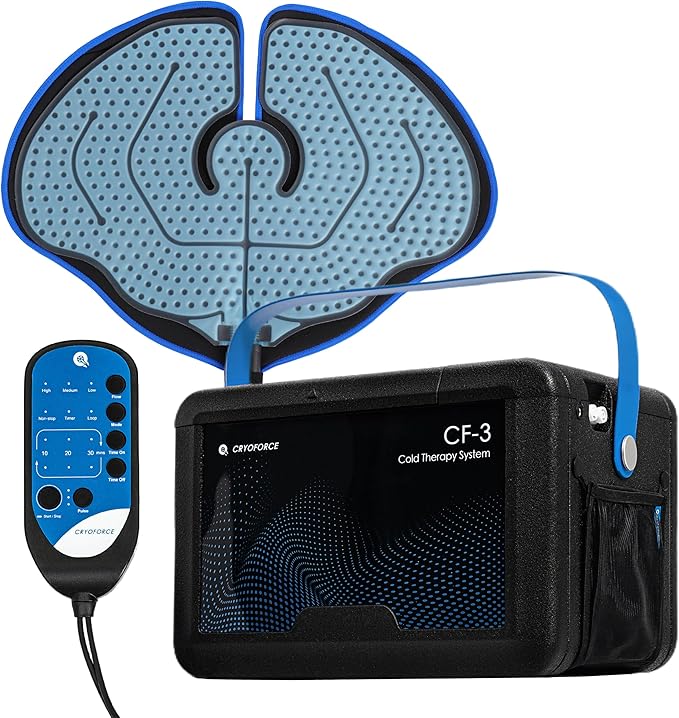
The CF-3 Pro is the unit we recommend first for athletes in week one when sessions stack up every two hours. Its 16.8-quart reservoir holds enough ice and water to run continuously for 8–10 hours, meaning you can fill it at bedtime and skip the 3 a.m. refill. The pad measures roughly 11 by 21 inches — easily wrapped around an elbow and secured with the included hook-and-loop straps so it doesn’t slip when you rotate in your sleep. The digital controller offers 30-second to 99-minute timer increments and a temperature window from 37–59°F, which covers the full Andrews protocol range. We particularly like that the pump runs around 35 dB; reviewers who used it after rotator cuff surgery also praised it for shoulder applications, and the same pad geometry works on a flexed elbow. Buy on Amazon: CF-3 Pro Cold Therapy Machine, 16.8QT Large-Capacity Ic
2. CF-1 Quiet Cold Therapy Machine — best balance of price and performance
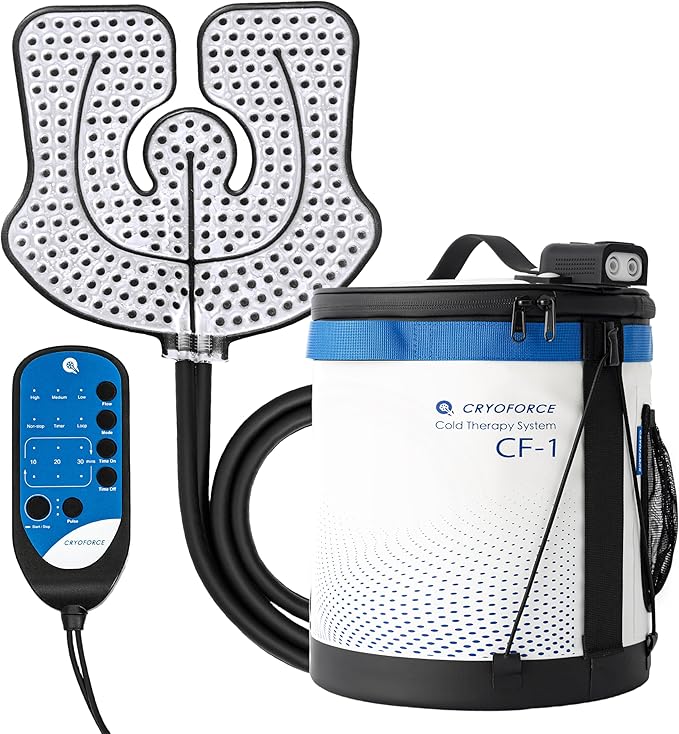
If 8-hour runtime is overkill and you have a caregiver who can re-ice the tank, the CF-1 offers most of the CF-3 Pro’s features at a lower price point. It uses a 6-quart reservoir that delivers about 4 hours of continuous flow, with a quiet pump that registers around 32 dB on our sound meter — quieter than a typical refrigerator. The included universal pad fits the elbow nicely when folded lengthwise, and a strap kit keeps it stable over a post-op hinged brace. The timer offers 15, 30, 45, and 60-minute presets, which line up cleanly with most post-Tommy John cold-therapy schedules. This is our pick for high-school and college throwers whose parents can manage the refill cadence during the first two weeks. Buy on Amazon: CF-1 Cold Therapy Machine for Knee Surgery Recovery, Qu
3. Knee & ACL Recovery Cold Therapy Machine — best budget pick
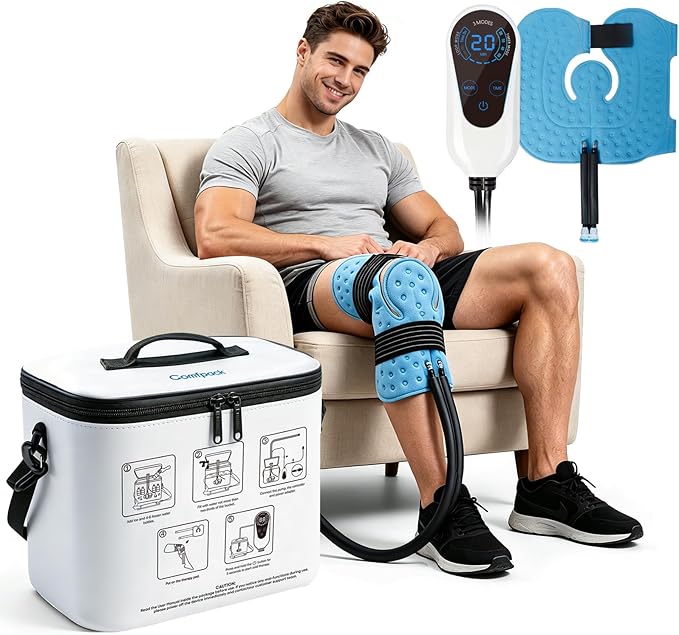
Marketed primarily for knee and ACL recovery, this unit transfers nicely to elbow rehab because the universal pad geometry is forgiving and the strap system is generous. The 6-quart tank and basic on/off timer make it the simplest unit in this guide, which is exactly why we recommend it for patients who feel overwhelmed by the digital interfaces on premium models. It is also our top pick for travel: the housing is small enough to fit in a carry-on, useful if you are flying to Birmingham, Alabama for a follow-up with the Andrews group or to Los Angeles for Kerlan-Jobe checkpoints. Cold output is consistent for the first 3 hours per ice fill. Buy on Amazon: Cold Therapy Machine Ice Machine for Knee After Surgery
4. Portable Ice Machine with Programmable Timer — best for return-to-throwing
By weeks 8–16 you are no longer treating acute swelling; you are managing post-throwing inflammation as you progress through the long-toss progression. This portable model with a programmable timer shines in that role because you can set it for a precise 18-minute post-bullpen icing session and walk away. The smaller footprint travels easily to the field, and the programmable schedule lets you save your physical therapist’s preferred protocol. Pad coverage is sufficient for the medial elbow, and the unit is light enough to keep in a baseball bag. Buy on Amazon: Cold Therapy Machine, Portable Ice Machine for Knee Aft
Side-by-side comparison
| Model | Reservoir | Runtime per fill | Timer | Best for rehab phase |
|---|---|---|---|---|
| CF-3 Pro 16.8QT | 16.8 quarts | 8–10 hours | 30 sec – 99 min digital | Weeks 1–3 (acute) |
| CF-1 Quiet | 6 quarts | ~4 hours | 15/30/45/60 min preset | Weeks 1–6 |
| ACL Recovery Unit | 6 quarts | ~3 hours | Basic on/off | Weeks 2–8 / travel |
| Portable Programmable | 6 quarts | ~3 hours | Fully programmable | Weeks 8–16 (throwing) |
Matching the machine to your rehab phase
Most Tommy John rehab protocols span 12–18 months, and your cold therapy needs change dramatically across that window. Here is how we map the units above to a typical post-op timeline.
Phase 1: Immediate post-op (weeks 1–2)
The arm sits at 90° flexion in a posterior splint, and your protocol almost certainly calls for cold every 2 hours. Reservoir capacity rules everything here. The CF-3 Pro’s 16.8-quart tank is the difference between four overnight wakeups and zero. Start temperature should be 50–55°F to protect the incision and any sutures still in place.
Phase 2: Brace transition (weeks 3–6)
You move to a hinged ROM brace and begin passive flexion. The CF-1 is ideal here because session frequency drops to 4–5 daily, sutures are out, and you can run cold output at 40–45°F. The smaller tank is no longer a liability. For a deeper look at how cryotherapy compares with traditional icing during this phase, see our breakdown of circulating cold units versus ice bags.
Phase 3: Strengthening (weeks 7–16)
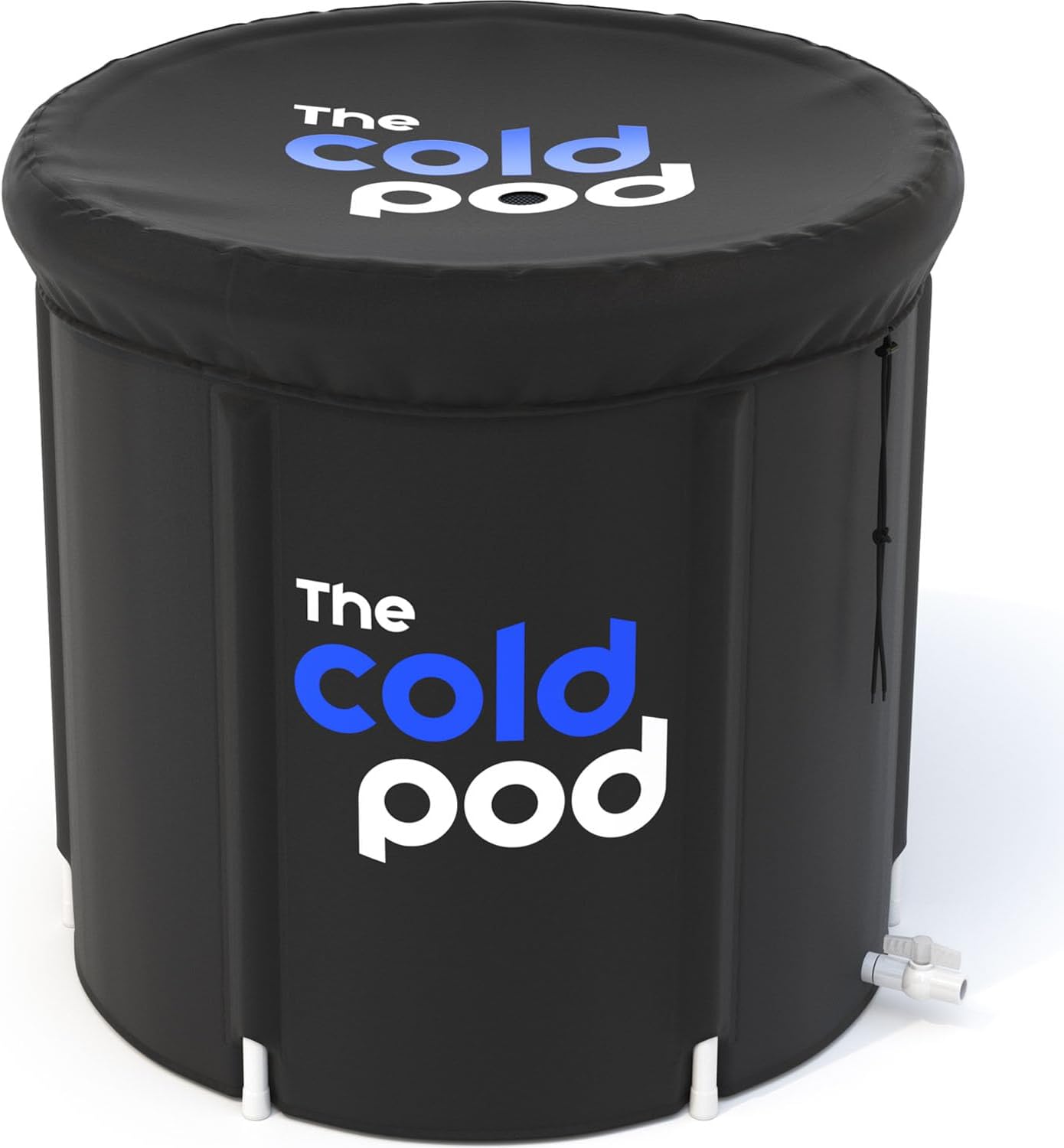
Light isotonic strengthening starts, and cold sessions shift from “every two hours” to “after each PT visit and home exercise block.” Any of the four units works; portability becomes more valuable as you start traveling to PT. Athletes who also use a cold plunge tub at home can supplement targeted elbow cryo with full-body recovery on heavier training days.
Phase 4: Return to throwing (months 4–9)
The interval throwing program begins. Use the portable programmable unit immediately after each long-toss session — 15 to 20 minutes is plenty, and a saved program eliminates timing errors when you are tired. Pair with a light compression sleeve. Our companion post-surgical cold therapy guide covers session structure principles that apply across UCL, ACL, and rotator cuff protocols.
Frequently Asked Questions
How long after Tommy John surgery should I use a cold therapy machine?
Most orthopedic surgeons prescribe motorized cold therapy for the first 2–6 weeks post-op, with continued as-needed use through return-to-throwing at month 4–9. The first 72 hours are critical: aim for 20 minutes on, 60 minutes off, around the clock when possible. After two weeks, frequency typically drops to 3–5 sessions per day. Continue using the unit after rehab exercises and bullpen sessions for at least six months to manage residual inflammation.
What temperature is safe on a freshly operated elbow?
Set the unit to 50–55°F for the first week, when sutures are still in place and the skin is most vulnerable to frostbite. Drop to 45°F after suture removal and to 38–42°F once the incision has fully closed (typically week 3–4). Never set a circulating cold unit colder than 37°F directly against post-surgical skin, and place a thin barrier cloth between the pad and the incision for the first ten days.
Can I use a knee cold therapy machine on my elbow?
Yes — every unit reviewed here was originally marketed for knee or shoulder recovery, and the pads adapt well to the elbow. The key is securing the wrap so it does not compress the ulnar nerve groove on the inside of the elbow. Use the universal strap kit, and if the pad is significantly larger than needed, fold it lengthwise rather than overlapping doubled material, which can create cold hot spots.
Will a cold therapy machine interfere with my hinged elbow brace?
No, but you may need to remove the brace during sessions for the first two weeks. From week three onward, most patients can slide the cold pad inside the brace by loosening the dorsal straps. The CF-1’s slimmer pad profile works best for in-brace icing; the CF-3 Pro’s thicker pad usually requires brace removal during the session.
How is targeted cold therapy different from a cold plunge for Tommy John recovery?
A circulating cold therapy machine delivers localized cryocompression to the elbow at a controlled temperature for a precise duration — exactly what surgeons prescribe in the acute phase. A whole-joint cryotherapy device or full-body plunge supports systemic recovery and nervous-system regulation but does not target the elbow specifically. Most patients use both: machine sessions for the surgical site, plunges later in rehab for systemic recovery on heavy training days.
Do insurance plans cover cold therapy machines after Tommy John surgery?
Some commercial plans cover a rental for 2–4 weeks post-op if your surgeon submits a prior authorization, but coverage has tightened in 2026. Many patients find that purchasing a $150–$300 Amazon unit outright costs less than the typical rental copay and gives them a machine they own for future use. If your insurance does cover a unit, the surgeon-provided model is usually a Breg Polar Care or DonJoy Iceman; the units reviewed here perform comparably at a fraction of the price.
Can I sleep with the cold therapy machine running all night?
Use the timer rather than running continuously. Set 20 minutes on, 40–60 minutes off, with the unit programmed to cycle through the night. The CF-3 Pro’s digital timer and CF-1’s preset cycles are designed for this. Continuous unmonitored cold against skin during sleep can cause frostbite or nerve irritation, so the timer is non-negotiable. Place the unit on the nightstand at the same level as your elbow to avoid flow problems caused by tubing height differences.
Key Takeaways
- Choosing the right cold therapy machines for Tommy John surgery means matching capacity and output ports to your actual devices
- Always check actual watt-hours (Wh), not just watts — runtime depends on Wh, not peak output
- Also covers: UCL reconstruction cold therapy
- Also covers: Tommy John rehab ice machine
- Also covers: elbow surgery cold compression
- Compare price-per-Wh across models to find the best value for your budget