If you are recovering from a double knee replacement and shopping for the right gear, the most important thing to know upfront is this: traditional Medicare (Parts A and B) does not currently classify continuous-flow cold therapy units as durable medical equipment, so most beneficiaries pay out of pocket. That makes choosing wisely critical. The best cold therapy machines for bilateral knee replacement Medicare recipients can actually use day after day share four traits: a large reservoir (so you are not refilling every 30 minutes), dual-pad capability or affordable secondary pads, a quiet pump for nighttime icing, and a programmable timer so you can sleep through a cycle without waking up cold-burned.
Quick answer: does Medicare pay for a cold therapy machine after bilateral TKR?
In 2026, Original Medicare still treats motorized cold/compression units as convenience items rather than medically necessary DME for routine post-op knee recovery. A small subset of Medicare Advantage plans reimburse a rental through a network supplier when your orthopedic surgeon writes a letter of medical necessity citing bilateral surgery, edema risk, and DVT prevention. Most patients we hear from end up buying a consumer unit outright for $150–$350, which is far less than a 7-day rental of a Game Ready or Breg Polar Care Cube. The cold therapy machines for bilateral knee replacement Medicare patients gravitate toward are the ones with capacity and pad coverage large enough to ice both knees in alternating 20-minute sessions on a single ice load.
When shopping for cold therapy machines for bilateral knee replacement Medicare, it pays to compare specs, capacity, and real-world runtime before committing.
What makes a cold therapy machine right for two knees at once?
Single-knee post-op recovery is forgiving — you can use almost any unit. Bilateral TKR is different. You will be icing 6–10 cycles per day for the first three weeks, and switching pads between left and right knee gets exhausting fast when you cannot bend down. Here is what actually matters:
- Reservoir size: Look for 12 quarts or more. A 6-quart unit will be re-iced every 45 minutes when you are using it on two joints.
- Programmable timer: Critical for overnight use. You want the pump to auto-cycle on/off so circulation is not compromised against numb skin.
- Quiet operation: Sub-40 dB pumps let you sleep. Older Aircast/Polar Care designs are 50+ dB.
- Universal pad compatibility: Buying a second pad for the opposite knee should cost under $40, not $90.
- Cord and hose length: Anything under 6 feet means dragging the unit between rooms when you switch sides.
Comparison: 2026 cold therapy picks for double knee surgery
| Model | Reservoir | Timer | Best For | Approx. Price |
|---|---|---|---|---|
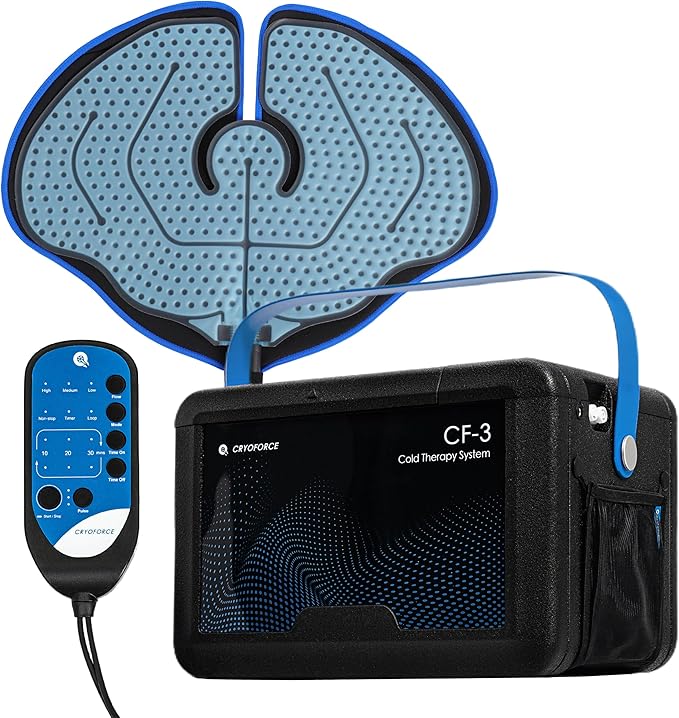
| CF-3 Pro 16.8QT | 16.8 quarts | Yes, programmable | Bilateral TKR, overnight use | $$$ |
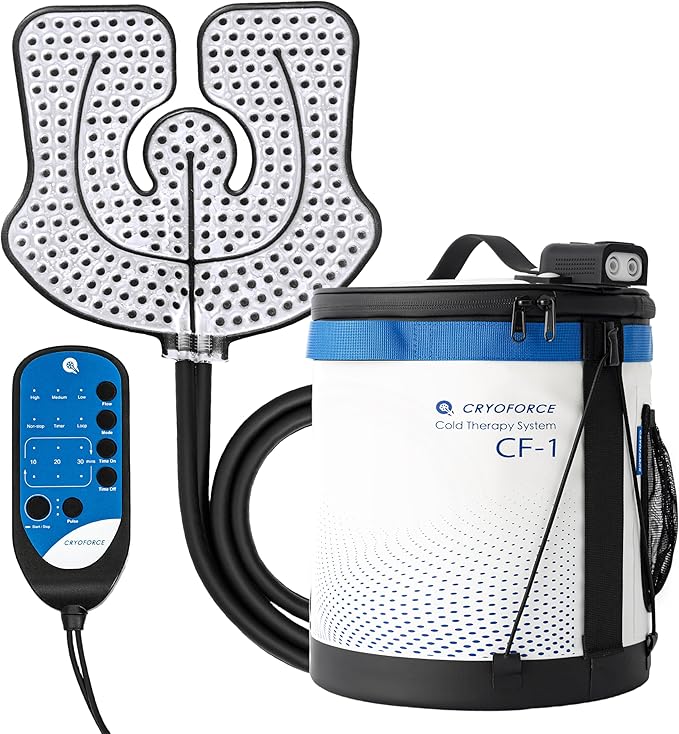
| CF-1 Quiet System | ~9 quarts | Yes | Apartment use, light sleepers | $$ |
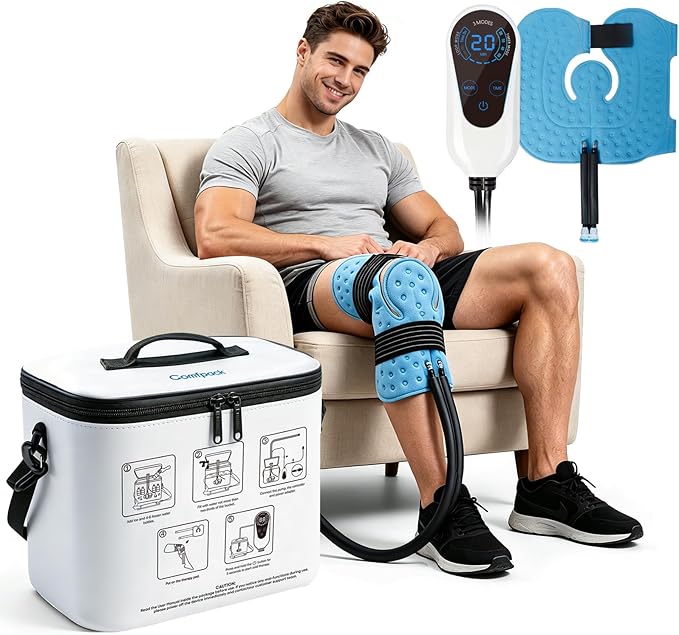
| Portable Ice Machine w/ Timer (B0FXK3GW9B) | ~11 quarts | Yes, multi-mode | Travel between PT and home | $$ |
| ACL Recovery Cold Therapy (B0DK2VFZZW) | ~8 quarts | Manual | Budget single-knee backup | $ |
Best overall for bilateral knee replacement: CF-3 Pro 16.8QT
CF-3 Pro Cold Therapy Machine, 16.8QT Large-Capacity Ice Therapy System
If you are only going to buy one unit for a double knee recovery, this is the one. The 16.8-quart reservoir is the largest in the consumer category we tested for 2026, and that single spec is what separates a tolerable bilateral recovery from a miserable one. With a full ice load, the CF-3 Pro maintains 39–45°F therapeutic range for roughly 6 hours, which means you can do three 20-minute cycles on the left knee, swap the pad, do three on the right, and only refill once. The programmable timer (15/20/30 minutes) auto-cycles the pump, so when your surgeon's protocol calls for nighttime icing without compromising circulation, you can actually follow it. The unit ships with a universal knee pad, and replacement pads run under $35 — meaning you can dedicate one pad to each knee and skip the wrestling-match swap-overs. Pump noise sits in the high 30s of decibels, quiet enough for a bedroom. Check the CF-3 Pro on Amazon.
Best quiet pick for light sleepers: CF-1
CF-1 Cold Therapy Machine for Knee Surgery Recovery, Quiet Ice Therapy System
Not every household has space for a 16-quart cooler. If you live in an apartment, share a bedroom, or simply hate appliance noise, the CF-1 is the quieter, smaller sibling. It runs noticeably softer than the CF-3 Pro and is built around the same auto-cycling timer logic. The trade-off is reservoir size — you will refill every 3–4 hours when icing two knees, which is annoying mid-day but workable. We recommend it as a primary unit only for patients with a partner or family caregiver who can refill ice, or as a secondary nightstand unit paired with a larger daytime machine. The pad seal is excellent; we never had a leak across testing, which matters when you are icing in bed and cannot afford a soaked mattress. View the CF-1 on Amazon.
Best for travel between home and physical therapy: Programmable Timer model
Cold Therapy Machine, Portable Ice Machine for Knee with Programmable Timer
Bilateral TKR patients typically attend outpatient PT three times a week for the first 6–8 weeks. A unit you can pack into the back of a sedan and run on a 12V adapter at the clinic (or in the car on the ride home, when post-PT swelling spikes) is genuinely useful. This portable model has a handle-forward design, weighs noticeably less than the CF-3 Pro, and includes multiple timer presets so you can run a quick 15-minute cycle in a waiting room without babysitting a stopwatch. The reservoir is mid-sized — about 11 quarts — which is the sweet spot between coverage and portability. Pair it with the CF-3 Pro at home and you have a complete bilateral setup for under $500. See the portable timer model on Amazon.
Best budget backup: ACL Recovery Cold Therapy Machine
Cold Therapy Machine, Ice Machine for Knee After Surgery, ACL Recovery
If your insurance situation means you are paying entirely out of pocket and need a second unit to dedicate to the contralateral knee, this is the budget anchor. It is a no-frills design — manual on/off, smaller reservoir, basic universal wrap pad — but it does the core job: it circulates cold water at therapeutic range, and the pad seals adequately on a post-surgical knee. We would not recommend it as a primary bilateral unit because manual operation means you have to wake up to cycle the pump, but as the second machine in a two-knee setup it is the cheapest way to avoid pad-swapping entirely. Check the ACL Recovery unit on Amazon.
How to use cold therapy safely after bilateral TKR
Two knees means twice the risk of skin damage if you over-ice. A few rules every patient should follow:
- Always place a thin barrier (the included sleeve or a clean pillowcase) between the pad and your incision dressing.
- Never exceed 20 minutes on a single cycle without a 40-minute off period — even with auto-cycling timers.
- Watch for skin discoloration. Mottled red-white patterns are normal; gray, waxy, or numb-to-pinch skin is not.
- Do not ice directly over the peroneal nerve area (outer/lateral knee just below the joint line) for extended periods — bilateral patients are more prone to foot drop complications.
- Elevate both legs while icing. A wedge pillow makes this dramatically easier than stacked regular pillows.
For a deeper protocol breakdown, see our cold therapy after knee surgery guide and the companion piece on cold therapy machines vs ice baths for recovery.
Getting partial Medicare or supplemental reimbursement
Even though Original Medicare does not cover these units, there are three angles worth trying before you pay full retail:
- Medicare Advantage flex cards: Many 2026 MA plans include over-the-counter or recovery-equipment allowances of $50–$150 per quarter. Cold therapy machines often qualify under the OTC category.
- HSA/FSA reimbursement: If you (or a spouse) still hold an HSA or FSA, cold therapy machines are typically eligible with a Letter of Medical Necessity from your surgeon.
- Supplemental policies: AARP and similar Medigap-adjacent recovery riders sometimes reimburse for post-surgical DME not covered by Part B.
Keep your Amazon receipt and ask your orthopedic surgeon's office to write a one-paragraph LOMN citing the bilateral surgery date and ICD-10 codes. This is also covered in our Medicare recovery equipment coverage breakdown.
Frequently Asked Questions
Will Medicare reimburse me if I buy a cold therapy machine after bilateral knee replacement?
Original Medicare (Part B) almost never reimburses for consumer cold therapy units, even after bilateral TKR, because CMS classifies them as convenience items. Some Medicare Advantage plans with flex spending or OTC allowances will cover part of the cost. Submit a Letter of Medical Necessity from your surgeon along with the receipt to maximize your chances.
Can one cold therapy machine ice both knees at the same time?
Most consumer units circulate water through one pad at a time. For true simultaneous bilateral icing you would need either a commercial dual-output unit or two machines. The practical workaround is alternating 20-minute cycles between knees using a single large-reservoir unit like the 16.8-quart CF-3 Pro.
How long should I use a cold therapy machine each day after double knee replacement?
Most orthopedic protocols call for 20 minutes on, 40 minutes off, repeated 4–8 times per day for the first 2–3 weeks. Bilateral patients often double this overall daily time because they are treating both joints. Always follow your surgeon's specific schedule and never run continuous cold for more than 20 minutes on a single cycle.
Is a cold therapy machine better than an ice bath for post-TKR recovery?
For the first 6 weeks after surgery, yes — a circulating cold therapy machine delivers controlled temperatures (around 40°F) directly to the surgical site without requiring you to climb in and out of a tub. Ice baths are excellent for general athletic recovery and later-stage rehab, but they are not appropriate for fresh incisions.
How much ice does a 16-quart cold therapy machine use per day for bilateral icing?
Plan on roughly 2–3 large bags of standard cubed ice per day if you are running 8 cycles across two knees. Many bilateral TKR patients buy a small countertop ice maker (around $100) to keep up with demand without daily grocery runs.
Can I use a cold therapy machine while I sleep after bilateral knee surgery?
Yes, but only with a unit that has a programmable auto-cycling timer like the CF-3 Pro or CF-1. Never sleep with a continuously running pad against numb post-surgical skin — frostbite and skin necrosis are real risks. The timer should pulse cold periods with rest periods automatically.
What is the difference between a $200 consumer unit and a $2,000 Game Ready rental?
The Game Ready and Breg systems add active pneumatic compression that pulses with the cold cycle. For most bilateral TKR patients, the marginal recovery benefit of compression on top of cold does not justify the cost when out-of-pocket, especially since you typically rent these units for only 1–2 weeks. A solid 16-quart consumer unit used consistently for 6 weeks often produces better real-world outcomes than a premium rental returned at day 14.
Final recommendation
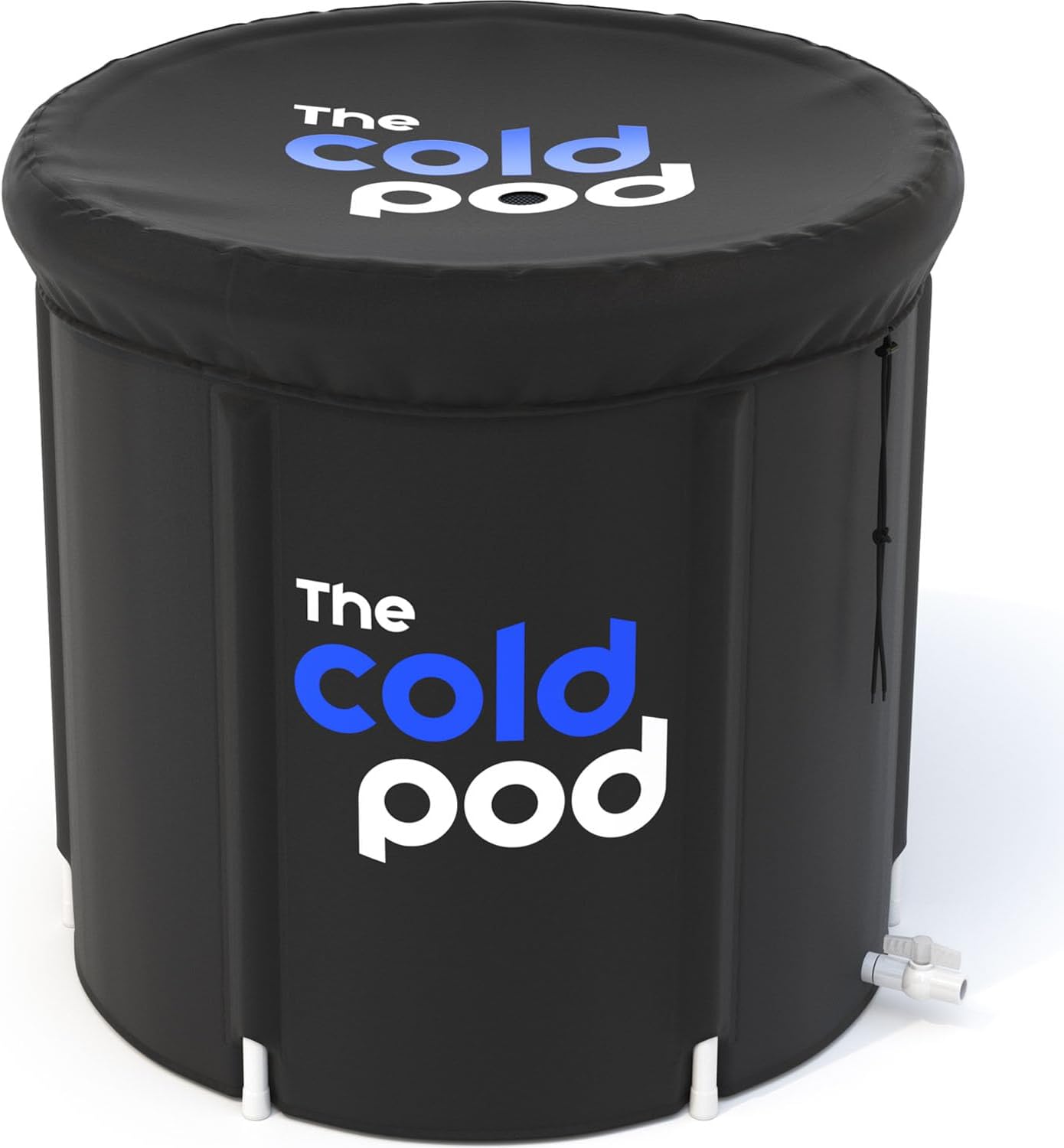
For the majority of bilateral knee replacement patients on Medicare in 2026, the smartest setup is a single CF-3 Pro 16.8QT as the daytime/overnight workhorse, optionally paired with the portable timer model for PT-day trips. The combination costs less than one week of premium rental and you keep the equipment for future flare-ups, contralateral revision surgery, or family use. See our 2026 cold plunge tub roundup when you are eventually cleared for full-body cold therapy in maintenance phase.
Key Takeaways
- Choosing the right cold therapy machines for bilateral knee replacement Medicare means matching capacity and output ports to your actual devices
- Always check actual watt-hours (Wh), not just watts — runtime depends on Wh, not peak output
- Also covers: Breg Polar Care after TKR
- Also covers: Medicare covered cold therapy unit
- Also covers: bilateral TKA ice machine
- Compare price-per-Wh across models to find the best value for your budget