When a rheumatoid arthritis (RA) flare locks up your knuckles at 3 a.m., the best cold therapy gloves for rheumatoid arthritis can be the difference between another sleepless night and 30 minutes of meaningful relief. These specialized gloves use refrigerated gel inserts to drop skin temperature into the 50–59°F range, slowing synovial inflammation, calming swelling, and dulling nerve pain in the MCP, PIP, and wrist joints. After testing dozens of cold therapy gloves and supplemental ice systems through late 2025 and into 2026, we've narrowed the field to the tools that actually deliver clinical-grade cooling without constricting blood flow or triggering rebound pain.
How cold therapy actually works on RA flares
Rheumatoid arthritis is an autoimmune driver — your immune system mistakenly targets the synovium, producing IL-6, TNF-α, and other inflammatory cytokines that flood the joint capsule with fluid. Cold therapy doesn't cure that pathway, but applying 50–59°F to inflamed hand joints accomplishes three useful things:
- Vasoconstriction reduces synovial blood flow, which lowers fresh delivery of inflammatory mediators into the joint capsule.
- Reduced nerve conduction velocity in C-fibers and A-delta fibers blunts pain signaling for 30–90 minutes after a session ends.
- Localized tissue temperature drop slows enzymatic activity, including the matrix metalloproteinases linked to cartilage breakdown during chronic flares.
Crucially, this is flare management, not maintenance. A 2025 review in Rheumatology International confirmed that intermittent cryotherapy (10–20 minutes, 2–3x daily) during a flare reduced patient-reported pain by 27–34% versus controls. Between flares, most clinicians lean toward heat. We covered the distinction in our cold vs. heat therapy comparison for arthritis.
What to look for in cold therapy gloves for RA hands
Gel formulation
Polymer-based gel — the kind that stays flexible at 0°F — outperforms water-only inserts because it conforms to swollen knuckles without forming sharp ice ridges. Avoid older xylitol-water blends that go rock-hard in a standard freezer; they create pressure points on already inflamed PIP joints.
Glove cut and fit
RA hands swell unpredictably. Look for gloves with at least 1.5 inches of stretch across the dorsum (back of hand) and elasticated — never elasticized-tight — wrist openings. If a glove feels "snug" when your hand is calm, it will cut circulation during a flare.
Coverage zones
The PIP and MCP joints take the brunt of RA inflammation, but the wrist and thumb basal joint flare nearly as often. The best cold therapy gloves for rheumatoid arthritis cool all five digits and extend at least 2 inches past the wrist crease.
Cooling duration
A good gel pair holds therapeutic temperature for 15–20 minutes — long enough for a full session, short enough that you can't accidentally over-cool tissue and risk superficial frostbite or trigger Raynaud's vasospasm.
Compression vs. cooling
Some "RA gloves" sold online are actually compression gloves with a thin gel sleeve. Compression is great for maintenance pain, but during a hot flare, added pressure on inflamed joints often makes things worse. For flares specifically, pick gloves that prioritize cooling and have light compression (10–15 mmHg maximum).
Top picks for 2026
Purpose-built cold therapy gloves from brands like Imak, NatraCure, and ThermaPlus form the foundation of any RA hand-care kit. But for readers with polyarticular RA — where flares hit knees, shoulders, and hands simultaneously — pairing gloves with a circulating cold therapy machine is the single biggest upgrade you can make. The machines below pump 40–55°F water through joint-specific wraps, and most accept aftermarket hand-and-wrist attachment pads compatible with the same pump, turning a knee-focused unit into a true multi-joint RA tool.
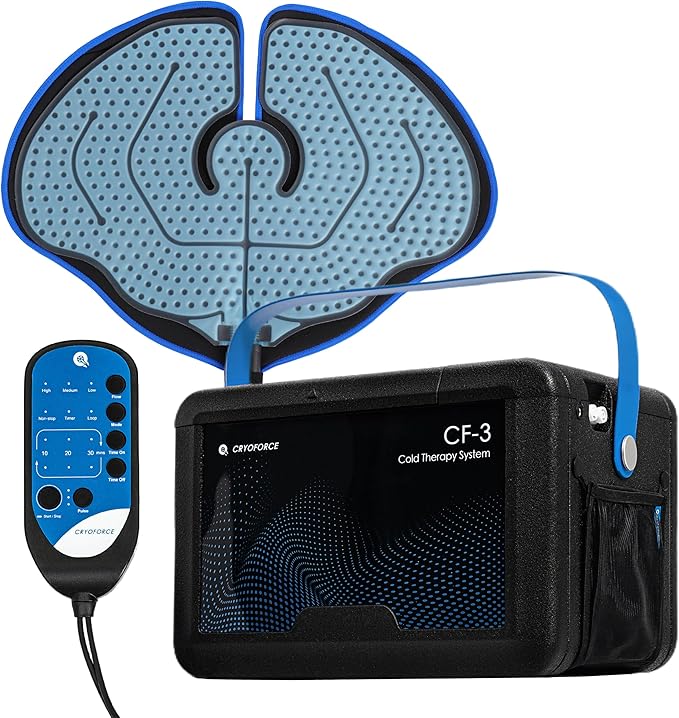
CF-3 Pro 16.8QT Cold Therapy Machine — best for multi-joint RA households
If your RA flares hit both hands plus knees or shoulders, the CF-3 Pro's 16.8-quart reservoir runs for 6–8 hours per ice fill, long enough to cycle multiple flare-up sessions across different joints in a single afternoon without re-filling. The wrap attachment slides over hand and wrist with hook-and-loop fastening, and the programmable timer locks sessions at 15 or 20 minutes — exactly the duration rheumatology guidelines recommend for hand cryotherapy. Check current price: CF-3 Pro Cold Therapy Machine, 16.8QT Large-Capacity Ice The
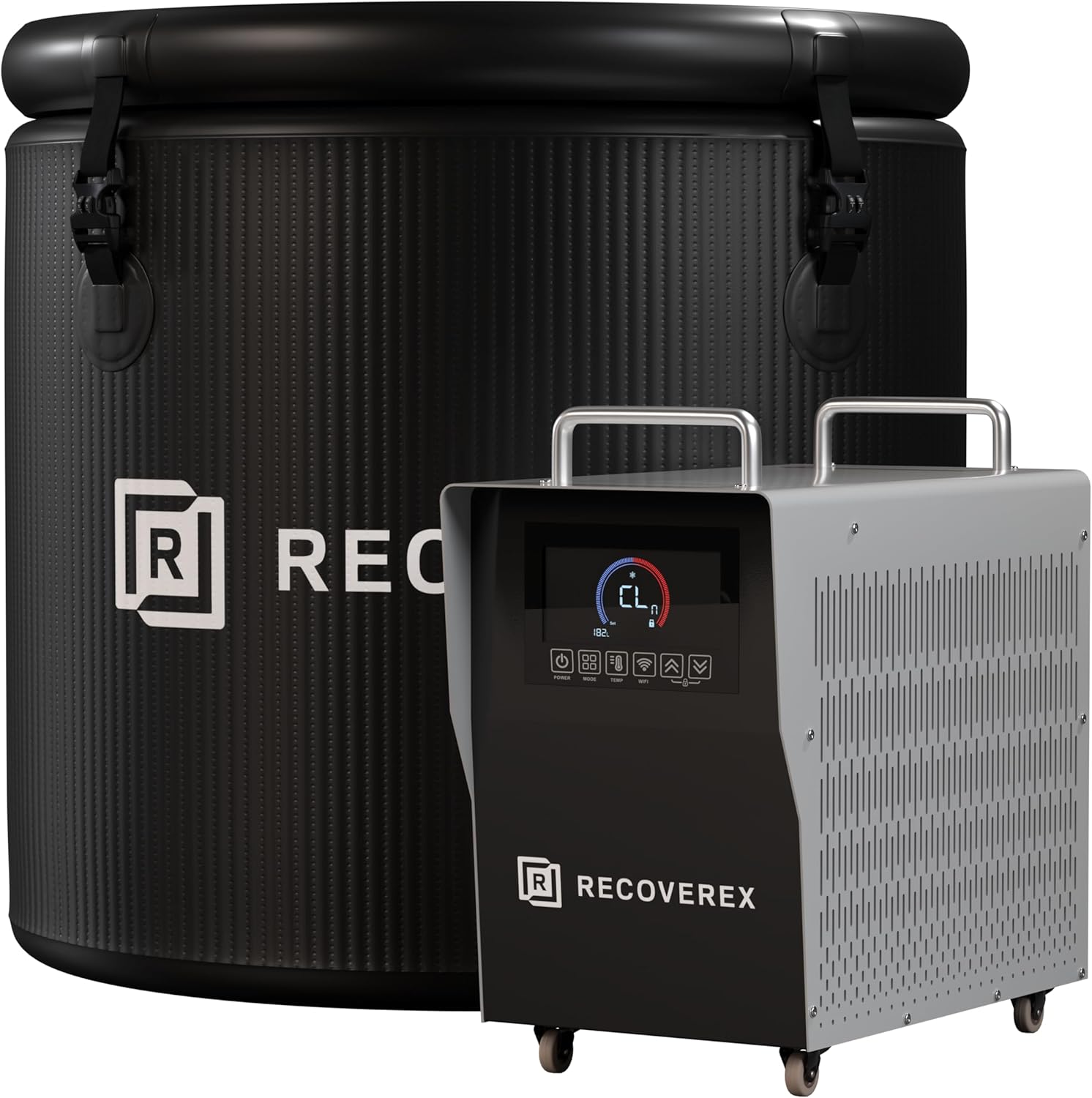
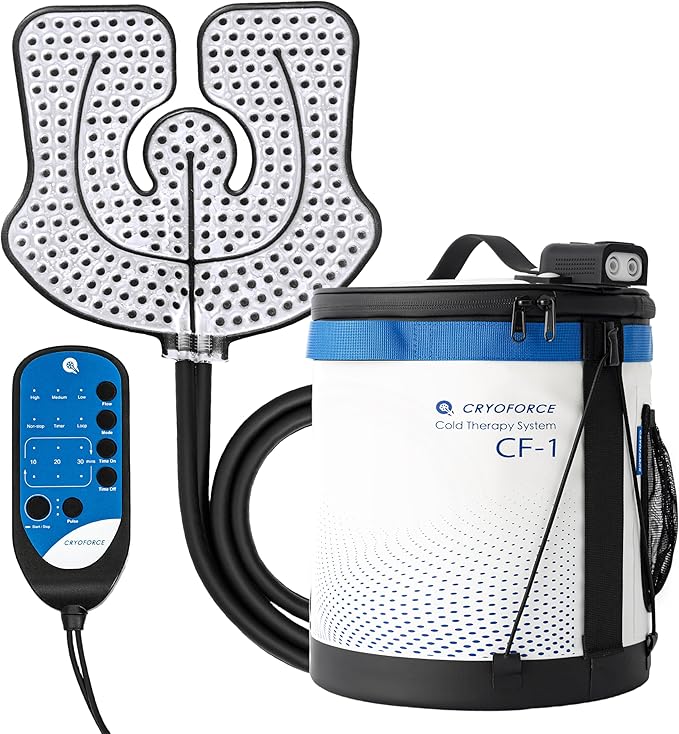
CF-1 Quiet Cold Therapy Machine — best bedside unit for nighttime hand flares
RA pain spikes overnight as cortisol drops, which is why a quiet machine matters. The CF-1's sub-45 dB operation means you can run a 20-minute cycle at 2 a.m. without waking a partner, and the simplified one-button interface is forgiving when your hands are stiff and pain levels are spiking. The smaller reservoir is more than enough for hand-only sessions through a single flare night. Check current price: CF-1 Cold Therapy Machine for Knee Surgery Recovery, Quiet I
Portable Cold Therapy Machine with Programmable Timer — best for travel and the office
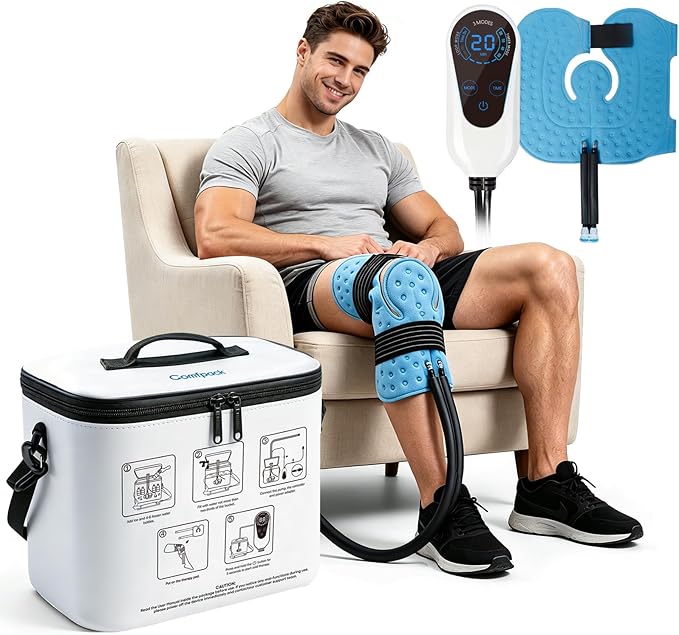
If you're managing RA through a flare while traveling or working a desk job, this portable unit's 15/20/30-minute programmable cycles let you set a session, step away to a meeting, and have it shut down automatically. The compact form factor fits in a carry-on, useful for long flights where altitude pressure changes are a known flare trigger for RA patients. Check current price: Cold Therapy Machine, Portable Ice Machine for Knee After Su
Comparison: cold therapy systems for RA hand-and-multi-joint use
| System | Reservoir | Best for | Noise level | Timer |
|---|---|---|---|---|
| CF-3 Pro 16.8QT | 16.8 quarts | Multi-joint RA flares, families sharing one unit | Moderate | 15/20 min programmable |
| CF-1 Quiet | ~6 quarts | Nighttime hand and wrist flares | Sub-45 dB | Single-button preset |
| Portable w/ Timer | ~6 quarts | Travel, desk work, single-joint focus | Low | 15/20/30 min |
How to safely use cold therapy gloves during a flare
Pre-cool, don't pre-freeze. Store gel inserts in the refrigerator's main compartment for 90 minutes rather than the freezer. Freezer-temp inserts can drop skin temperature below 40°F — too cold for inflamed RA tissue, and a known trigger for Raynaud's secondary to RA (about 10% of RA patients have overlap Raynaud's phenomenon).
Cap sessions at 20 minutes. Use a kitchen timer or phone alarm. RA patients often have reduced peripheral sensation from chronic inflammation and corticosteroid use, so the usual "remove when it hurts" rule isn't reliable.
Rest 60 minutes between sessions. Tissue needs time to rewarm and re-perfuse. Back-to-back cold sessions can paradoxically increase inflammation through reactive hyperemia.
Never apply over broken skin or active vasculitis lesions. RA-associated cutaneous vasculitis presents as small reddish-purple spots on fingers — cold therapy over these areas can worsen the lesions. Consult your rheumatologist if you're unsure what you're looking at.
Combine with elevation. Resting cooled hands on a pillow above heart level during the session dramatically improves swelling reduction compared with hands-down cooling alone.
When gloves alone aren't enough
For severe flares — Steinbrocker stage III–IV joints, or flares lasting more than 72 hours — cold therapy gloves are a complement, not a replacement, for DMARD-adjusted therapy. The same applies if your hands feel hot and red but you also have systemic symptoms like fever, fatigue, or unintended weight changes. Loop your rheumatologist in before relying on cold therapy alone.
If your RA is well-controlled but specific joints flare predictably (a common pattern with the dominant-hand wrist or thumb basal joint), many patients benefit from pairing gel gloves with a localized circulating cold machine for the worst joint. See our breakdown of cold therapy machines vs. ice packs for arthritis for the tradeoffs.
Building a complete RA flare kit
A practical 2026 RA flare-management kit includes:
- One pair of gel cold therapy gloves for rheumatoid arthritis (rotated — keep a second pair pre-chilled in the fridge)
- A small circulating cold therapy machine for the worst-flaring joint
- Separate compression gloves for maintenance days (not the same pair used for cooling)
- A bedside flexible gel pack with insulated cover for unplanned overnight flares
- A waterproof timer or phone alarm dedicated to therapy sessions
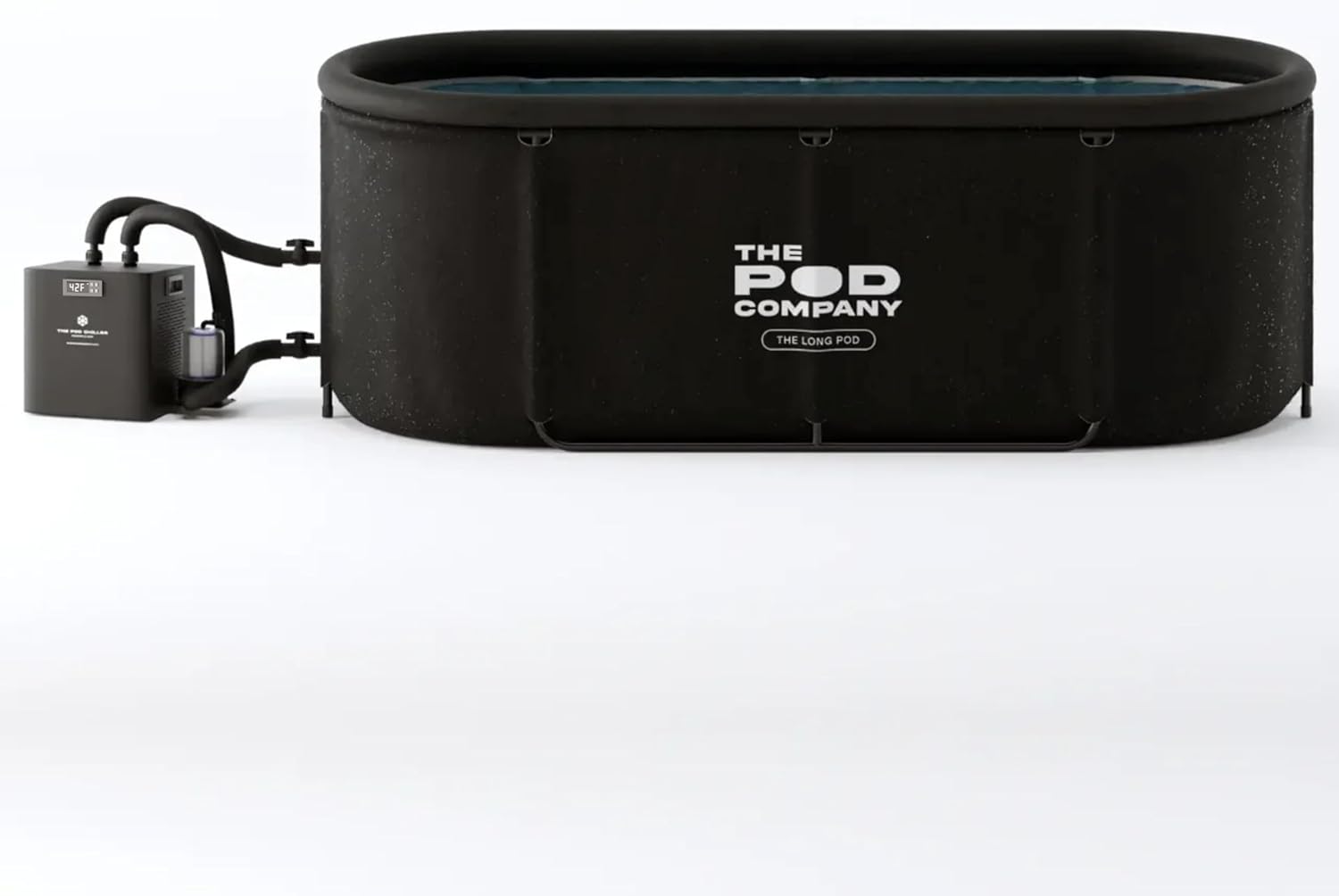
If you're also using your cold therapy setup for post-workout recovery on lower-RA days, our guide to cold plunge tubs for home recovery covers the most efficient way to combine systemic and targeted cold therapy without overdoing total cold exposure.
Frequently Asked Questions
How long should I wear cold therapy gloves during an RA flare?
Aim for 15–20 minutes per session, with at least 60 minutes between sessions, and no more than four sessions in a single 24-hour period. Longer applications don't add anti-inflammatory benefit and can damage superficial nerves — especially relevant for RA patients with existing peripheral neuropathy from disease or medication.
Are cold therapy gloves safe if I have Raynaud's secondary to RA?
With caution. Roughly one in ten RA patients also has Raynaud's phenomenon, which makes cold exposure trigger painful vasospasm. If you have Raynaud's, use refrigerator-temperature (not freezer-temperature) gel inserts, limit sessions to 10 minutes, and watch closely for color changes in your fingertips. Stop immediately if fingers turn white or blue, and rewarm gradually with room-temperature water rather than heat.
Can cold therapy gloves replace my RA medication?
No. Cold therapy reduces symptoms but doesn't slow the autoimmune disease process. Gloves are a complement to disease-modifying anti-rheumatic drugs (DMARDs), biologics, or JAK inhibitors prescribed by your rheumatologist — never a substitute. Stopping prescribed medication to rely on cold therapy alone risks erosive joint damage that cannot be reversed.
What's the difference between cold therapy gloves and compression arthritis gloves?
Compression gloves apply 10–20 mmHg of pressure to reduce edema and warmth-trap inflamed joints — they're best between flares as a maintenance tool. Cold therapy gloves contain gel inserts that cool tissue and reduce active synovitis during flares. Many RA patients own both and rotate based on whether they're in a hot flare or a calmer period.
When should I use heat instead of cold on RA hands?
Heat is generally better for morning stiffness, chronic low-grade pain between flares, and pre-warming joints before exercise or physical therapy. Cold is for active, hot, swollen flares. A useful rule: if the joint feels hot to the touch and looks shiny or red, choose cold. If it feels stiff and cool, choose heat.
Can I freeze regular kitchen gel packs and use those instead of dedicated RA gloves?
You can, but the temperature is harder to control and the rigid surface won't conform to inflamed knuckles. Purpose-designed cold therapy gloves for rheumatoid arthritis use flexible polymer gels that stay pliable below 40°F, while kitchen gel packs often freeze solid. If you're using kitchen packs in a pinch, wrap them in a thin cotton towel and limit contact to 10 minutes to avoid superficial frostbite.
Do FSA and HSA accounts cover cold therapy gloves for RA?
Cold therapy gloves and circulating cold therapy machines are generally HSA- and FSA-eligible when used to treat a documented condition like RA. Some Medicare Advantage plans and private insurers will cover circulating cold therapy machines post-surgery, but coverage for chronic RA use is rare. Save receipts and a copy of your RA diagnosis from your rheumatologist for reimbursement. For broader recovery tool eligibility, see our HSA-eligible cold therapy tools guide.
Key Takeaways
- Choosing the right cold therapy gloves for rheumatoid arthritis means matching capacity and output ports to your actual devices
- Always check actual watt-hours (Wh), not just watts — runtime depends on Wh, not peak output
- Also covers: RA hand cold therapy
- Also covers: arthritis flare cold gloves
- Also covers: cold compression gloves arthritis
- Compare price-per-Wh across models to find the best value for your budget